




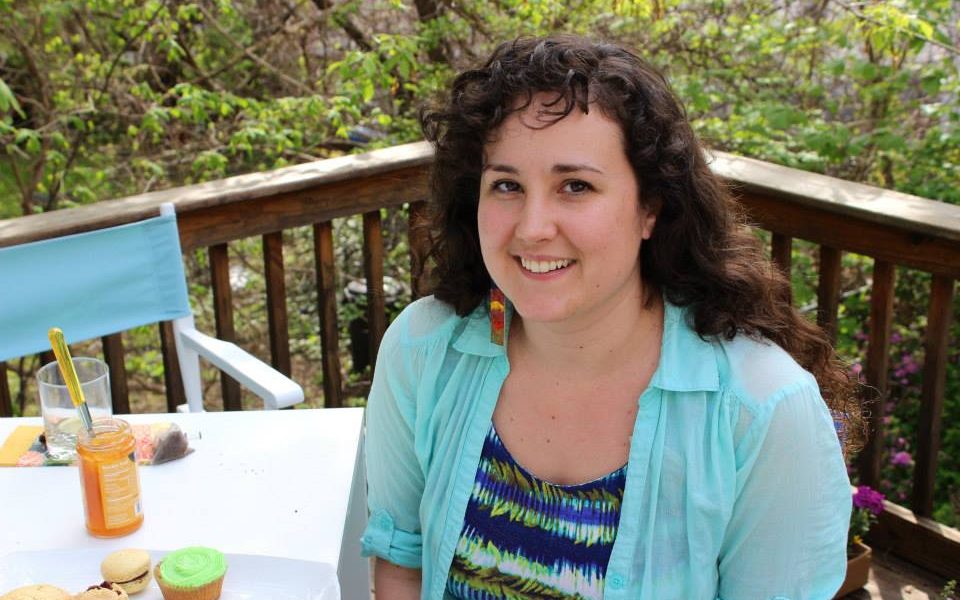
Life and Work with Tonya WhiteToday we’d like to introduce you to Tonya White.
Tonya, let’s start with your story. We’d love to hear how you got started and how the journey has been so far.
In the field of Expressive Arts Therapy, I would say, my start was in my choice to go to college to study art. My education went through an evolution of following a path to become a teacher, and then shifting more toward a track of emotional expression and growth through a variety of creative arts. After obtaining my BFA in Studio Art with a minor in Dance, I learned that Art Therapy existed! And shortly thereafter learned that Intermodal Expressive Arts Therapy existed. It was like happening upon something out in the world that I had previously thought I was just trying to come up with myself.
My Expressive Arts Therapy training brought me through a deep experience of personal growth through the arts as well as development of clinical knowledge and skills. One internship in particular, started me on the path of working with persons on the autism spectrum. Spotlight was a social skills program using the SDARI method, which is the use of improvisational theater games to teach children and adolescents social skills, self awareness, emotional regulation, and more. I continued on this expertise in autism when I graduated and worked for the Asperger/Autism Network (AANE) of Watertown. My understanding and experience in supporting adults on the autism spectrum expanded exponentially working with this organization.
From there, I worked in the Counseling and Wellness Center at Massachusetts College of Art and Design where I was supported in creating the Neurodiversity Committee, which included many initiatives for faculty, staff, and student training and support. I entered the position with an expertise in autism, which turned into an expanded view of neurodiversity. Neurodiversity is the concept that humans have a variety of neurological differences. The Neurodiversity Movement, which is now occurring not only at Mass Art — but across the world, is an initiative to shift the paradigm belief that there is one “normal” brain and all others are flawed. My colleagues and I at Mass Art continued this effort by presenting about our work at the NASPA national conference on mental health in higher education.
January of 2018, I moved from the Boston area to start a private practice in counseling in the Pioneer Valley area. Over the course of my professional work outlined above, I had continued to use the creative arts as a personal avenue for growth and healing. I also began hosting a workshop called Heart Fire, which is a journey through various types of creative arts aiming to connect with the “fire in your heart” — which means that we give space for you to listen to yourself and create from a place of curiosity. Participants have often left this workshop feeling like they created artwork like nothing they ever had before, including those who felt very resistant to the making process. Participants would also share that they felt like they received exactly what they needed in the process, which makes sense because the intention for the workshop is to invite them to listen to their own inner guidance.
I now find myself about 7 months into my private practice and I am now on an ongoing path of integrating these many practices and values into a healing space. I offer my clients a mindfulness-based therapy modality where we often are working to build self-compassion in the process using talk therapy, art, movement, writing, and more. I sit with clients of various identities and my work in the Neurodiversity field goes hand in hand with a theme of self-compassion. Whether clients identify with autism, ADHD, other neurodivergence or not — I see all kinds of minds as having value in our world.
I meet with clients in person in my Amherst office and I still have a lot of ties with the Boston area, with some clients working via Telehealth (Online Video Therapy). I travel to Boston to DJ expressive dance journeys, offer Expressive Art Therapy workshops and training in Neurodiversity.
We’re always bombarded by how great it is to pursue your passion, etc – but we’ve spoken with enough people to know that it’s not always easy. Overall, would you say things have been easy for you?
Coming from a small town in Northern Vermont, I have often felt like being behind and always trying to catch up. There are very few people in even my extended family who have pursued a graduate degree and I was the first generation in my immediate family to go to college at all. This is a continuing process, but especially over the course of completing my masters and obtaining my counseling license, I was able to not only obtain more information but to recognize my own inner wisdom — something that does not necessarily require credentials and externally impressive experiences.
I have learned that as a leader, I have a tendency to create spaces that support others in their own growth and strength-building. This is a quality I associate both with a natural nurturing maternal instinct as well as a quality that women are socialized to take on in our society. Part of my challenge has been to both honor that quality as well as not let in distract me from recognizing my own value. How do I create space for others and simultaneously honor and celebrate myself? This is an ongoing question I answer every day.
Sometimes I feel pressure to take on characteristics that are more aligned with patriarchal values and capitalist ventures. It’s a continuing dance with these dynamics to find “success” in a system, while not playing exactly by its rules.
If I were to try to turn this experience into advice for other women: I encourage you to be creative when you are reflecting on your strengths and value in this world. You may find that at times you have value to offer to this world that is not typically outwardly celebrated — which may be all the more reason the world needs you! If you are an introvert in a society that celebrates extroversion, then find your own value in your introverted nature so you can not only offer that part of yourself, but you can teach others to understand why it is valuable — possibly just by modeling your own sense of self-worth.
In a patriarchal society, women and all other than cis males seem to have two paths to “success” to choose from. One is to learn the rules and compete on the patriarchal path, and the other is to venture through the newer and less defined path where you create new rules and eventually a new system. Spoiler Alert: I think it’s a bit of both, but there is still a whole lot of nuance to be discovered in this journey!
So, as you know, we’re impressed with Tonya White, Expressive Arts Therapist – tell our readers more, for example, what you’re most proud of as a company and what sets you apart from others.
My new chapter of work is just beginning, so I envision a lot of expansion. At the moment, I approach my work as a practice of compassion and a support for each person toward a greater evolution of their true selves. I approach my counseling work from a perspective that with safety, witnessing, creativity, and a little humor — we each have the wisdom within us to show up more fully to life.
With that big picture in mind, actual sessions vary in terms of process. Clients are often traversing through muddy waters of thoughts that are judgmental of themselves or holding them back from something. We may engage in a conversation of challenging the immediate reality of these thoughts at the moment (technically called cognitive therapy) and we may also find ways to drop in to deeper values and beliefs so the client can feel more space to decide how they *want* to think about and approach aspects of their experience.
For some clients, talking is the method that speaks to their process, no pun intended. 😉 For others, we use a combination of drawing images to represent their experience, checking in with sensations of emotions experienced in the body, writing to explore more clarity on an issue, and other creative languages. Many clients find that these other creative art languages give them a new perspective on an issue that they may be quite stuck on when they only confront it using spoken conversation.
Do you think there are structural or other barriers impeding the emergence of more female leaders?
From the start, my industry was devalued based on it being a typically female industry. Social work and counseling started with women who were living in a society where their husbands were expected to be the breadwinners of the family, and so this occupation was not considered a high money-making field – I believe the first work in the area was volunteer work. So in the context of our society, workers in this field are grossly underpaid compared to the level of education required and often do not hold high leadership stature when participating in the context of medical and other larger systems.
Within the industry, while predominantly female, I still find that many males in the field are more encouraged to pursue doctoral level degrees and positions of leadership and management.
Pricing:
- Many clients use their insurance to pay for sessions, in this case, they may have a copay of $0-40. (Usually $15-20). Sometimes, there is a deductible or an option for reimbursement.
- For those paying out of pocket for sessions, average session cost is $100 for 50 minutes.
Contact Info:
- Address: 664 Main Street, #59B, Amherst, MA 01002
- Website: tonyawhitetherapy.com
- Phone: 617-600-8952
- Email: tonyawhite.lmhc@gmail.com
- Instagram: https://www.instagram.com/tonyawhitetherapy/
- Facebook: https://www.facebook.com/tonyawhitelmhc/

Getting in touch: BostonVoyager is built on recommendations from the community; it’s how we uncover hidden gems, so if you know someone who deserves recognition please let us know here.