




Today we’d like to introduce you to Sorrel Hatch.
Sorrel, please share your story with us. How did you get to where you are today?
Upinngil is a farm, but more than that it’s a place that celebrates the good hard work demanded of love, family, and the land. People come from all over the Pioneer Valley and the State of Massachusetts, bringing family and friends with them, to partake in the year-round experience that is Upinngil.
We believe that connecting people directly with their food is critical to the future of sustainable agriculture, and at the end of the day, it is immensely satisfying for us to have this connection with the people we feed. For the uninitiated, the name Upinngil is a bit strange, like a place in a far-off land. The origin of the name is tied up in what makes the place one-of-a-kind.
When I was four years old my younger brother and I would make daily trips from Whately, MA up to Gill with my father, Clifford Hatch, in the early stages of reviving a dormant farmstead from my mother’s side of the family, Patricia Crosby. We loved our days of adventure, exploring the land and the shambling farmhouse that was to become our new home.
On the drive up, we would bounce up and down in the cab of the truck in anticipation, chanting, “We’re going up-in-Gill, we’re going up-in-Gill.” Thus a farm was born. Now my husband Isaac Bingham and I work full-time with my father to run the farm. A third generation is on the way. When I went off to Cornell University I didn’t anticipate returning to the farm.
But being away helped me realize that foundation that my father had built was worth preserving and expanding. Since my return in 2007, our business has shifted from attending farmer’s markets and selling produce wholesale to 100% direct retail in our farm store.
Essay by Sorrel Hatch:
The Human Equation!
There was a time in our country when every farmer milked cows. Maybe two, maybe ten, maybe even 25. If they owned even a scrap of land, why would they not keep such a generous, giving animal? One cow can take mere grass – the simplest of things to grow – and turn it into plentiful quantities of milk. And not just milk on which children thrive, but yogurt and kefir, and multitude of cheeses that can be stored indefinitely. And even more precious than milk, is the cream that can be made into butter, and ice cream, and sour cream. Such bounty, such riches, milked from the pure rays of the sun. Here is a commodity with universal appeal, a perfect food, a staple that every family will always need and crave. I have visited many old barns that remain standing in my small town of Gill. They are often unused – if they still stand at all. Generally the interior is uninhabited by animals, except mice. The old barn sits, accumulating broken lawn mowers and snow blowers and other rubbish of our modern age. But underneath it you can find the signs – where the stanchions hung, where the cows entered and exited, gutters in the floor where the manure was shoveled out, chests where a stream was once diverted to chill the cans of milk, hay lofts with ancient hay still moldering across the floor. Invariably I see the faded remnants that prove beyond a shadow of a doubt that yes – this farm kept cows, and this one, and this one. Just as certainly as they kept chickens and grew corn – they kept dairy cows.m
In America today one farmer can grow wheat for thousands, even hundreds of thousands of people. No longer is the farmer’s goal to feed his family and his neighbors, but to feed the world. Many regard it as a noble thing – and a miracle of the modern age and of modern agriculture. The equation of 1 man = thousands of tons of food is considered a grand achievement. What this equations fails to understand is a basic function of the resources that human kind has to work with on our planet. There are many men, and women, and children. And they all have two hands. They all need, must have, productive work to do. Without an honorable labor for our bodies – our minds disintegrate into depression, anger, hatred, cruelty, and madness. It is everywhere around us, every day. There is no shortage of labor. No shortage of man hours. There is nothing to be gained as a society by reducing the need for this resource. But as there are more of us, what there is less of is space, earth. And arable farm land? Even less. At the heart of it we need a different equation to solve. The human equation. How many people can we feed … on 1 square inch of soil? For this task we will need many hands. And that is the beauty of it.
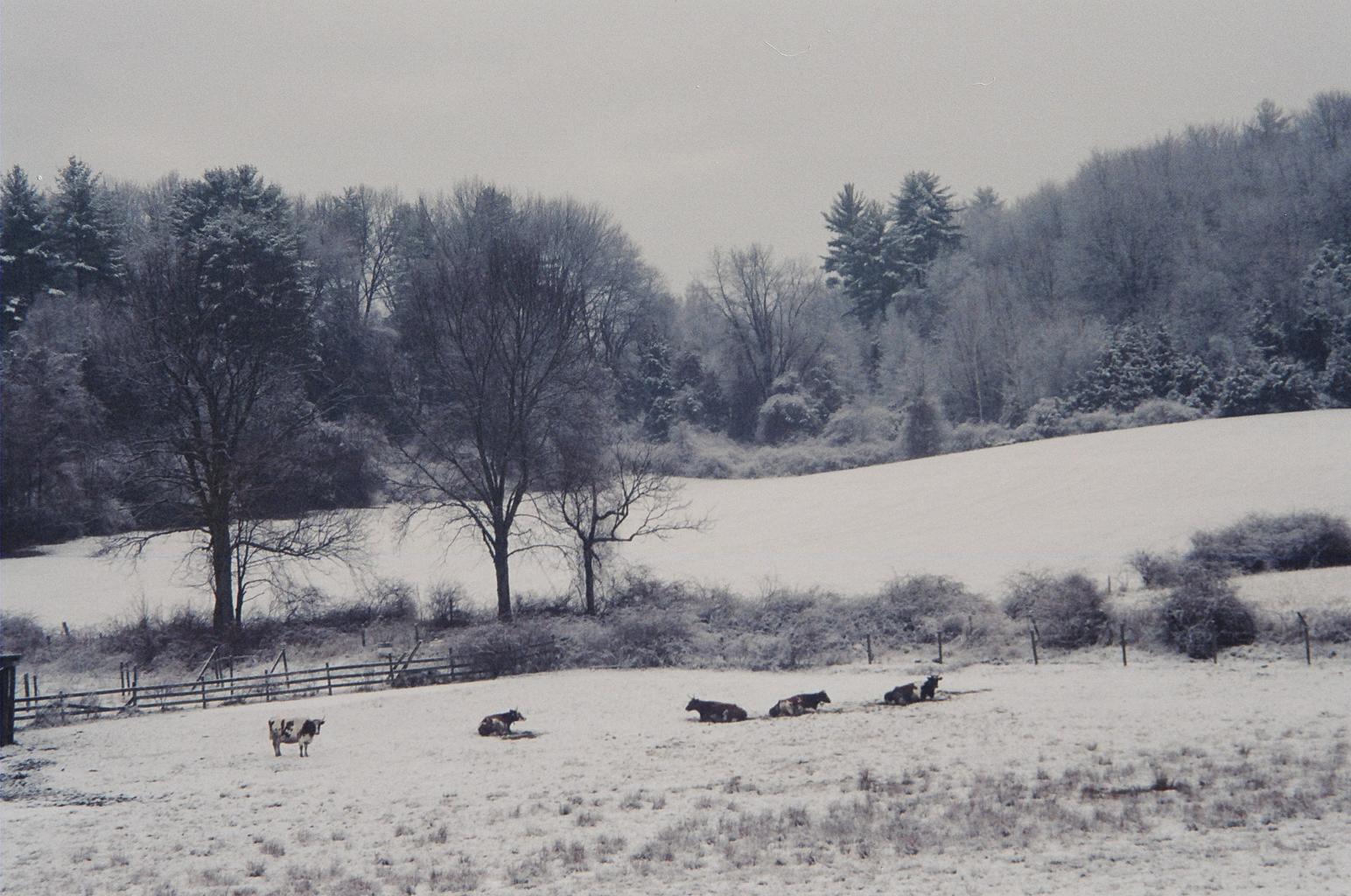
My family’s farm is about 100 acres. There is woodland and grassland. There is a gushing brook hidden in a secluded valley. Along it’s banks grow the sugar maples that make the sweetest sap for sugaring. There is a rocky hillside, where my father has planted a vineyard and peaches and where he keeps his bees. There is one quarter acre of silty loam, ancient flood plain of the Connecticut River – smooth as silk, without a single rock, the most fertile soil in the world. Here, I plant my garden divided into tiny plots 3×10, each different. With another set of hands I’m sure I could produce twice as much, and another – three times, four times. I do not yet know the limit of it’s potential. I keep chickens in the backyard amongst the raspberries. On the pastures graze cattle. In the summer all hands gather to make hay. I am pregnant, and I am glad, because for me it is not just another mouth to feed, but another set of hands to help me do all this work. The land has so much of itself to give, and my world is so far from being full.
This may sound like Utopia, and there is no denying that I do dream sometimes. Life’s rude shocks shatter the charm. When a field of grain turns toxic from too much rain. When the pumpkins rot on the vine from too little sun. When a cow is unable to rise after giving birth. Sometimes we struggle, sometimes we fail to find joy in our work. But the land sustains us, and holds us through the bad times. With it alive beneath us our children can, and will, forever endure. And by this measure, every square inch is more precious than any monetary wealth can ever match.
The fate of America and of the world, rests on the careful, nurturing, stewardship of every square inch of our soil. When our leaders talk about jobs, about the economy, about education, about defense, they are merely stirring the surface of our existence. At the depths of the world’s problems lies the human equation, the equation of the square inch. The day that our leaders are men and women that grasp this truth, the day that we set our hearts, and minds, and hands to solving this equation, will be the day that humanity pivots on its axis of despair and desperation and heads in a new direction. A direction of hope, of humanity, of gratitude for all of God’s gifts. A day of gratitude for the family cow.
Overall, has it been relatively smooth? If not, what were some of the struggles along the way?
Our goal as a farm is to make slow and steady improvements year after year, along with a growing family of employees with increasing benefits and stability. Infrastructure has been our hardest struggle. Every year we grow and make a huge diversity of food products on a small scale (fruit, vegetables, milk, cheese, grains, baked goods, maple syrup, meat, eggs).
Our infrastructure is constantly strained to try to do all these tasks efficiently in shared spaces. Each year we tackle another major improvement project. In 2016 we applied for and received a Farm Viability Enhancement Grant from the Massachusetts Department of Agriculture which helped us with a major renovation and moving of our milk bottling facility and cheese making facility.
Our next major renovation project will allow us to move our bakery out of the residential licensed kitchen into a commercial kitchen space.
Please tell us about Upinngil Farm.
Families from all over the state, including from Boston, travel out route 2, over the French King Bridge, crossing the Connecticut River and find our Farm Store just a five-minute drive from route 2 through the rolling hills of Gill. We are best known for our fresh raw milk, our pick-your-own strawberries, and our grains (and the daily fresh bread we bake from it).
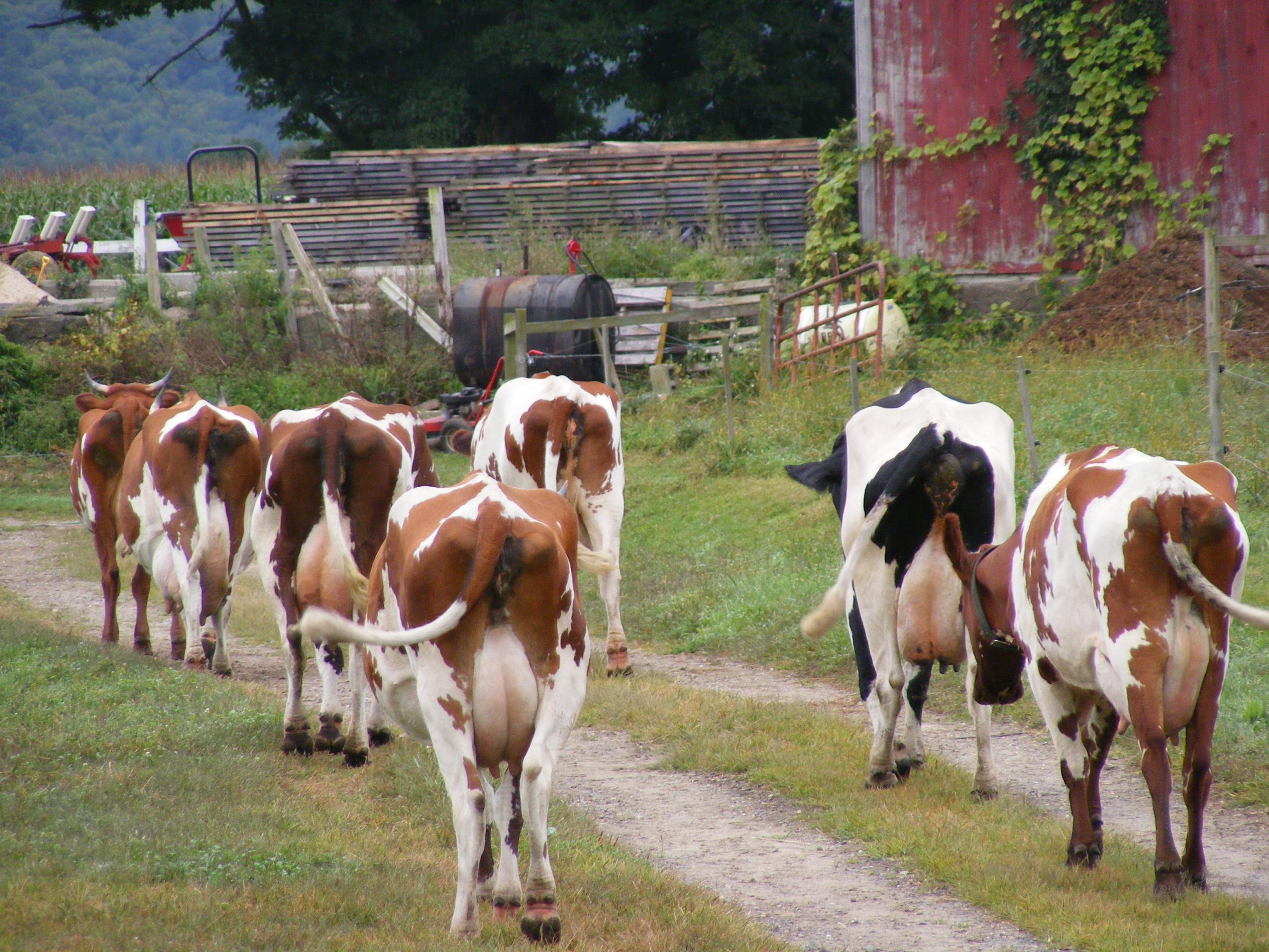
Our milk is bottled every day immediately after milking. Our cows are Ayrshires. This breed produces a milk that is especially good for cheesemaking as it has a high protein content and small fat molecules. It is not pasteurized and it is not homogenized. Many claims that it’s the best milk they’ve ever tasted. Many people that have had trouble drinking conventional store bought milk say our milk is different and have returned to drinking milk after years of avoiding it.
Our milk fridge is always stocked with milk bottled in both glass and plastic bottles. We sell an average of 50 gallons a day, year round. When the cows are producing extra we make cheese. Some of our signature cheeses include the Upinngillar, the Upinnzellar, the Ayrshire, Blue, and Gouda. We are open every single day of the year including Christmas, New Years, and Thanksgiving. We figure if the cows have to be milked every day we might as well open the doors. Our store is primarily self-serve honor-system, though someone is usually around to assist customers.
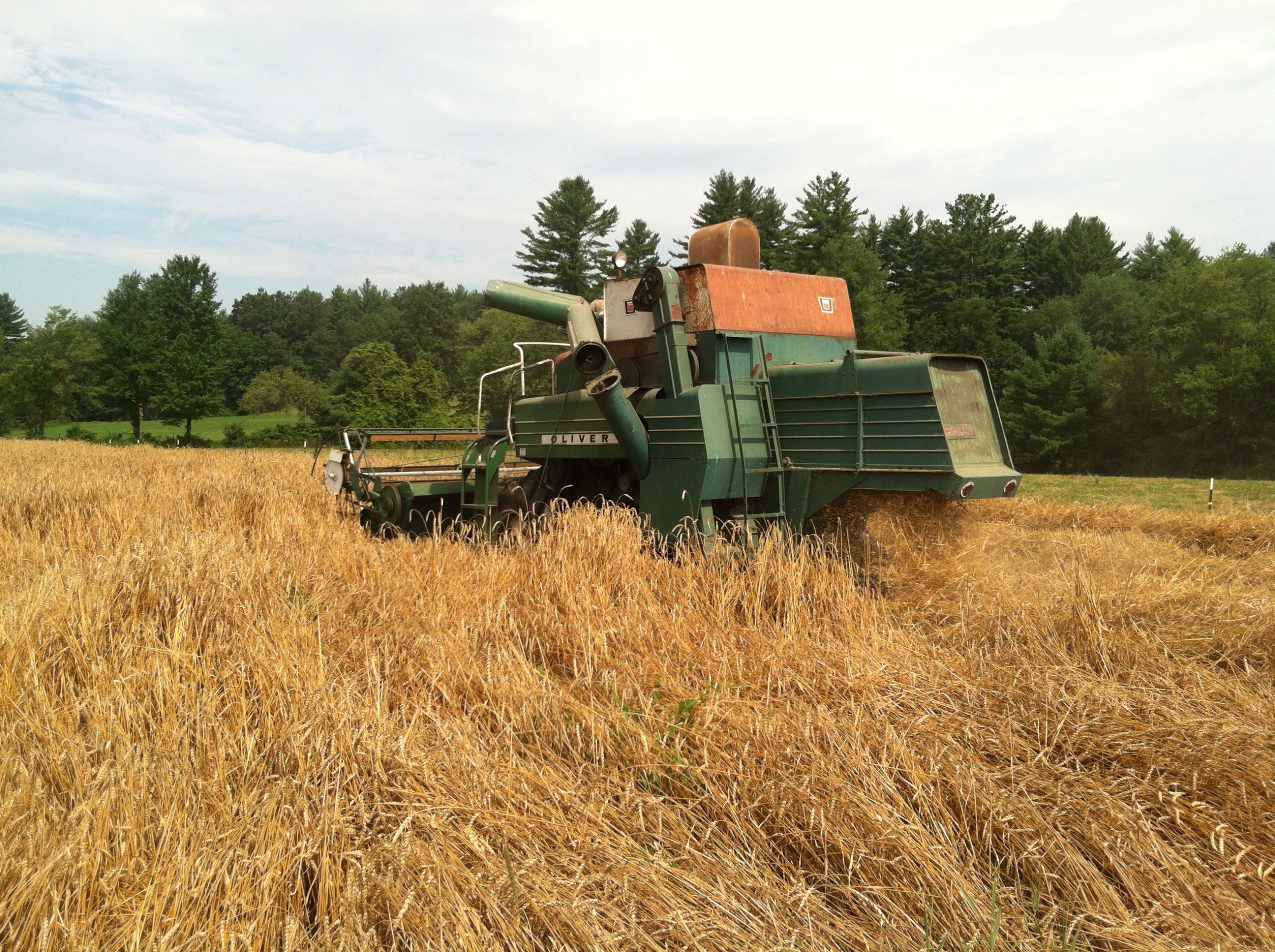
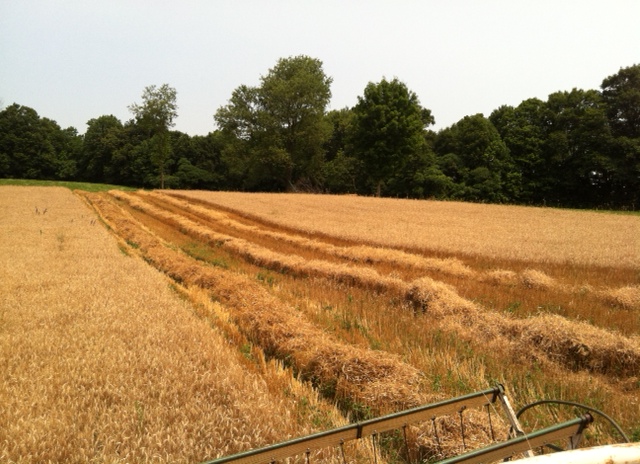
We bake fresh bread, cookies, and scones daily. All the baked goods feature our whole grain flour from wheat we grew here in Gill. Growing wheat in the New England climate is a challenge, but we believe is an important draw for our business. Most store-bought bread is pumped full of preservatives and extra gluten, which has contributed to many peoples problems with wheat. Again, customers find that eating our bread is a very different experience from conventional store-bought.
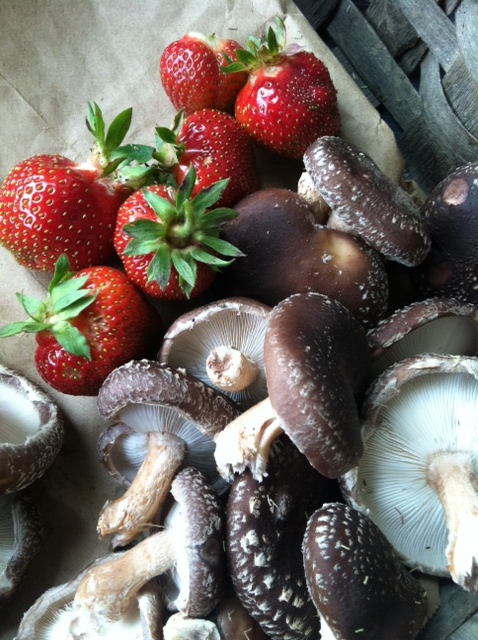
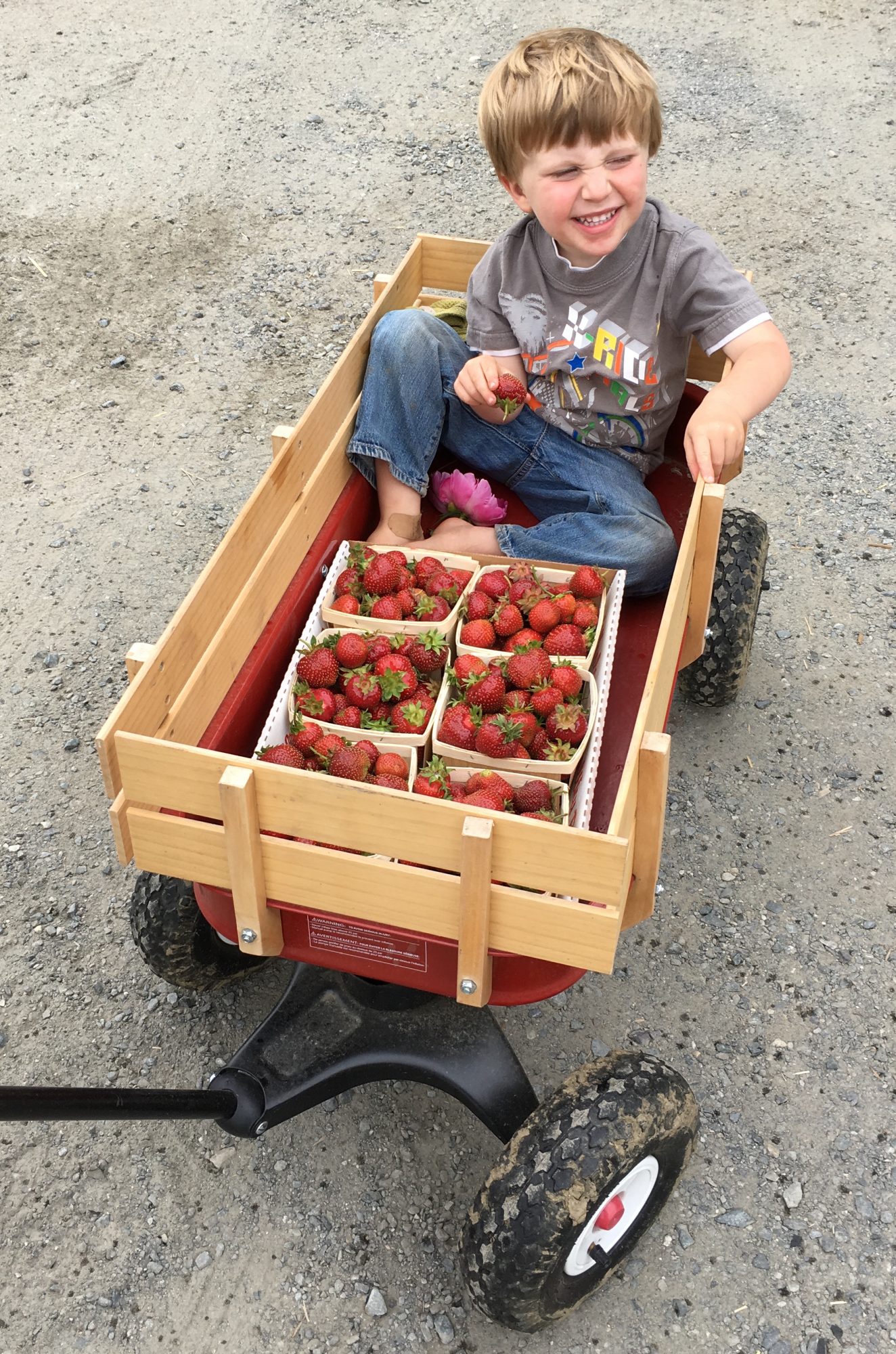
Strawberries are the crop that Upinngil has been known for the longest. As kids we worked in the strawberry fields with our father, riding the transplanter, picking blossoms (you do this the first year to get the plants established), hoeing, weeding, and finally picking the fruit and peddling it around the county. Now that we are established, we sell about half the crop pick-your-own, and the other half on our farm stand, rarely needing to deliver to other markets.
We have found success by really focusing all our energies on this one marketing outlet. Upinngil has developed into a very welcoming and authentic place for farm visitors, as well as being a pleasant hangout place and general grocery stop for the local community. We offer a full range of convenience grocery items and snacks in addition to our own products.
Part of building Upinngil into a special place has been an emphasis on pick-your-own crops Strawberries (June), Flowers & Herbs (June-September), Sugar snap peas (June-July), Raspberries (Sept-Oct), and even pick-your-own Eggs! We have a migrating chicken coop, it looks like a gypsy wagon, that travels around the farm.
And we’ve developed a system so that a family can arrive at the store, and if they want their eggs as fresh as possible, they can grab an egg basket, walk out the farm road, and reach under a warm hen. I’ve been raising chickens since I was five, and though I can’t boast much of a profit margin yet (poultry is generally unprofitable in our economy) developing the flock is a personal passion of mine.
At the Farm Store we accept all forms of payment, including SNAP EBT, in addition to cash, check, and credit cards. Our tagline is “Food You Need from the Land You Love”. It’s important to us that this food also be affordable for everyone. We work hard to balance our predominantly organic growing practices with practical considerations to keep our costs under control and our prices reasonable.
If you had to go back in time and start over, would you have done anything differently?
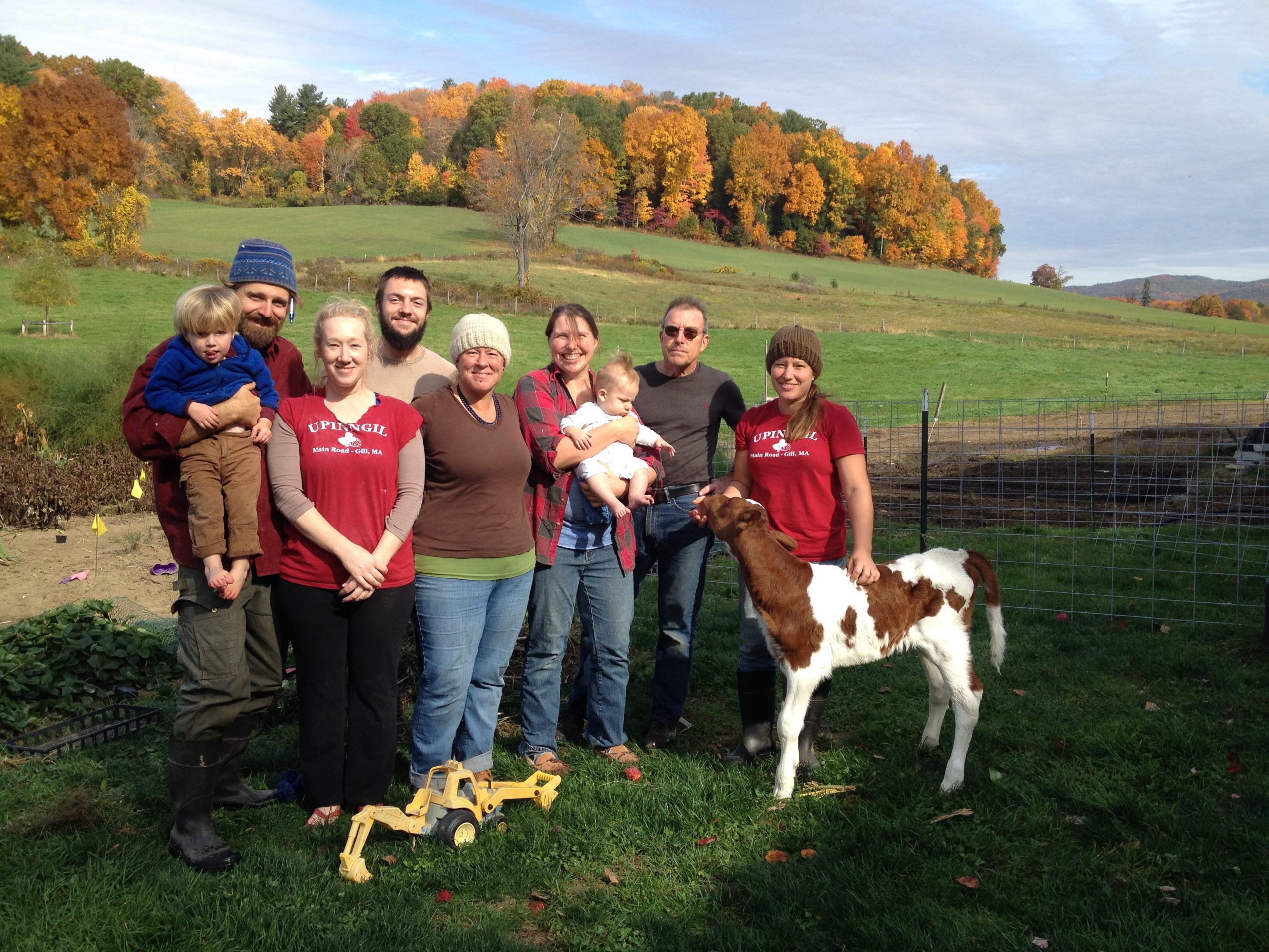
I define success as slow and steady, sustainable growth. It seems like every year we can fit another project into the jig-saw puzzle that is Upinngil. Every year we need lots more people and provide employment for roughly one more person – without expanding our acreage. We currently have 7 year-round employees including myself and my husband, with increasing benefits and stability.
It is our belief that anything worth building requires generations of effort. We look forward to generations of children from all over the State bouncing up and down in the back seat of their parent’s car, chanting “we’re going Upinngil, we’re going Upinngil!”
Pricing:
- A gallon of milk (plastic bottle) $7.50
- A half gallon of milk (glass bottle) $4.00
Contact Info:
- Address: 411 Main Road Gill, MA 01354
- Website: www.upinngil.com
- Phone: 413 – 863 – 4431
- Email: sorrel@upinngil.com
Getting in touch: BostonVoyager is built on recommendations from the community; it’s how we uncover hidden gems, so if you know someone who deserves recognition please let us know here.