






Today we’d like to introduce you to Salman Habib.
So, before we jump into specific questions about the business, why don’t you give us some details about you and your story.
Years ago, among chaotic roads and raggedy streets, I would play cricket with my fellow classmates right after we would get done with school. The scene, precisely, would be as follow: Street vendors waiting for customers, kids running around barefoot, and rickshaws that sound like jackhammers adding to the droning hum of traffic.
As you allow your eyes to adjust, focus, and re-focus, you see a bunch of kids forming groups of eleven players each, across the dusty playing field. You wonder about the location. It’s Pakistan and the year is 2005. Growing up in Pakistan, I would take every opportunity to get together with my friends in those dusty fields to play cricket.
Substituting formal creases — lines that define the area within which the batsmen and bowlers operate in cricket — with stones and our very own shoes. Fast forward to 2009, my family moved to the U.S., and I enrolled in high school. My impromptu cricket games were replaced with learning how to operate Xbox and PS4.
Meeting friends at 3 pm by the old neighborhood compound was replaced with spending hours adding friends and stalking others on Facebook. Throughout high school and college, I noticed this disconnection between online and offline hangouts. My face-to-face interactions became completely replaced by virtual hangouts, just as they did for everyone around me.
We’re now in a situation where there’s a growing body of research suggesting that high amounts of social media usage can be damaging to our mental health. In the early stages of development, social media platforms were focused on connecting users in a meaningful manner. However, at some point in time, the incentives of companies creating these platforms split from that of users.
The standard revenue model became selling user data and making apps more addictive, thus making advertisements more persuasive. At its core, social media needs to be focused on emphasizing in-person interactions between people and their friends or family. Face-to-face interactions are good precisely because they allow people to figure out how to use their environment in creative ways on their own.
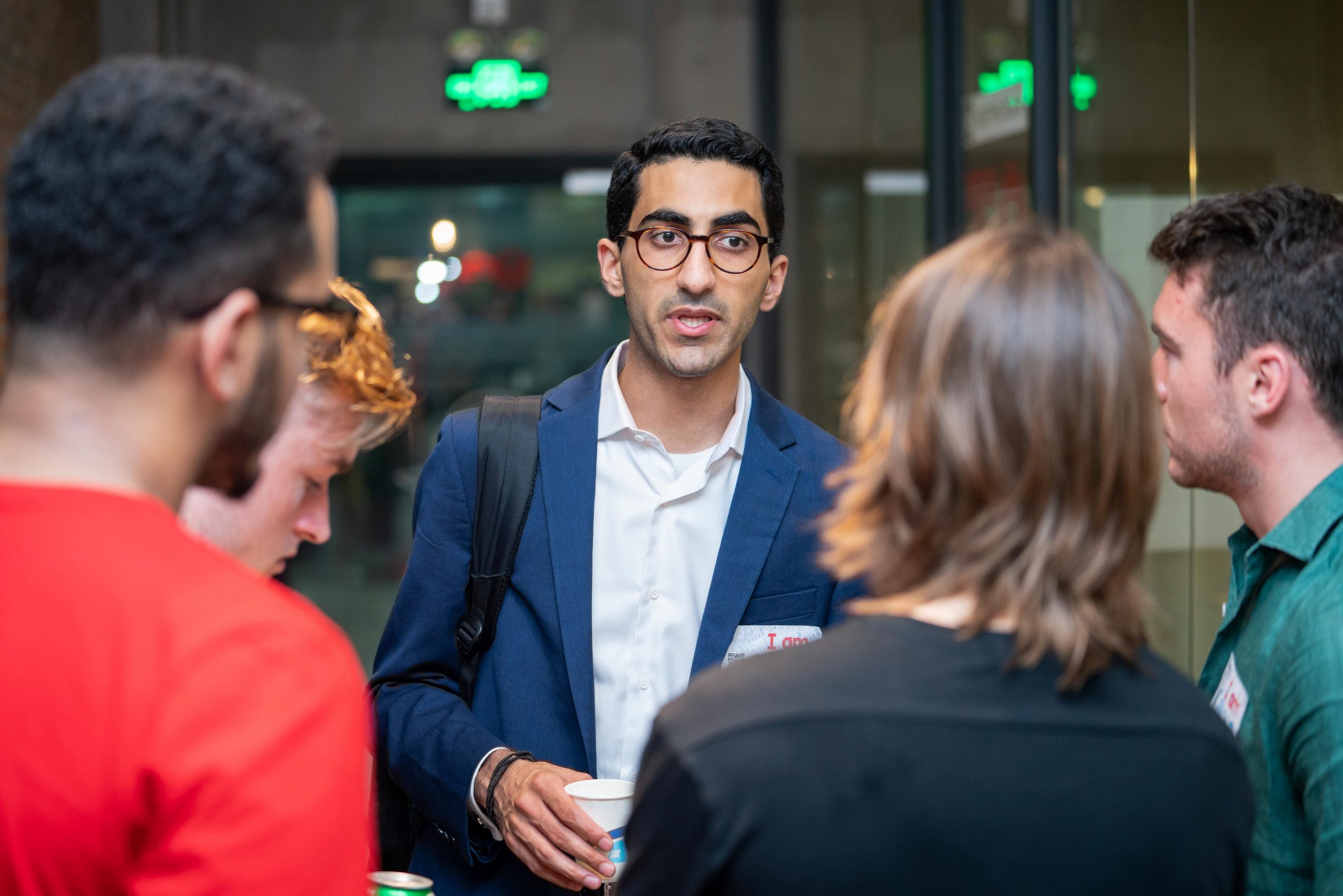
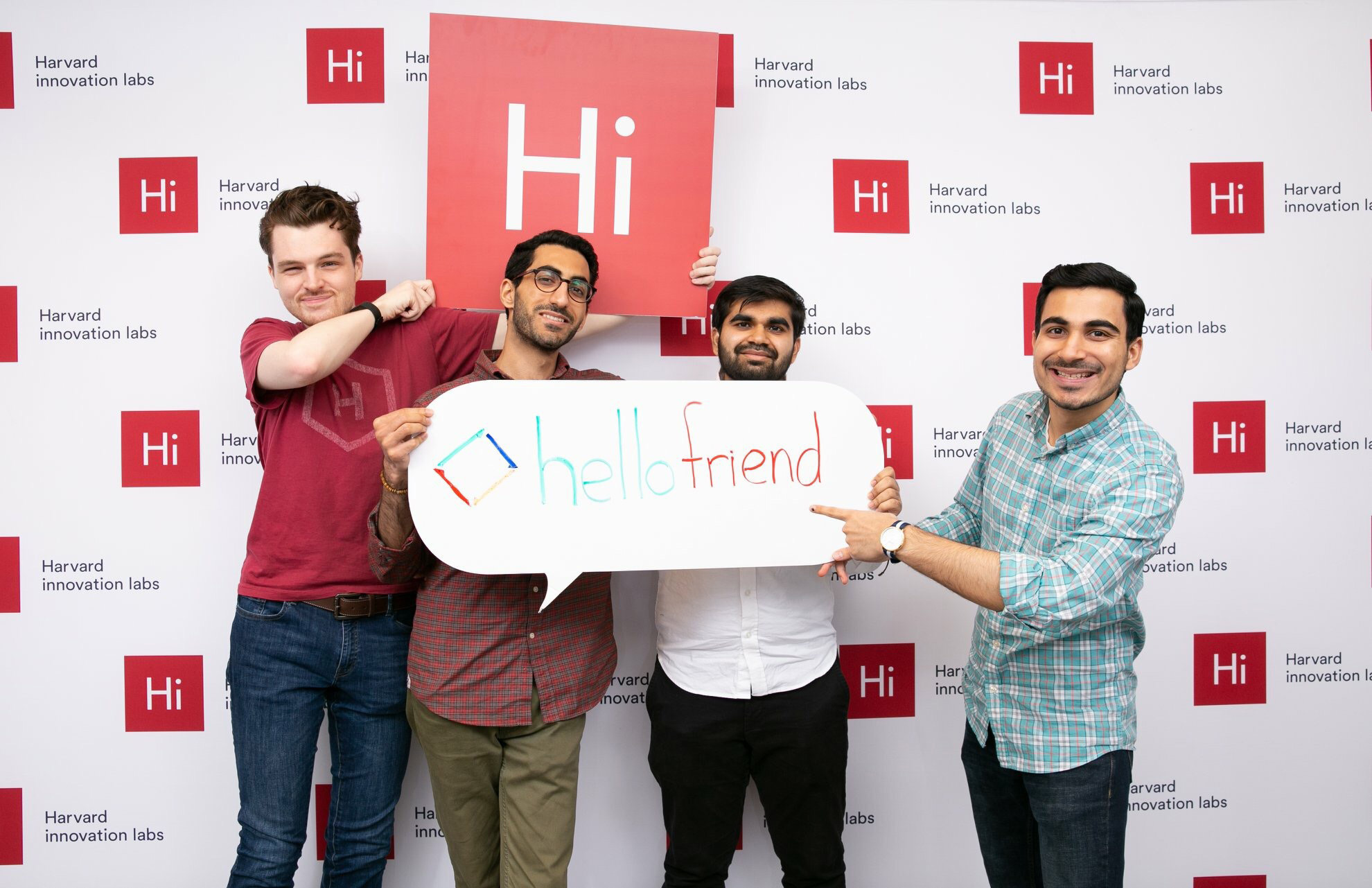
In my third year at Harvard University, I co-founded Hellofriend alongside my brother. The goal of Hellofriend is simple: We want to tackle the problem of social isolation by creating a platform that is focused on connecting people in real life around the globe while protecting their personal data.
I decided to take time off from Harvard to work full-time on Hellofriend. We are currently based at the Harvard Innovation Labs and are a team of 8 people. We recently completed our first round of equity fundraise and will be launching the app for the public in the coming months.
We’re always bombarded by how great it is to pursue your passion, etc. – but we’ve spoken with enough people to know that it’s not always easy. Overall, would you say things have been easy for you?
Being an immigrant, the biggest challenge, of course, was adapting to a new culture and learning a new language. Aside from also maintaining financial stability.
With cultural adoption comes this element of understanding cultural nuances within a cultural context, and their possible meanings as viewed from the different cultural lens. Fitting in at first in the social scene and then trying to re-shape it, it has been a bumpy ride but, nonetheless, exciting and rewarding.
We’d love to hear more about your business.
At Hellofriend, we want to focus more on real-world interactions. Users can connect with friends and acquaintances old and new, just like on any other social site. Once connected, users can then find, organize, and monetize real-life activities and make them happen in the real world. These activities can include a house party or small get-together, touring a new city with a local, meeting new people over coffee, or organizing a weekend trip with a group of friends.
Users can transact through Hellofriend’s very own cryptocurrency — called Connect — and manage all of their earnings and spendings in one place. This allows you to share experiences around the world without worrying about exchanging different currencies.
Hellofriend’s crypto wallet allows users to convert the dollar into CTT or CTT into dollar instantly (and other currencies). By leveraging technologies like blockchain, distributed systems, homomorphic encryption, and federated machine learning, we ensure that user data is never exploited by anyone.
Our users control their personal data and not Hellofriend. This is what sets us apart from all other social networking platforms and also that we are focused on real-world interactions.
Contact Info:
- Website: http://www.joinhellofriend.com
- Email: hello@joinhellofriend.com
- Instagram: instagram.com/joinhellofriend
- Facebook: facebook.com/joinhellofriend
- Twitter: twitter.com/joinhellofriend
- Other: Telegram: https://t.me/joinhellofriend


Getting in touch: BostonVoyager is built on recommendations from the community; it’s how we uncover hidden gems, so if you know someone who deserves recognition please let us know here.