


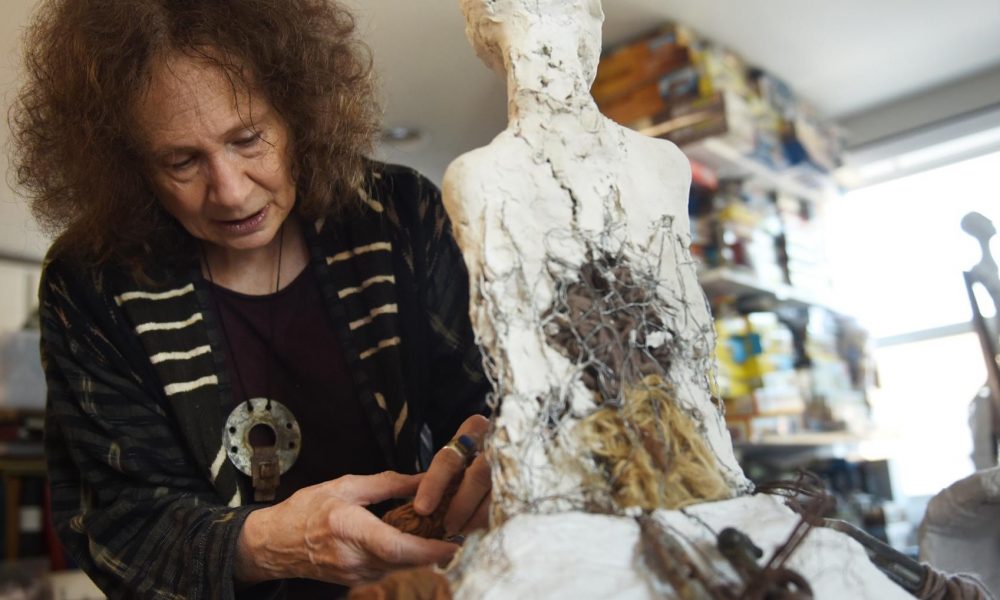
Today we’d like to introduce you to Ruth Rosner.
Ruth, please share your story with us. How did you get to where you are today?
The trajectory of my work in sculpture is best expressed by my favorite lines from Edward Albee’s The Zoo Story: “Sometimes it’s necessary to go a long distance out of the way in order to come back a short distance correctly.” I had never imagined I might have a career as an artist, but many paths in my life eventually led to it.
As a child, I was fortunate to have a father who brought me a continuous supply of blank-backed advertisement sheets from work. And I drew continuously in my notebooks during classes and lectures in high school and college. Miraculously, when I was a college freshman, Michelangelo’s Pieta came to the NY World’s fair and I rode round and round it on a moving platform hypnotized—until enticed away by the music and art at the African exhibit, swept up by the dancing and by the drumming of the remarkable artist, Olatunji—hence my passion for African art as well as Renaissance sculpture.
But I had planned on a career as a teacher of English literature. I majored in English literature at Bryn Mawr College and received a Master’s degree in English literature from Boston University, where through a teaching fellowship, I taught literature and writing to freshmen. By chance, and then by request, I was assigned for several years to teach students at the School for the Arts and I was impressed and excited by the time and passion they put into their studies: Theater, Music and Visual Arts. From here I went on to write and illustrate picture books for children. But this wasn’t the end of the journey.
In 1993, I was stunned by the violent death of a young cousin working for the UN in Somalia. I had no words to express my grief. Instead, (being never without art supplies) I began to work fiercely in clay. As I did, a veil was lifted. I saw differently. The clay took shape immediately and passionately. Forms came spontaneously and quickly from some core I had never reached before. Whatever stuff I had in my studio: rocks, twine, wood, stones was consumed by a series of female figures, and mouths open as if to speak, cry, shout, sing to express what they felt, reveal what they had seen.
And I began to do on a regular basis, what I continue to do today: search for rusted, discarded, weathered objects or any other appealing piece of debris. All these look to me like relics. My eyes sweep the streets, the back of gas stations, construction sites, and trolley tracks. I find myself looking down at the curb to find new treasures to animate my work. Driven to push or pierce these found objects into clay and to mold clay around them, I came to realize that for me the power of the figures was activated much as it is in the tradition of the African nkisi nkonde power figures. As the object pierces the figure, the figure’s force or spirit is awakened. As found objects transform a figure, the objects themselves are transformed. What has decayed is now the agent of rebirth and is itself reborn. In 2016, I was fortunate to have Fitchburg State University’s Hammond Gallery sponsor my solo show, OUT OF RUBBLE: Women’s Voices & the Transformational Power of the Found Object.
These sculptures of totemic figures are born of rubble, and like the phoenix, they arise out of it. They stand as guardian figures giving voice and power to the voiceless. Alone or in chorus they chant, speak out, bear witness. They attest to what they have seen, give testimony to what they feel, to what they know. I am currently focused on my Refugee Women Series and on a series of photo collages based on images of my sculptures in settings real and imagined.
In 2005, my first installation, Phalanx of the Long-Necked Women, was accepted into the Cambridge Art Association’s National Prize Show by the juror, Joseph C. Campbell, Director of Mass MoCA. And my postcard for the show was brought to the attention of the Director, Michael Price, of MPG Contemporary in SoWa by his then intern, Shelly Russell Magno. Being included in several of MPG’s shows helped propel my work forward to where it is today. I’ve been fortunate to have work exhibited in galleries, colleges, and universities throughout New England; in New York at the Harlem School of the Arts (where my work received a prize); and in Vienna, Austria and Cuba through Projection by the Boston Biennial Project. I have co-curated shows (with artists Gail Bos and Gloretta Baynes, also the Chair of the African American Master Artist in Residency Program [AAMARP]) on such critical topics as WHAT ABOUT WAR, MIGRATIONS, and INSIDER/OUTSIDER NATION at the Resnikoff Gallery at Roxbury Community College co-sponsored by the artist collective VIOLENCE TRANSFORMED: Celebrating the Transformative Power of Art.
Great, so let’s dig a little deeper into the story – has it been an easy path overall and if not, what were the challenges you’ve had to overcome?
Transporting work is always a challenge.
Bringing in found objects through airport security since 911 is a major challenge. I used to be able to bring stones—from Loch Ness, for example—in my pockets. And when I brought in a spectacular piece of rusted metal from the railroad station in Tallinn, I transformed it into a doll with tights and fabric and packed it in a suitcase.
A beautiful small, dented chimney pipe that I found on a Paris sidewalk and still cherish was mailed from a Paris post office thanks to the great advice of an ex-patriot friend of my husband’s from Yonkers.
The eternal challenge is space—I still cannot believe that I was able to create as much work as I did in our Beacon Street apartment in Brookline, which my husband, daughter and I left due to unaffordable rents and lack of space. Advantage: We now have a basement.
An early challenge was finding sturdy materials that didn’t need firing so that I could embed objects into them as I worked. I also had to find materials that allowed me to work large.
Alright – so let’s talk business. Tell us about Ruth Rosner/Sculpture. Totemic Female Figures – what should we know?
I create Totemic Female Figures from (variously) clay, plaster, chicken wire, rusted metal, found wood and stones, wire, fiber, muslin dyed in rust or turmeric, other found objects. The sizes vary from 1 inch to 64 inches in height.
My work is appreciated for the intensity of the faces, the evocative quality of the figures, their power and passion, and the transformed and transforming nature of the found objects. I’m known for working intuitively (“thinking with my hands,” an expression coined by artist, William Kentridge) and for the endless variety and imaginative nature of the pieces.
Is there a characteristic or quality that you feel is essential to success?
My passion for my work. Concern for human rights.
Contact Info:
- Address: Watertown, MA 02472
- Website: www.Ruthrosner.com
- Phone: (617) 803-1272
- Email: Rosnerrr@aol.com
- Instagram: https://www.instagram.com/ruthrosnerart/
- Facebook: Facebook https://www.facebook.com/ruth.rosner
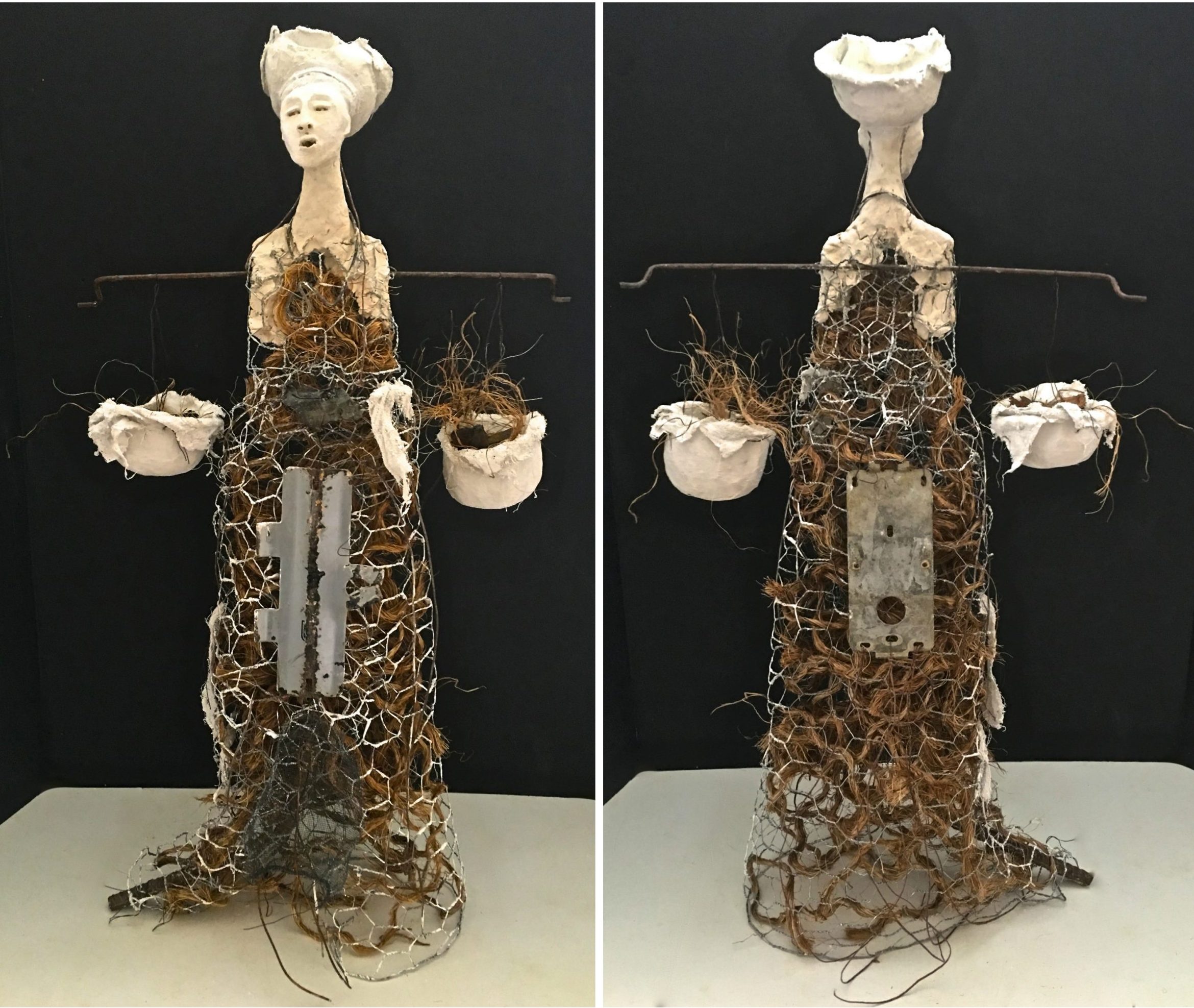
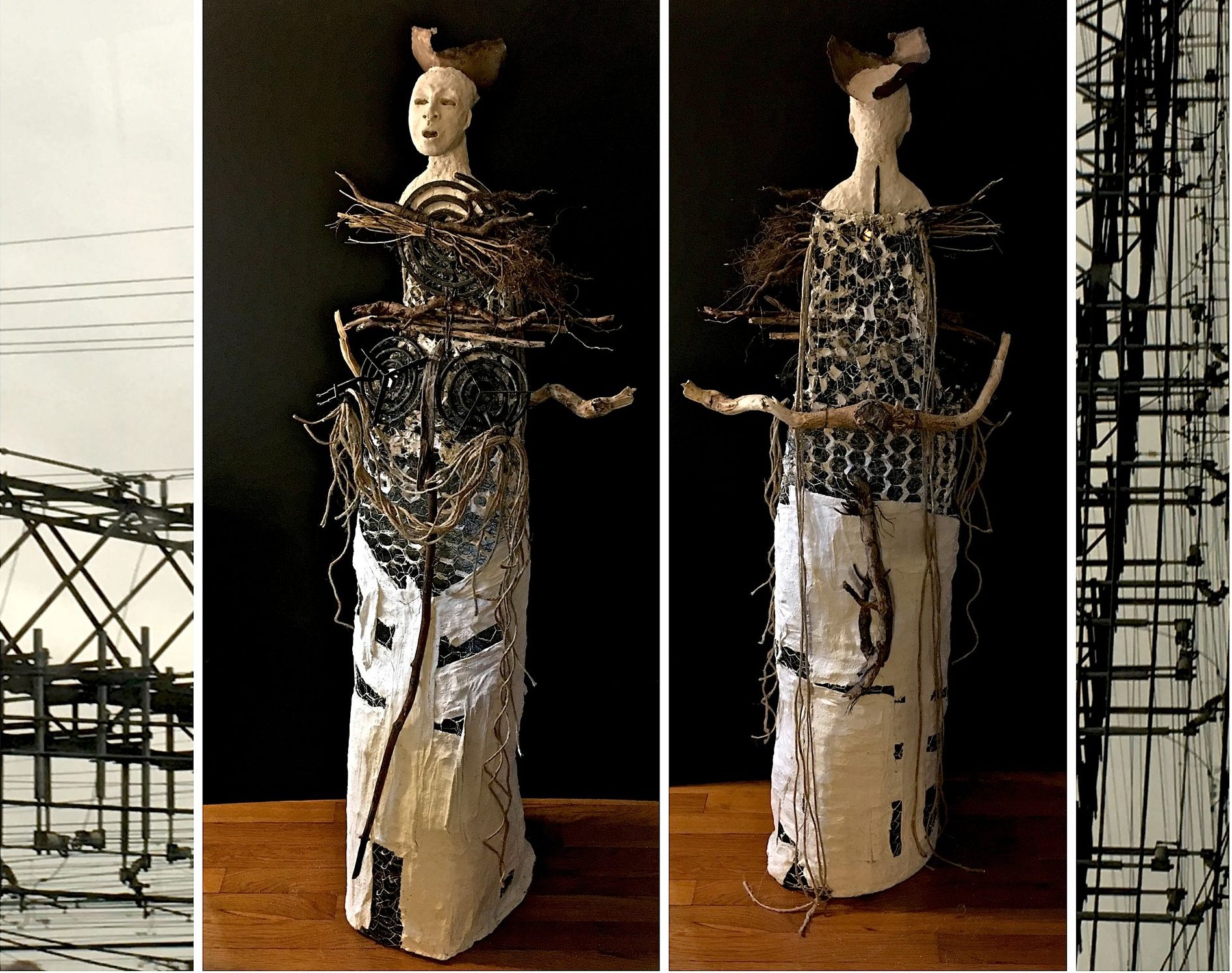
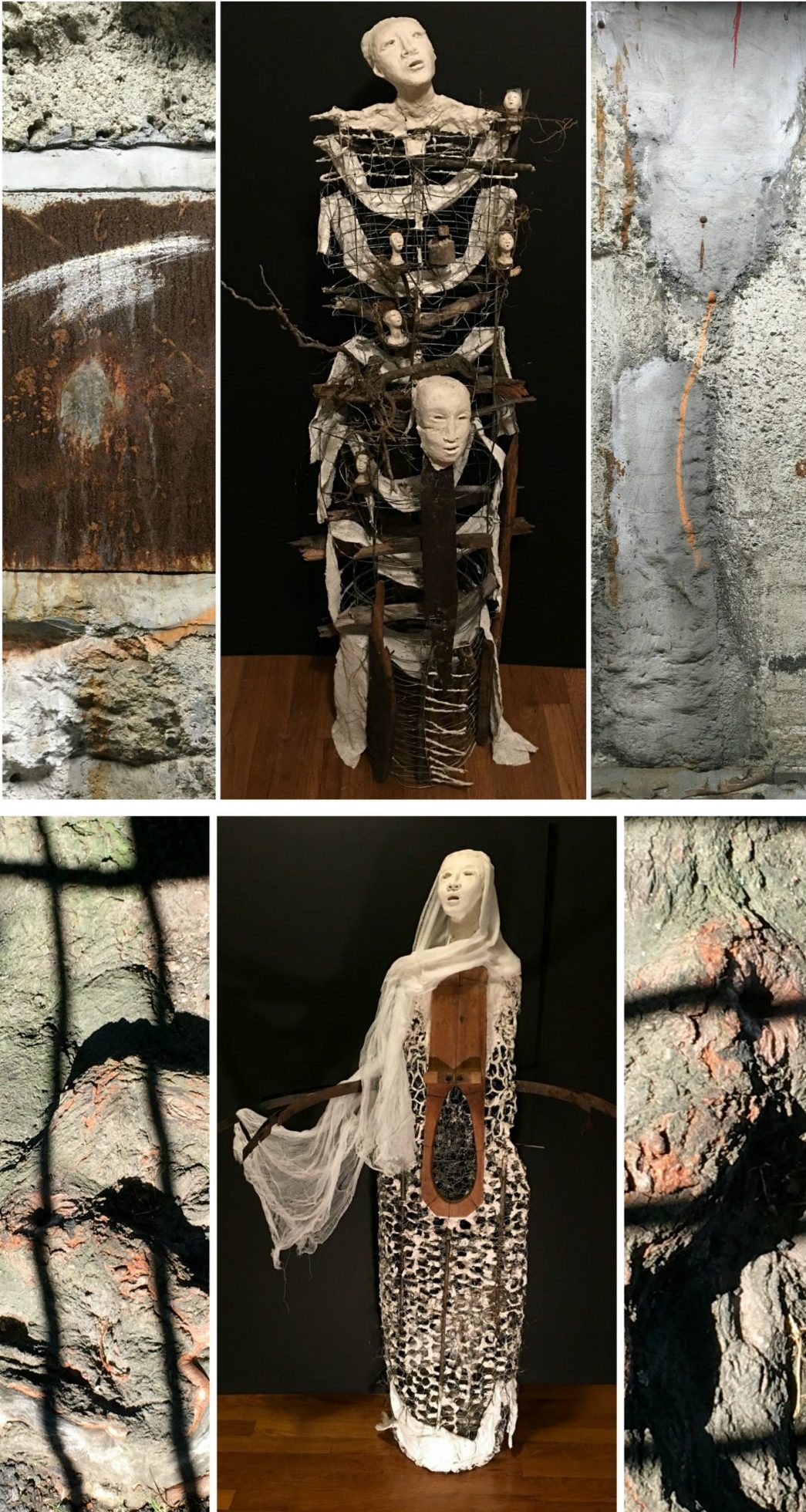
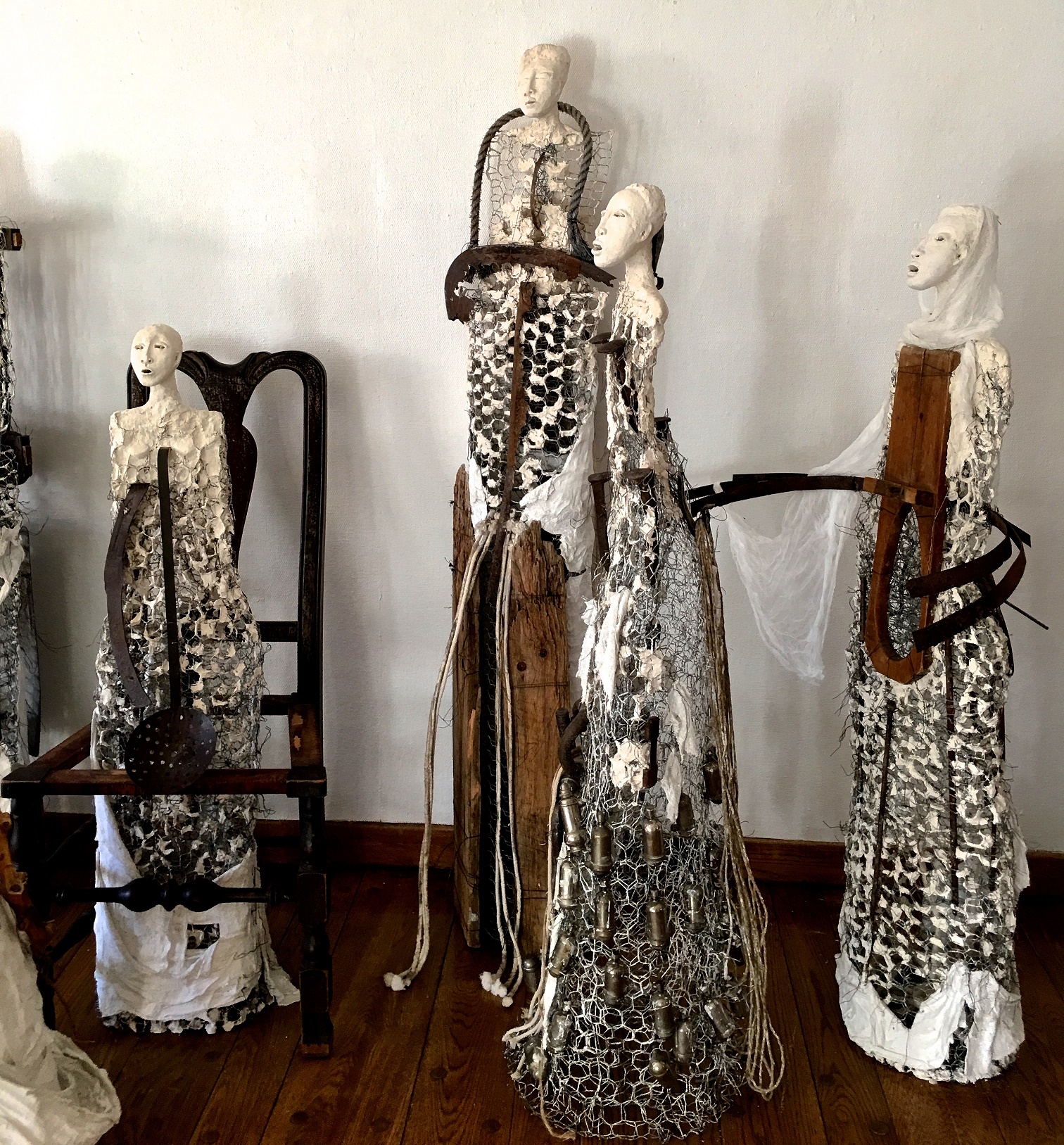
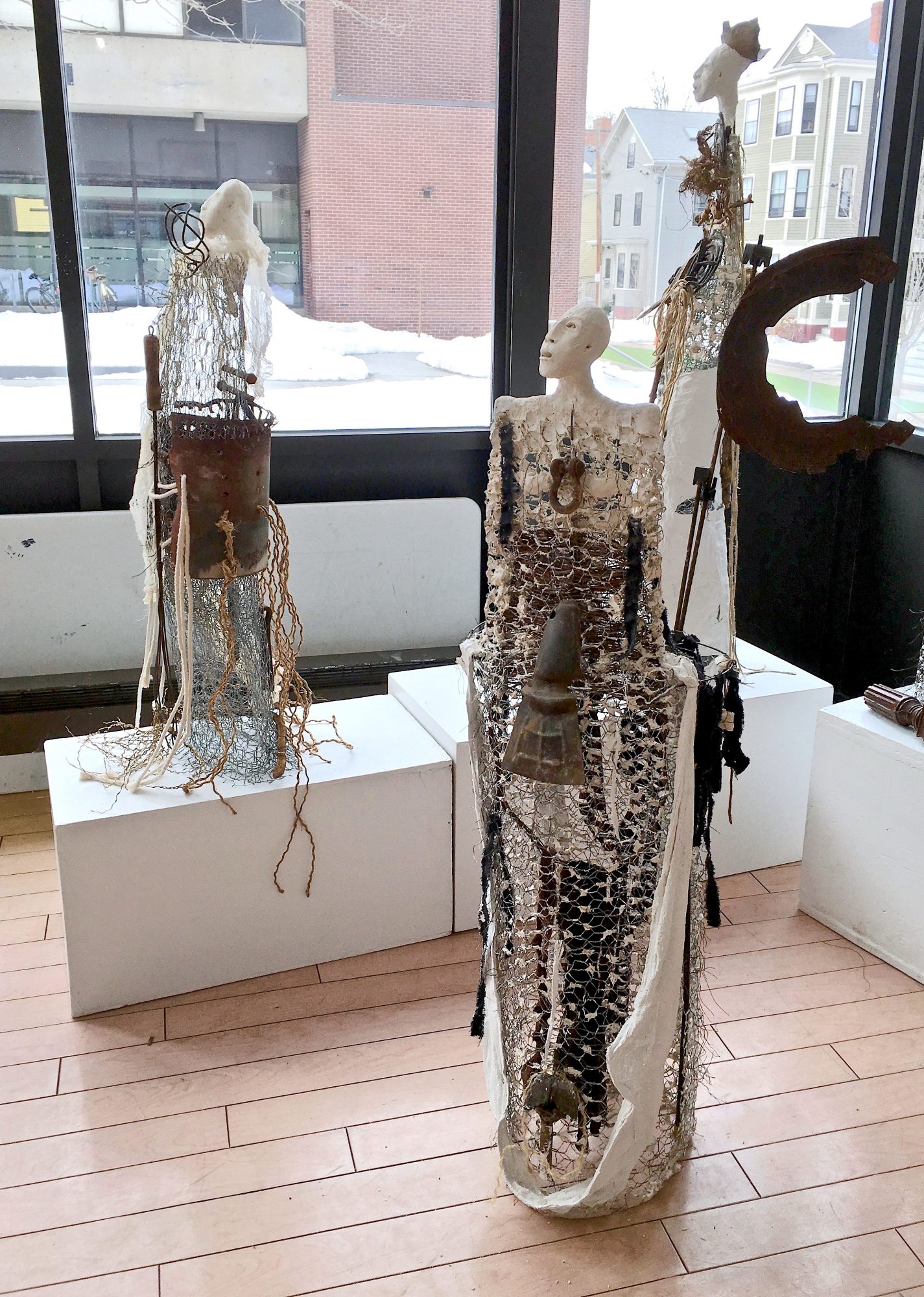
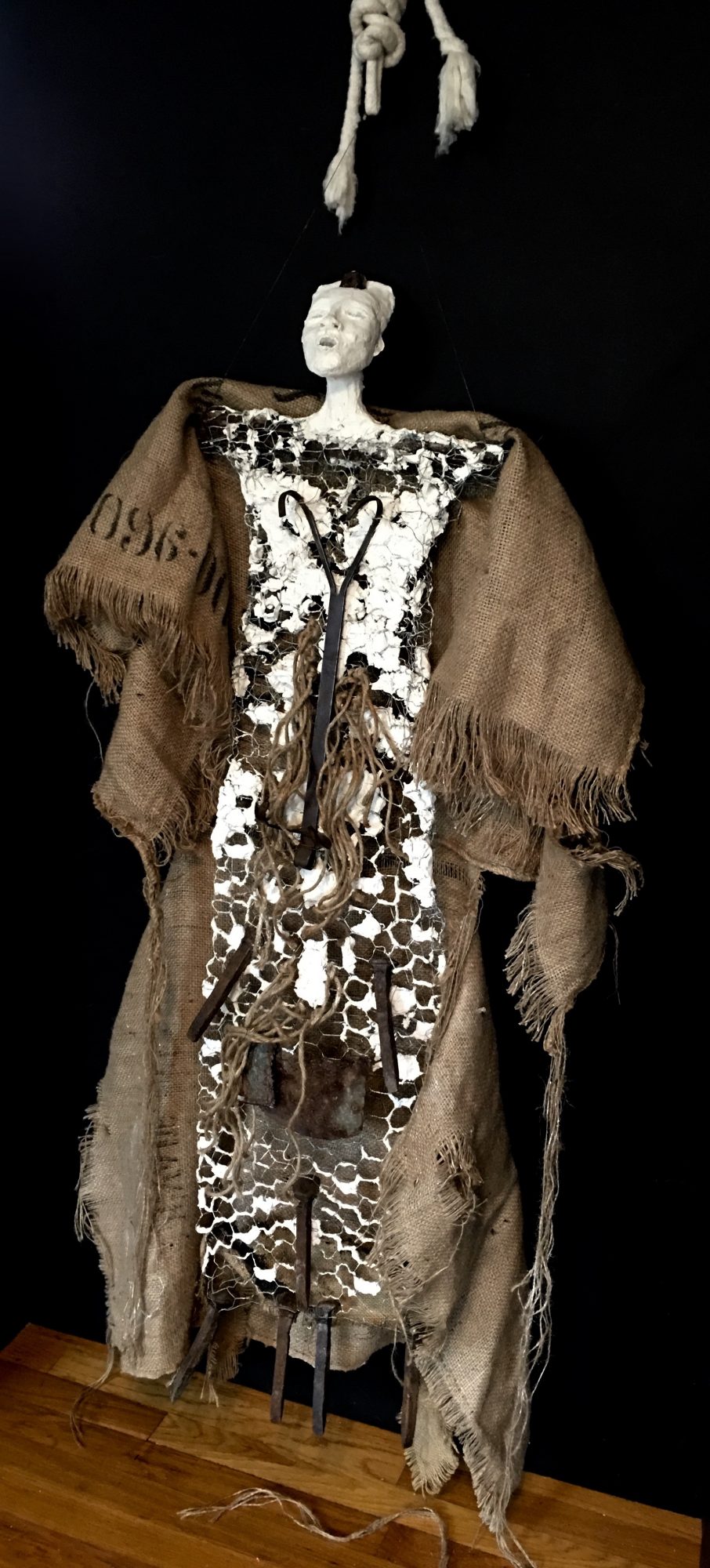
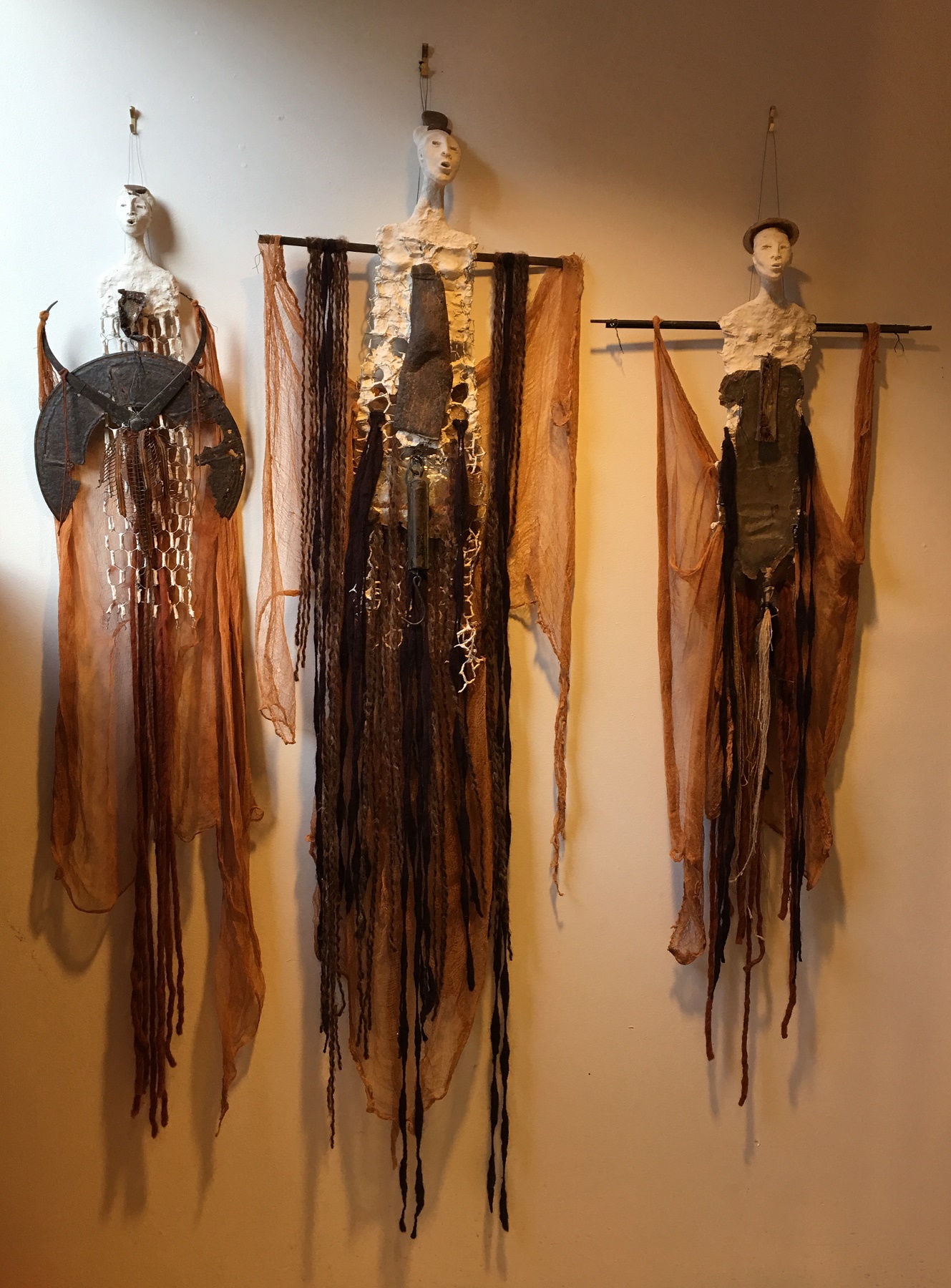
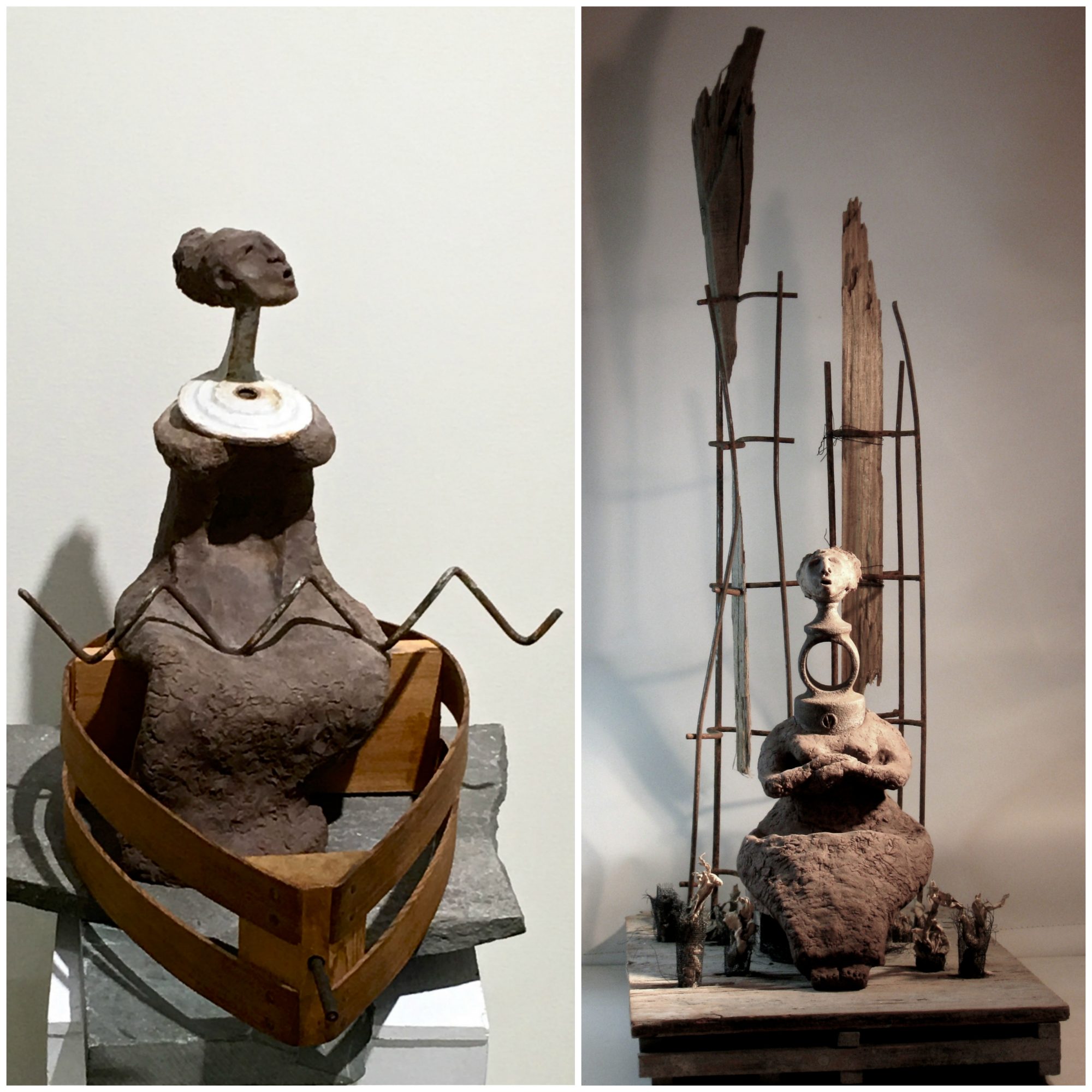
Image Credit:
Art photos by Ruth Rosner
Photo of the artist by Kate Flock
Brookline Tab
Getting in touch: BostonVoyager is built on recommendations from the community; it’s how we uncover hidden gems, so if you know someone who deserves recognition please let us know here.