


Today we’d like to introduce you to Angela Rossi.
Angela, please share your story with us. How did you get to where you are today?
I’m a professional singer first and foremost, and I later became a composer by choice. Singing has always been my passion. And I am a voyager! I’ve been a traveler in life. As a young girl, I used to travel throughout Europe on the cheap, usually by train, ready to discover and learn from the unknown. In these journeys, I visited a number of fascinating places and met the most diverse people…People who always had captivating and inspiring stories to tell. Africa was my most incredible life adventure as a young person, but that’s another story.
This constant longing for travelling and explorations explains why, in music, I’ve always been interested in the fusion of different cultures and the styles that derive from it.
As a child, I’d listen to the records that my parents had brought with them on their long journey full of hopes from Naples to Milan in the ‘70s. They had decided to finally move in search of a better future, to a city with more opportunities. They left everything behind, but didn’t forget their own culinary and music traditions. These records belonged to the Neapolitan tradition for the most part, but my favorites were always the result of a fusion of genres. For example, I loved artists like Pino Daniele, who had masterfully mixed the blues with Neapolitan folk music and I would sing and dance along with his records any chance I had.
The element of the dance in music (first classical and then modern and folk) has always been very important to me as well. In other words, if there was music, there had to be dancing! No exceptions. The rhythm has a cathartic power which, combined with the right harmonies and melodies. Can truly carry the listener/dancer into other dimensions.
At home, our dining room was always “adorned” with records, guitars and tambourines. My father, who had a powerful tenor voice, taught me one Italian song a day. I have always listened to everything from folk to jazz, as well as British and American rock and roll.
After classical vocal studies and a language diploma in Milan, I went to Barcelona to audition for a scholarship at Berklee College of Music. The scholarship would give me the opportunity to come study in the US and broaden my horizons in music. I did not think twice: I threw myself headlong into another journey – to the dismay of my parents, who were not too crazy about the idea.
This was the decision that changed my life. In Italy I had already formed blues and jazz bands, playing in various clubs and festivals there, but here in Boston I learned how to become an independent thinker and a self-reliant musician. At Berklee, I studied new elements of arranging, composition, and improvisation.
I was very lucky to study with such music giants as trumpeter/composer Greg Hopkins, vocalists Kevin Mahogany, Sheila Jordan and many others. Thanks to these teachers, my singing skills in jazz made a quantum leap in just a couple of years.
Before graduating Berklee, I took the class that connected all the missing points: a World Music ensemble with famed percussionist Jamie Haddad and pianist/composer/producer Alain Mallet. Singing and writing in this ensemble, I understood what I really wanted to do, what truly made me “click” in music. I wanted to use my voice as a bridge between my own music tradition and “modern music”. Then also came the realization that music could serve as an instrument of union between cultures, as a tool to communicate and exchange ideas with an audience.
In the meantime, the gigs kept coming: people seemed to appreciate what perhaps made the Italian public a little scared; my versatility and the desire to use it… I sang in French, English, and Portuguese – sometimes also in German. And thanks to word of mouth, I quickly began to collaborate with many local musicians at various shows and recording sessions. In that climate, I met the poli-instrumentalist Jacques Pardo from the group Atlas Soul who hired me as their lead singer and with whom I co-wrote a couple of songs which were presented with an award and published in a Phoenix magazine compilation. This gave me an extra push to continue in the direction I was headed and exposed me again to the North African music which I had always loved so much. To this day, I still work with some of these collaborators, such as my friend Maxim Lubarsky, a wonderful pianist/composer with whom I have shared many stages and published a record.
In 2003, Newpoli, a Mediterranean folk group with which I’ve recorded five albums and traveled throughout the US and Italy, was born. I will talk more in detail about it. Our brand-new album Mediterraneo [2018] will be released this fall, and our CD release concert is presented by World Music/CRASHarts at the Rockwell Theatre in Somerville, MA on October 4th, 2018. On July 12th, we’ll be performing at the Library of Congress in Washington, DC as part of their concert series that presents the traditional music from a variety of folk cultures in the U.S.
We’re always bombarded by how great it is to pursue your passion, etc – but we’ve spoken with enough people to know that it’s not always easy. Overall, would you say things have been easy for you?
Haha no! Absolutely not. The road is never flat when trying to achieve any kind of success in life. And then, what does it mean? Economic success? Artistic success? Spiritual success? When I started this career, I mostly thought about improving my skills and finding my voice as a musician. My focus was also on ways to share my experiences with people through live shows or other avenues.
In recent years, the two most difficult moments for me have been two unwanted separations. In September 2015, my father Alfonso, who was my greatest friend on this earth, passed away from a sudden illness. Only a year later came another sudden departure, of our dear friend and incredible accordionist, Roberto Cassan. He was a great source of inspiration for all of us in Newpoli, and his passing left us totally disoriented. At the time, we were on tour in Italy and it was as if a member of our family was suddenly gone.
The new album is dedicated to him, our dear friend Roberto, who was as special as those distant countries so full of wonders that no one can ever really describe.
We’d love to hear more about your business.
Newpoli is basically a group created by the visceral passion of three musician friends for Mediterranean music.
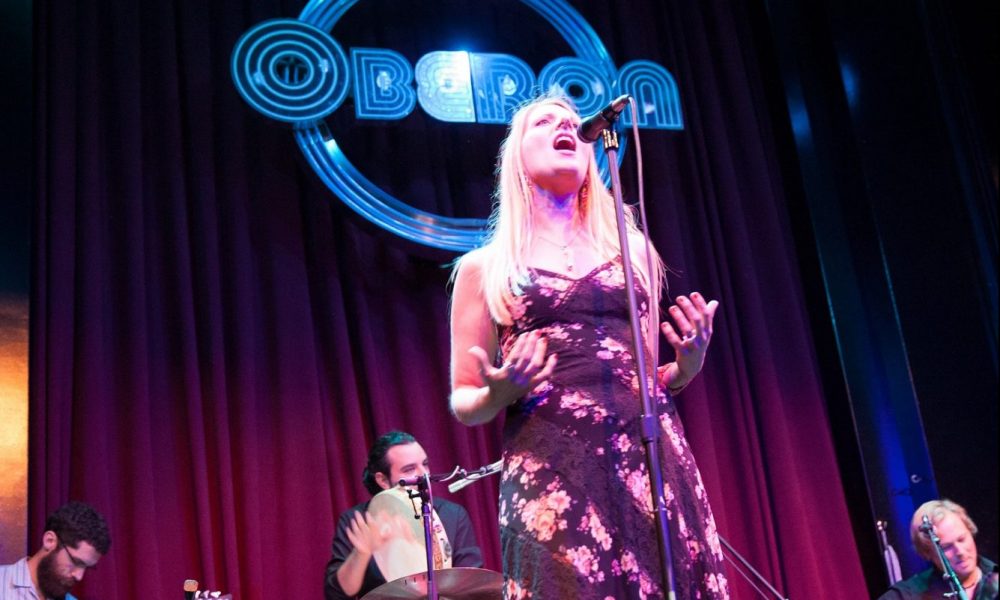
In 2003, my friends Carmen Marsico and Björn Wennås (Carmen’s husband) and I were reading the program of the Berklee International Folk Festival and realized that Italy was not represented. So, in an impetus of “patriotism” to make known the true Italian folklore of the south, we decided to participate in the festival. We put together a combo and recorded a demo, and they accepted our project. Newpoli at the Berklee Performance Center was our debut performance. That evening, we really enjoyed playing – for the first time in front of a mainly American audience – a repertoire of traditional music from southern Italy. None of us expected such a strong response from the public. Everyone went wild dancing, and at the end of the night, we’d hear comments: “We had no idea that Italian folk music could be so cool and full of energy!” They thought that Italian folk was the tarantella heard in the Godfather film, or the songs of Frank Sinatra, which is actually Italian-American music.
From that moment on, we decided to fill that void and continue our research into the musical traditions of southern Italy. Carmen’s family is originally from Basilicata, and my family is from Campania, so we grew up with this music – it was already present in our DNA. However, to expand the repertoire, it became important to look for other sources; sometimes in libraries, sometimes on field recordings by ethnomusicologists such as Alan Lomax and Diego Carpitella with anthropologist Ernesto De Martino. It also became crucial to come up with our original arrangements, and Björn Wennås created those new musical shapes for the band. The challenge we faced, was to come up with new melodic lines or harmonic progressions which would sound original while still respecting the folk tradition.
Our first lineup consisted of musicians from all over the world, and I think we were destined to become more of a fusion band from the very beginning! This is why we picked the name “Newpoli”. We used the Greek word Neapolis (Νεάπολις) which means «new city», adding the English “spin” to it.
Newpoli has changed personnel over the years, but the beating heart has always been the same: Björn Wennås on guitars (and in recent years also mandola), Carmen Marsico and myself as the lead vocalists of Newpoli as well as the dancers; Fabio Pirozzolo on various traditional tambourines (and other percussion) as well as voice. In the last few years we’ve been joined by Dan Meyers on recorders, bagpipes and percussion; Karen Burciaga on violin and percussion; Jeff McAuliffe on fretless bass guitar; and Jussi Reijonen on oud, guitar and mandola.
With our recent album, Nun Te Vutà (Don’t Look Back) [2014], we started writing original compositions, and through this process, I believe we really developed our true sound. Once we found our new voice, it was relatively natural to focus on the ideas that interested us most.
In this era of profound intolerance towards those who are different, of hatred and oppression, we wanted to start a conversation that offered another direction. A direction of mental openness and hope. Starting from personal experience, we wanted to express how sometimes even indifference can kill any form of growth from both a spiritual and a human point of view.
Nun te vutà won the 2016 IMA award at Lincoln Center, New York, for Best World Traditional Album, and we felt very honored.
What were you like growing up?
I grew up in a Milanese suburb for the most part populated by immigrants from the south; blue-collar workers. My father worked at Alfa Romeo and my mother at Braun (German home appliances). So all in all, this allowed me to have a rather free childhood. I used to go cycling around the neighborhood and I was allowed to play late in the evening in the courtyard with my friends after school. Nobody was afraid of their neighbor then… Although there was crime, no one lived in the name of fear as they do today. I often went to evening dance classes with a couple of girlfriends, and we never once felt threatened. My parents loved to go camping with friends during the summer holidays and they instilled in me the contact with nature in spite of my fundamental “attachment” to city life.
As a teenager, I started to buy my first records; Sting (as a solo artist and with The Police), various rock and soul bands and classical music. I’d go to a used record store in Milan near the canals, and most of the time I would choose the discs based solely on how cool the cover looked. It usually turned out to be a good method!
Then I ran home, put on headphones, and good-bye homework! I bought Pink Floyd, Yes, Doors, and Black Crowes records. One of my constant soundtracks since I was young was Creedence Clearwater Revival. I loved the voice of John Fogerty, who accompanied my travels on the train to the city every day. I also picked up the guitar and started learning the basic chord progressions that would allow me to accompany myself and learn new songs.
Much of the music I was listening to did not exactly belong to my generation, but I have never been a conformist in this sense. I never got tired of looking at the videocassettes of opera like Rigoletto or La Traviata, because I was interested in the staging and I didn’t have the money to go to the La Scala Theater all the time. I consumed Billie Holiday records by dint of listening to them. Also, Ella Fitzgerald, Carmen McRae, Louis Armstrong, and so on. The radio was almost always on.
For me, listening to music was no different from traveling to discover a multitude of mysterious countries. And in my view, there was certainly still a lot to discover! My opera teacher at the time did not like my approach. She wanted to shelter me from modern singing as “it would ruin your ears and your flawless vocal technique,” she’d say. But being confined in one style of singing didn’t make me happy at all. My impression was that she was simply afraid of the unknown, and those fears were mostly unfunded. When I discovered Stravinsky and Debussy, I understood the host of immense possibilities just by opening up to other harmonic concepts. We human beings often create the barriers of style, simply because we become easily conservative and we are fundamentally afraid of change. This was a valuable piece of information for my growth, and I try never to forget it.
Contact Info:
- Website: http://www.newpolimusic.com
- Email: newpolimusic@gmail.com
- YouTube: https://www.youtube.com/channel/UCqyV-Z1oWl9xBjoVJOz5OrQ
- iTunes: https://itunes.apple.com/us/artist/newpoli/id276871210
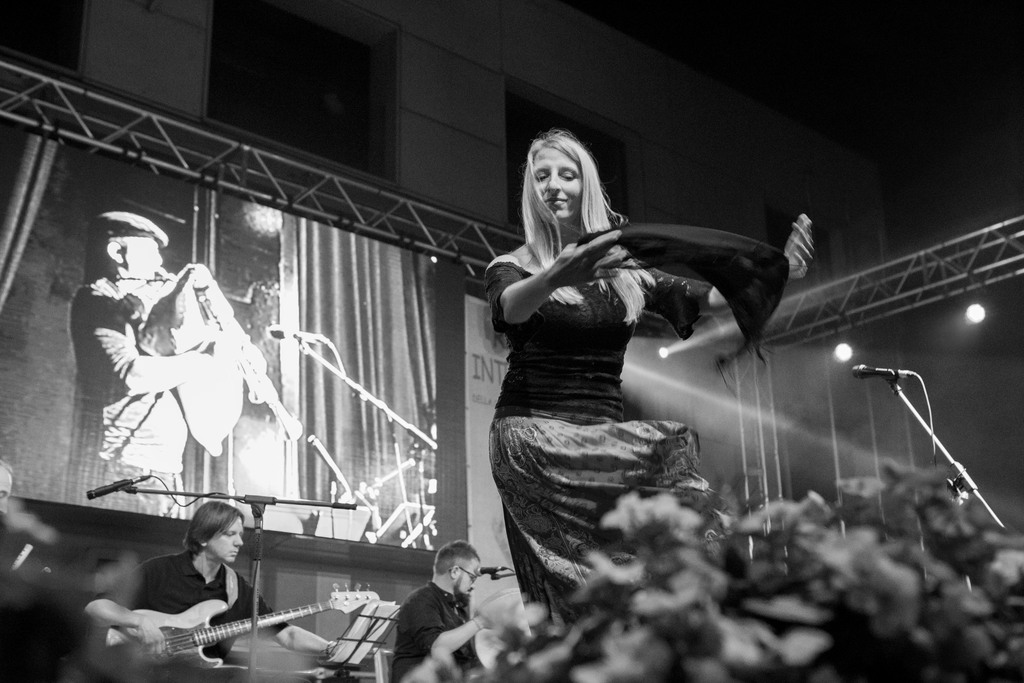
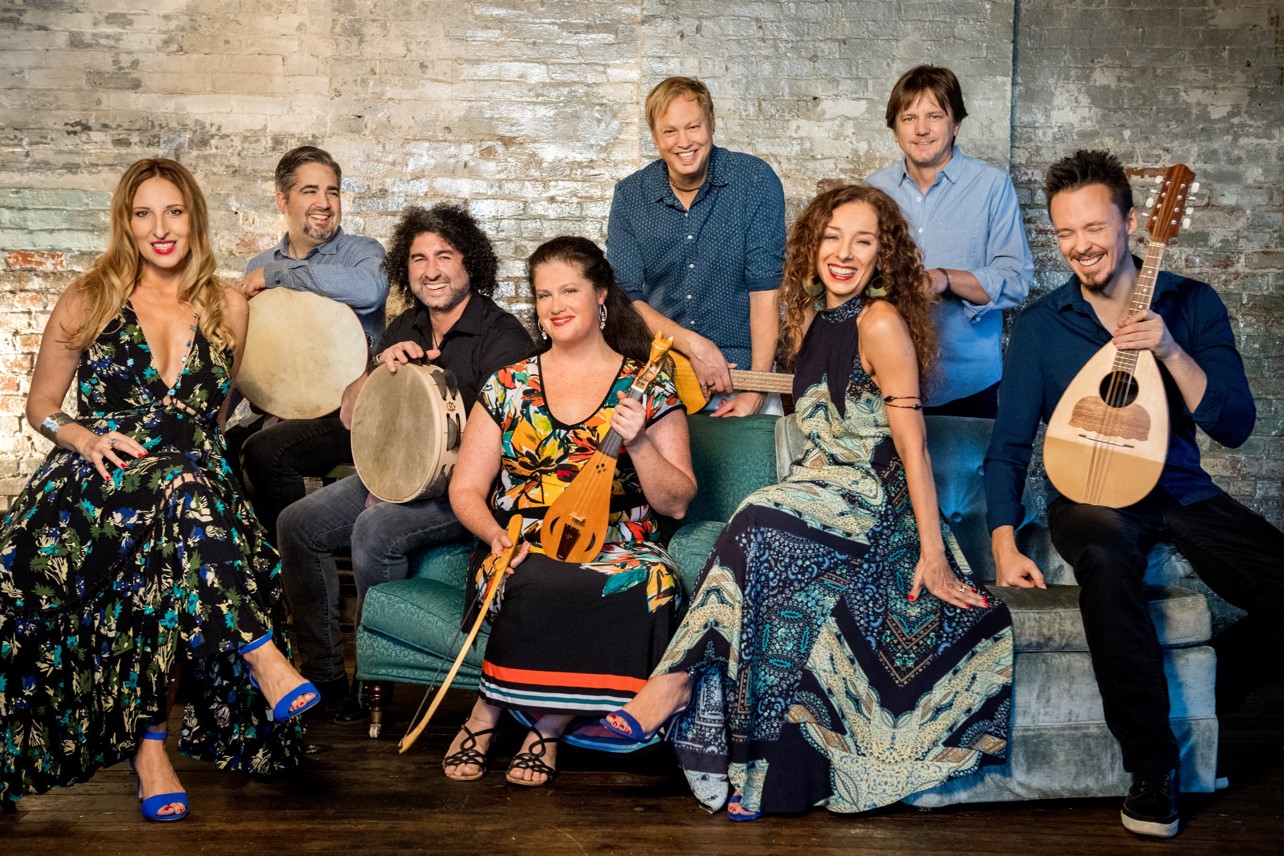
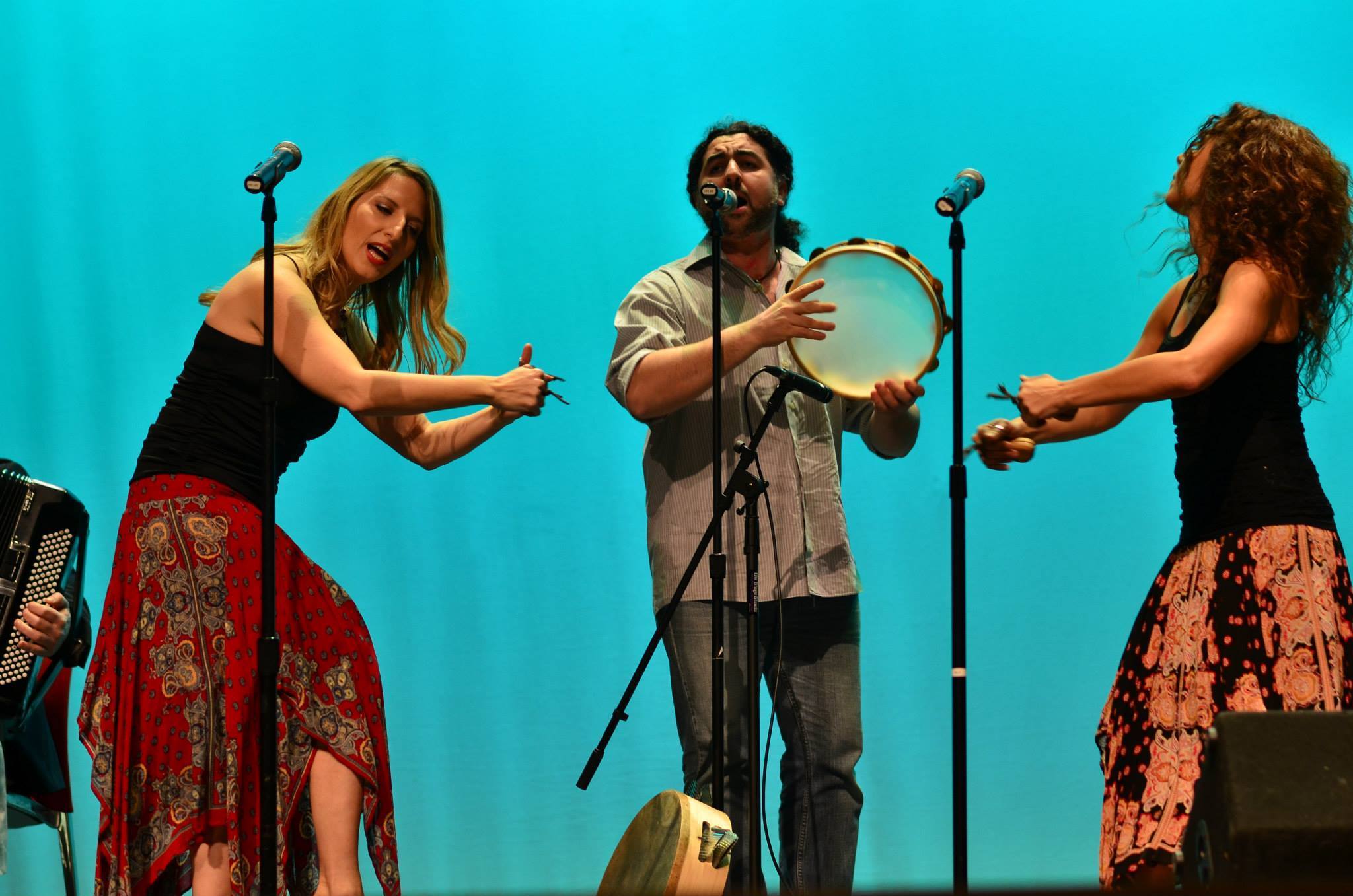
Image Credit:
Matthew Stein
Francesca Gnappa Lanza
Liz Linder
James Gerke – Text editing
Sal Mazzone
Getting in touch: BostonVoyager is built on recommendations from the community; it’s how we uncover hidden gems, so if you know someone who deserves recognition please let us know here.