





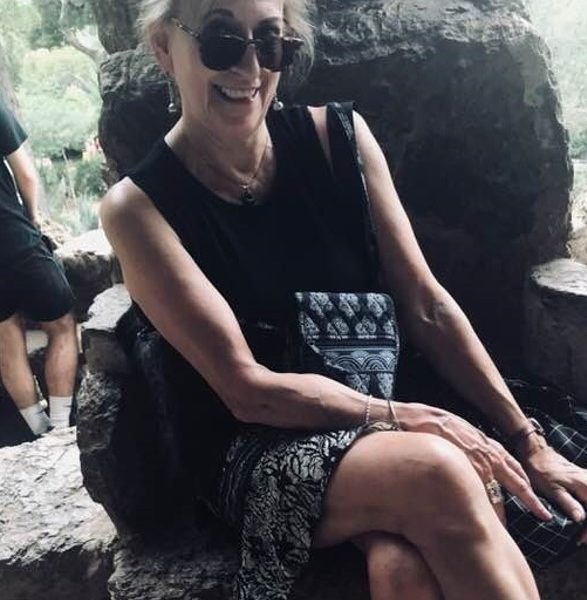
Today we’d like to introduce you to Mary Bonina.
Mary, please share your story with us. How did you get to where you are today?
I’ll try. It’s a rather circuitous route that I’ve taken to get to this point in my life, so it may not be brief. I moved to Cambridge for love, really, having fallen for a Cambridge poet who’d worked for a year as the Poet-in Residence for the Worcester Public Schools. I was born and raised in Worcester and still living there then. I’d been working in the Poets in the Schools Program, too, going around to different schools in Central Massachusetts with other poets, modern troubadours. This was a time when there was actually funding for this kind of program. I’d been writing poetry for several years by then and was selected for a course with one of my writing heroes, the poet Denise Levertov. The course was sponsored by the Worcester County Poetry Association and funded through a grant from the National Endowment for the Arts in the Master Poets/Apprentice Poets program.
The Levertov workshop was a turning point for me–in many ways– and one of them was that Denise’s enthusiasm for my poetry led her to encourage me to get to know the new poet-in-residence for the public schools, Mark Pawlak. She thought that given his family background and his work, we’d hit it off. The rest is history. A few years later I was living with and then married to Mark.
In addition to working in the Poets in the Schools Program before moving to Cambridge, I’d worked for several years as a community organizer in housing and I’d been an activist mainly for women’s issues and for the poor and low-income community. The skills I’d developed doing that work helped me land a government job directing a statewide energy conservation program for the Commonwealth, a means of supporting myself and financing graduate school to earn an MFA in creative writing.
I entered the low-residency MFA Program for Writers at Warren Wilson College, the first of its kind actually, one devised to allow writers who don’t have the means to take a couple of years away from work to get an advanced degree. Sheer persistence allowed me to earn an MFA while running a multi-million dollar energy conservation program. I would get up at 4 a.m. and work for three hours before getting ready and leaving for my job at government center. At lunchtime, I would try to find a quiet place to read for my study project–not so easy in the middle of the city. Even the library was too noisy and more than once I found myself reading in a back pew at St. Anthony’s Shrine at Downtown Crossing when I had deadlines!
I worked with well-known literary writers at Warren Wilson, a couple who mentored me one-on-one in an independent study. I gave up all the vacation time I’d accrued at work, to go to the college in North Carolina once a semester for two years to attend a couple of intense weeks of classes, lectures, workshops, readings, and meetings with my mentor to set up my semester study projects. I look back at those 2 years in amazement of what I accomplished. The demanding expectations of the MFA Program for Writers at Warren Wilson has led to its #1 rating among programs like it in the country.
For a couple of decades it was a challenge to support myself financially and to also find time to write, so I am a late bloomer, as far as publication is concerned. After graduate school I began to work at part-time positions that didn’t necessarily pay well–working for non-profits, running a literacy program, and teaching the English language to immigrants in their workplaces, at Boston hospitals and banks–because part-time work I thought would give me time to write. More often than not though, the work I did required more than part-time hours to do it well, and I like to do things well, so It was not ideal for writing either.
It wasn’t really until I discovered the Writers Room of Boston that I actually began to finish any of my manuscript projects. The Room has provided me with things I’d been sorely lacking all those years before, giving me a dedicated space in which to work — and colleagues. Most writers teach in colleges or universities so they have ready-made colleagues, but having taught English in high schools and community college for a while before moving to Cambridge, I knew how demanding the work was and I knew from experience my tendency to throw myself into the work and neglect my writing. The Writers Room gave me the opportunity to meet others struggling to finish manuscripts and to publish them. It also gave me a silent space– so rare in the city — and one in which there is the atmosphere of affirmation and expectation. It gave me confidence, too, to apply for fellowships and residencies.
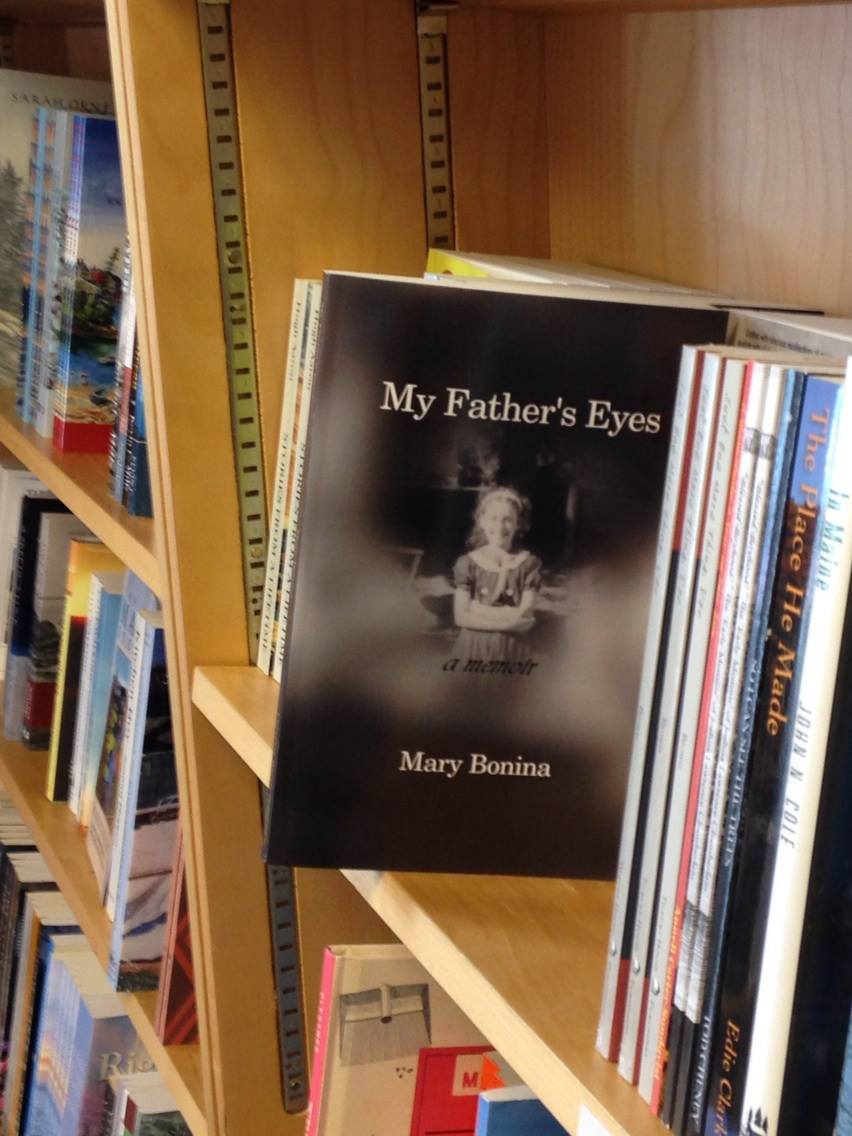
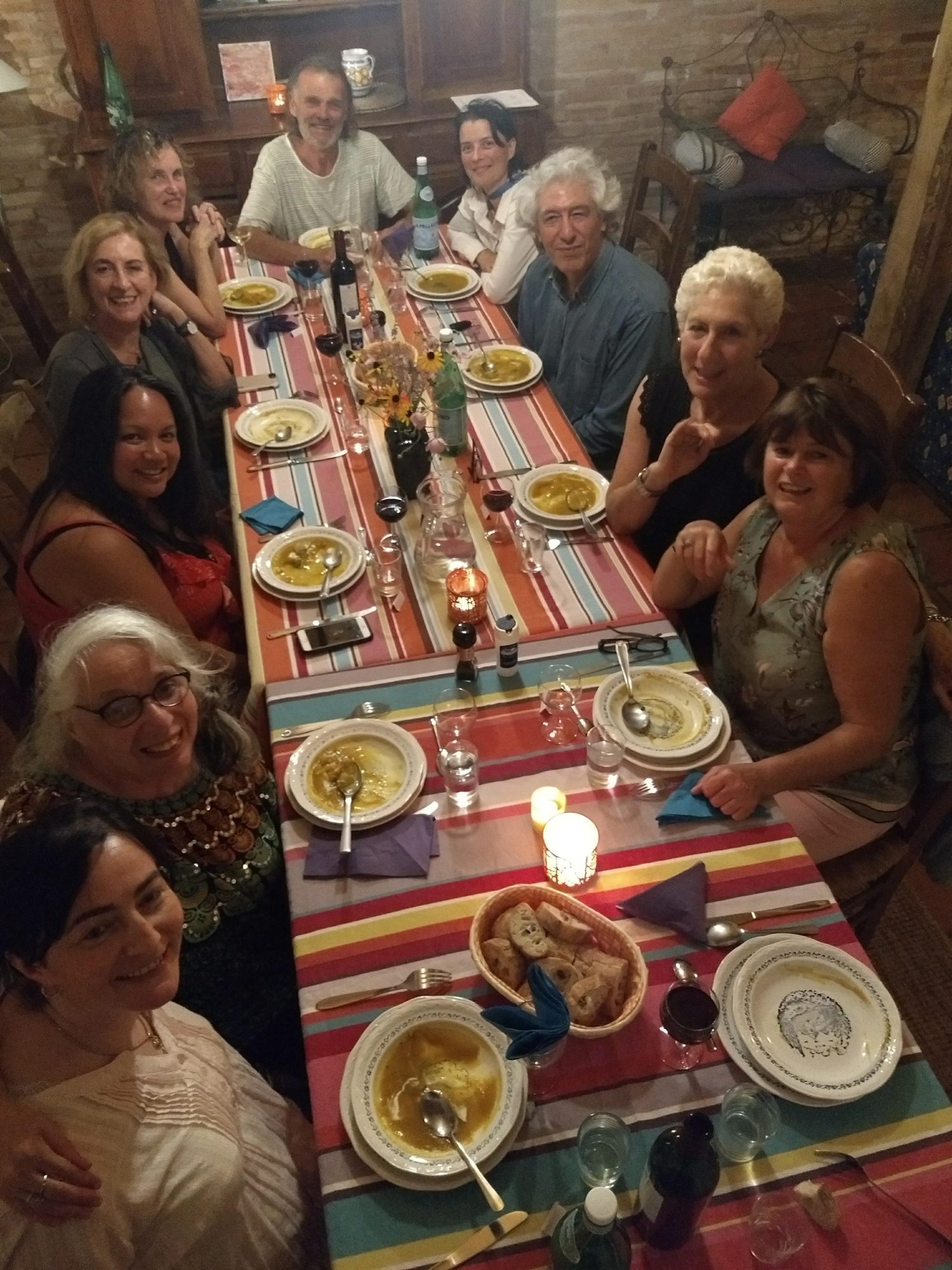
I was chosen as a Virginia Center for the Creative Arts fellow, named the finalist for the Goldfarb Fellowship in Non-Fiction after submitting chapters of memoir-in-progress at the time (later published as MY FATHER’S EYES: A Memoir, Cervena Barva Press, Somerville, 2013). A couple of collections of poetry and the memoir were completed and published as a result of the support I’ve received from the Writers Room of Boston and the Virginia Center for the Creative Arts. I continue to receive their support, as I’ve just finished a novel for which I’m searching for a publisher, work which has been furthered by time spent in both havens. I’ve just returned from a writing residency at Moulin a Nef, the Virginia Center for the Creative Arts retreat in Auvillar, France, where I’ve been working on a new poetry manuscript.
In gratitude, I help support both organizations to help other writers, as much as I can. I’ve been serving on the Board of the Writers Room for more than a decade now and I’ve been involved in many of its activities since, most recently coordinating the Immigrant Voices essay competition in the community.
The other thing that I put time and effort into for the sake of promoting community involvement in the literature of Boston is School Street Sessions. A couple of years ago I was invited to join the Board of this new organization, to produce programming about Boston history and literary figures and events at the historic Parker House. The Parker House has played a huge role in both and even has a House Historian on staff, Susan Wilson. It has been a gratifying experience working with this group of inspiring and dedicated writers whose mission it is to foster a sense of appreciation in the community for the rich history of the City.
Please tell us more about your work. What else should we know?
In addition to the difficulty I had for years, of balancing work with writing time, I believe that there was another reason it took so long before I had any book length work published: the fact that my work spans three separate genres- poetry, memoir, and fiction.. I kept moving back and forth between them, and that made it impossible to finish any one. As I’ve said, I began in poetry and received immediate support and encouragement for that work from the Worcester County Poetry Association.
When I decided to pursue an MFA at Warren Wilson, I had to choose a focus — either poetry or fiction. (Now I believe this isn’t the case, and also the genre of creative non-fiction has been added.) My early poetry had become decidedly narrative and I began to realize that I had stories to tell and that perhaps fiction would be a better genre for them; so I decided to choose fiction writing as my concentration. I never intended fiction over poetry, and during MFA residencies, I remember auditing as many poetry lectures and classes as possible, and attending readings in both genres. The MFA required a creative thesis of original stories, in addition to completing a degree year essay, a lengthy study on an aspect of a writer’s work that you studied in depth because it helped you solve a problem in your own writing. My actual thesis had to be a collection of stories, but mine were more like novellas! I never did publish any, since their length far exceeded the length journals could publish.
I began to realize that that I had the long breath, after thinking about what one my mentors at Warren Wilson had said — I can’t remember if it was Mary Elsie Robertson or David Huddle–but one of them suggested that I might do my best work in the novel. And so, after graduate school I began trying to write an autobiographical novel. I worked for ten years, off and on–not unusual for a novelist, I know. But in the end I’d been too invested in the real material that had inspired the work, and could not let the characters I created live lives of their own. Because of that, I couldn’t get the structure right.
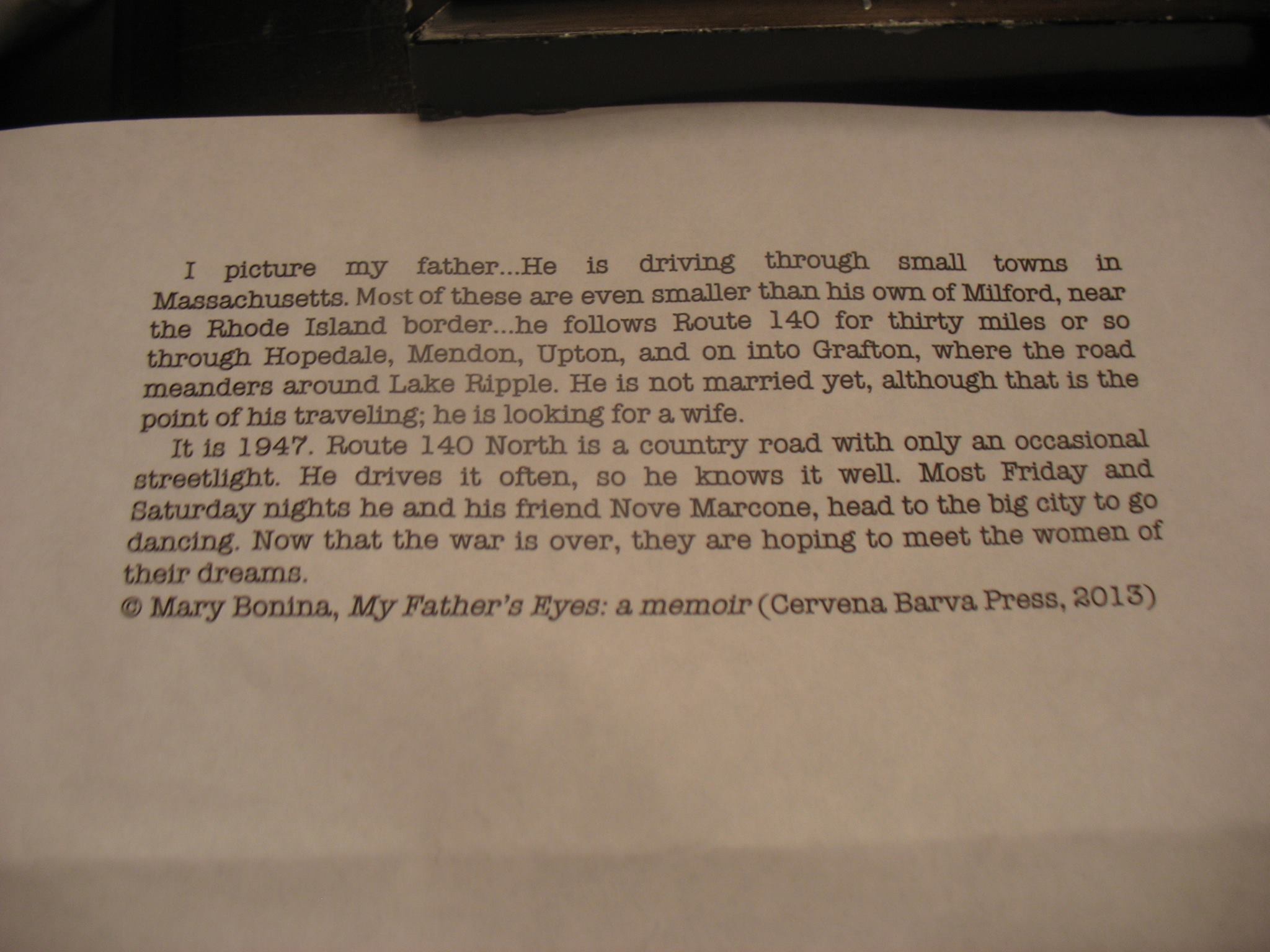
At that point a good amount of literary memoir was being published (in the 1990s) and a reader who knew I was struggling suggested I try writing the real story I had to tell. For some reason I’d been holding onto the idea that creative non-fiction or memoir couldn’t be art and that since I was an artist, it was fiction or bust. I read a few moving memoirs and saw my foolishness. Thankfully, I tossed the novel–even after all those years of work– and began the memoir that became My Father’s Eyes, the story of how I became a writer, growing up with a dad who was gradually losing his sight and who relied upon me as a guide in the years before he became totally blind. In that role of reporting what I saw for my dad, I learned from a young age, not just how to read social signals and analyze human interactions while helping him navigate streets, situations, and rooms that were always in flux, but having to be specific in my description encouraged my love of words, as well as the strong visual sense that I am blessed with, and which is a hallmark of my writing.
The memoir was compared to a novel in its form and depth of character and narrative. After its publication I finally felt free to begin a real novel, true fiction–writing which is, as Eudora Welty stated, “out of (my) self (i.e., my experiences and knowledge) and not OF myself,” as I had in the memoir, or in the earlier failed novel.
Having spent almost ten years again, completing that novel, I am engaged now in what is for any writer–but especially for one who is a late bloomer whose only previously published work is in poetry and literary memoir/personal essay– the mostly frustrating experience of searching for an agent to represent the novel for sale, or for an independent publisher who will put energy into helping me market it. I think I’ve explored an important subject, dealing with the continuing ramifications of the Vietnam War, seen through the story of a young woman who has to face choices that were long ago denied her, and secrets kept, when her high school sweetheart returns decades later to the U.S. from Canada, where he fled to avoid being drafted into the army during the Vietnam War.
If you had to go back in time and start over, would you have done anything differently?
The one thing I lacked other than the financial means to devote myself primarily to writing was a real mentor. I had mentors in graduate school while I was in the MFA program, but I believe I would have benefited greatly if I’d had someone who was there for me, to provide guidance, direction, support, etc. long-term. It’s valuable I realize now. I can’t be certain, but I think I might have become a published writer sooner if I had someone in my court in that way. In the absence of a mentor, my husband, a poet and writer himself, has provided a good deal of support for my work, and he’s still my first reader.
Pricing:
- MY FATHER’S EYES: A MEMOIR is available in Kindle & Paperback https://www.amazon.com/My-Fathers-Eyes-Mary-Bonina/dp/0988371383
- CLEAR EYE TEA: Poems is available through www.marybonina.com for purchase (paperback @ $15.)
Contact Info:
- Website: http://www.marybonina.com
- Phone: 857-998-9778
- Email: marybonina1@gmail.com
- Instagram: @marebonina
- Facebook: Mary Bonina / My Father’s Eyes by Mary Bonina
- Twitter: @reebonina









Jacqueline McRath
January 12, 2019 at 5:48 pm
An absolutely magnificent account of your path Mary! Incredible with detail, deepest feelings, truths, and other experiences that so many of us share!!!!!
CONGRATULATIONS! CONGRATULATIONS! CONGRATULATIONS!!!!
Diane Boover
January 12, 2019 at 6:17 pm
It’s rather “poetic” that the only quiet places in the world nowadays are Churches. We have loved you for a long time Mary, I can’t wait to see where the future brings you and all of your friends and readers.
Joanne Reynolds
January 15, 2019 at 10:24 pm
Terrific interview, Mary! Looking forward to your novel—
Mary Bonina
April 15, 2019 at 12:57 am
Thanks so much, Joanne. so pleased to have had tge opportunity to tell my story. Grateful to Boston Voyager!