






Today we’d like to introduce you to Mark Landsberg.
So, before we jump into specific questions about the business, why don’t you give us some details about you and your story.
We were first licensed and established in 1981, specializing in the adaptive reuse of historic buildings and new construction in older neighbors. Prior to that, I was involved in the establishment of Art Deco District (1974) in Miami Beach, Florida and was chosen by the National Endowment for the Arts, in 1978, to study the establishment of an Art Deco National Park there. In 1976, I began teaching at Boston Architectural College, concentrating on Photography, Architectural History, and Non-Silver Print processes.
In 2010, with Bruce Rosenbaum and others, we founded Steampunk by Design, a multi disciplinary consulting group, specializing in design for interior and exterior commercial and residential projects. This led to several commissions for residential commercial and hospitality projects. In addition, we became were invited as lecturers for the annual ABX Architectural Convention and other nationwide events.
Over the last 37 years, I have been involved in all aspects of design, construction, and development, including products, interiors, and planning for major clients including Avis, MIT, and Brazilian churches. We have a complete wood and metal shop, 500 international vendor contacts, and multiple crews of contractors and specialty subs.
This year, our latest residential/commercial project was featured in the Newton House Tour, benefitting programs of Historic Newton. We continue to consult on historic house painting and renovation as a published expert for the Painted Ladies series of books. On another front, we have recently branched out to photography and video production with offshoot MLA Media. This subsidiary provides in-house performance and production space, along with on location filming at all major Jazz venues around Boston.
Overall, has it been relatively smooth? If not, what were some of the struggles along the way?
2008 will go down as the best year of my 28-year architectural career and 2009 was probably the worst. During 2008, I “banked” the most money ever, with the intention of using the funds for “jumping in” full force into the equity markets.
I saw the early warning signs of a downturn in late 2008. It was sometime in early December of 2008, that an institutional client of mine, expressed concern about a construction project that I was sure was “in the bag”. Soon afterward, a residential client decided to halt all near future phases of work on her house. As it turns out, her brother had been laid off by Citibank, and was four months behind in his mortgage and other commitments, requiring a bailout from his sister. Then came the cascading reports about defaults of banks and brokerage houses related to the mortgage debacle.
Architects, in general, are the canaries in a coal mine when it comes to construction spending. They are the first to see reactions by clients when there are downturns in the economy, or, as is the case today, downright catastrophes. Many of them have a large discretionary income and savings, but feel that it does not look right to be spending large sums of money, when others are out of work. Compound this with the close to home impact of the Bernie Madoff Scandal, and you have a recipe for disaster.
It had been a regular annual family comedy routine, when I mentioned spending the slow month of January cleaning up the office and fine-tuning marketing materials and chores. They would pipe in that I haven’t had a slow January in twenty years! A slow January rolled into a slow February and a slow March.
So what does a self-employed architect with no employees do? Having worked basically 60 hours a week for the last thirty years, even a small slowdown would have a dramatic effect. As the joke goes, nobody is going to tell a self-employed person when to work sixty hours; that is his/her choice!
With two kids in college and one looking, the natural inclination was to grab at any work options, no matter how trivial or economic. After thirty years with my nose to the grindstone, and a well-diversified portfolio, I decided to pursue those other interests that I had neither the time nor inclination to do before.
The process began with the consolidation of voluminous lists of house chores, accumulated possessions, low hanging receivables, and family activities. There were many cardboard boxes filled with items from the last move in 1984, along with boxes of items shipped up from Florida, when my mother sold the family house and moved to a condo. That sorting became a triage of stuff to save, stuff to donate and stuff to trash.
After a flurry of activity that lasted most of January, it was time to decide which projects warranted my time during the next month, assuming that my workload did not magically expand to previous hectic levels. A friend had a cousin who was writing a book and needed some editing assistance. I had recently seen an exhibit at the Museum of Fine Arts and was interested in integrating some of the designs into new architectural products. A close family friend was looking for a new venture and wanted to do something significant with alternate energy. The annual after-party for the prom at the local high school was coming up and they needed a leader for one of the decorating projects.
In addition, it was time to teach my daughter to drive, look at prospective colleges and continue to support her traditional boxing hobby, three nights a week at the gym. It was inevitable that the downturn would end. To those ends, I ended up honing my graphic arts skills by revamping my marketing materials, updating the website, and creating a series of photo books. It was inevitable that some of the new ventures would come to fruition, but mostly I missed doing what I did best, helping people create and evolve their living environments.
During 2011, I became embroiled in a divorce, leading to my relocation within Newton, MA, to a previously rented residential property. This parting forced me to leave long-term established offices, in a landmark restored the Victorian home, used for client marketing. During the last seven years, I temporarily relocated to cramped quarters, while designing and constructing a new townhouse, adjacent to the rental.
This move allowed me to re-evaluate my life and formulate a new design creed, combining traditional Arts & Crafts architecture, with contemporary details and technology. The new residence, now substantially complete, is energy efficient and is powered, off the grid by an extensive solar panel array, hidden from public view, by design. There are thirteen different wood species, all unpainted, repurposed cabinetry, finishes, and furniture, including dozens of stained glass windows, saved from previous projects.
My new home has removed the shackles of traditional styles of my past and allowed me to rethink my way of life and subsequently, those of my clients. The new life is all about the integration of art, living, love and a being a thoughtful guest of the planet.
Alright – so let’s talk business. Tell us about MLA Consultants – what should we know?
I would have to say that my decision to travel and see the world, beginning at age 17, has been the greatest influence on me. Besides the nurturing of self-reliance, it has given me a unique perspective on how people live. I began considering a profession early on as founder of an encounter camp, such as Esalen, in Big Sur, California, It was tied in with my 70s interest in the Human Potential Movement, ultimately convincing me to begin college as a pre-med student, leading to a degree in Psychiatry.
I met a student across the hall in the dormitory, during my freshman year, named Jose Gonzales, who was studying Architecture. I found myself spending less time on Pre-Med and increasingly more time, helping him build cardboard models of design projects. Sophomore year began with a major change in my life as I changed my major to the study of Architecture. Initially, my plan was to learn design, leading to a career in set design for the film industry. As time went on, I became intrigued with designing living and working environments, rather than temporary movie sets.
By the end of senior year, I decided move to Boston and enroll at Boston Architectural College where I could learn, teach and work at the same time. At B.A.C., I could work while attending school and simultaneously tick off three years of required apprenticeship at the same time. In addition, my Degree in Design from the University of Florida enabled me to start teaching right away.
After five years of studying, teaching and working, I had earned my degree and the right to practice. With skills developed in undergrad study, I found ready work, during school, drafting, model-building and designing for several firms now emerging from the 1974 recession. All along, I knew that I would eventually have my own firm, so I spent a lot of time at work, not only learning the trade but how to get and retain clients. As soon as I received my license in 1981, I began chasing developers and home service companies, to build a portfolio of steady clients, spurning offices that wanted me to come on board as an employee.
Soon after, I crossed paths with a kitchen cabinet company in Lexington, who was looking for an independent architect who could handle the rush of new customers, needing additions along with new kitchens. I agreed to charge nothing for an initial consultation, but was free to charge whatever the market would bear once they were sold on a design. For a few years, I had client meetings five nights a week, spending the remainder of time drawing. By 1991, I gave up mechanical drawing entirely, moving the office entirely over to CAD and computers.
In terms of my earlier dream to become a Psychiatrist, I found that doing Architecture is 50% psychology and 50% technical skills. I would say that nine times out of ten, my verbal skills and enthusiasm, helped me to close 95% of the projects I pursued. Today, I have repeat clients, of thirty years, who continue to retain me. Many have become my friends. I have always told my kids to pick a profession that you want to jump out of bed and do.
My clients know that I will always tell them the truth, have their back, and deliver on promises I have made. They feel that they are part of the process and I include them in all decisions, up to their comfort level. My main problem, as in all personal service businesses, is that there are never enough hours in the day. I have learned to manage expectations, be realistic about promises, and still carve out time, for my necessary travel lust.
Any shoutouts? Who else deserves credit in this story – who has played a meaningful role?
I made a difficult decision, over forty years ago, when I left Florida for New England. My friends and family in South Florida have become the movers and shakers there, and could have afforded me a much easier time, as I struggled to build a business, grow a family, and establish a beachhead. At that time, everything in Florida, thirty years old, was considered dated and ready for demolition. There were very few opportunities for renovation until the establishment of the Art Deco District and the Rehabilitation Tax Act. I did get involved, in later years, with non-profits in South Beach, receiving a grant from the National Endowments for the Arts, to conceptually design an Art Deco National Park.
My decision to leave Florida and come to the B.A.C. was a good one. It gave me an opportunity to teach, study with peers serious about the profession, and have unlimited exposure to successful practitioners through their work/study program. While several employers took me under their wing, others were scared when I mentioned my goal to own the firm. I would say that rather than having a mentor, I learned from several tough clients about the “real world”, and how to operate as a business. This was something we never learned in school, and is the primary cause of early failure of new firms.
Though I was paid little during the early years, I always produced quality work, on time, and never really had any downtime. Their real gift to me was the reality of business and the opportunity to practice, similar to the minor leagues.
There was one client, an Independent Living Group president, who became and has remained my greatest supporter. In 1989, I was hired to renovate an MIT Fraternity house, after a recommendation from the uncle of a house brother. It was my largest single project to date and had to be completed within a ten-week window during the summer. Things went well until a few weeks into construction, when I realized that the contractor I chose, was overbilling for the project. I immediately went to the client and explained the situation, not knowing what the outcome would be. We worked together and resolved the issue, which could have become really ugly.
Since then and for the last thirty years, he has been instrumental in helping me land and complete 27 other projects at other independent living groups, and three major planning projects for MIT. In this case, my honesty and work ethic was the key to the completion of the first project and instrumental in landing the others. In recent years, I helped him with a Change of Occupancy problem at the original house, and he gave me African Mahogany bunkbeds, that I repurposed for my new house.
Early on, I decided to have a home office, not only for financial reasons, but to would enable me to have more contact time with my new family. This allowed me to coach the kids in sports, teach classes, and spend time on renovations of home, office and additional rental units. My clients have always enjoyed coming to the house and seeing improvements made, as well as seeing improvements in progress. My personal carpentry skills also gave them confidence in my ability to oversee job sites, a skill many Architects don’t share.
Alas, none of my kids chose to become Architects or any job related to the construction trades. Maybe it was the number of night hours I worked, but the irony is that they all work long hours in banking and economics. My family has always been supportive of my work, and one chose to visit job sites with me, after hours. He has become quite handy and I attribute that to our time together.
Give us a description of a typical Mark Landsberg Project?
My recently completed offices and personal residence, known as Casa Perla, is a combination of an 1884 Victorian house and a 2018 townhouse addition. The 3000sf addition is a contemporized Arts & Crafts style, combining modern glass and steel, with recycled materials and repurposed objects.
My love of natural wood, led to the use of nine species; Brazilian Cherry, Cherry, Oak, Mahogany, Maple, Bamboo, Black Walnut, Douglas Fir, Ipe and Pine with clear finish. Oak was “harvested” from church pews, Mahogany from MIT fraternity loft beds, and Pine from recycled Flooring. Live edge Black Walnut from fallen trees, was used for mantles, tables and counters. Custom Maple paneling was leftover from material we designed for the Frost Icebar in Boston.
The new basement is entirely constructed of recycled materials. The staircase is entirely made of recycled Pine, the wainscot from salvaged bowling alley pin set flooring. The laundry cabinetry, appliances and Granite counters are from a previous Back Bay renovation. Undulating Oak paneling was made of recycled church pew seating. Wood planking for the built in seating was reused from my storage-shed mezzanine, which was originally salvaged from a fraternity house, room partition.
Repurposed church glass has been integrated into door transoms, newel posts and a new Koi pond. Wall sized murals were printed on fabric, used for sound absorption and the surround of built in seating. The integration of art in living and working environments adds visual interest and reinforces the stories of the lives of my clients.
As MLA evolves into a Media company, the opportunities to create an immersive environment, delights clients , and continues to excite as we enter our 38th year in business.
Pricing:
- I charge one of three ways, either as a percentage of construction cost (10%).
- As a negotiated fixed fee based on a defined scope of work.
- On a time & material basis with a base cost of $200. per hour.
- I bill in segments, based on five phases of design through construction.
Contact Info:
- Address: 72 Pearl Street
Newton, MA 02458 - Website: MLAConsultants.com
- Phone: 6176459535
- Email: mark@mlaconsultants.com
- Instagram: mark_landsberg
- Facebook: MLA Consultants
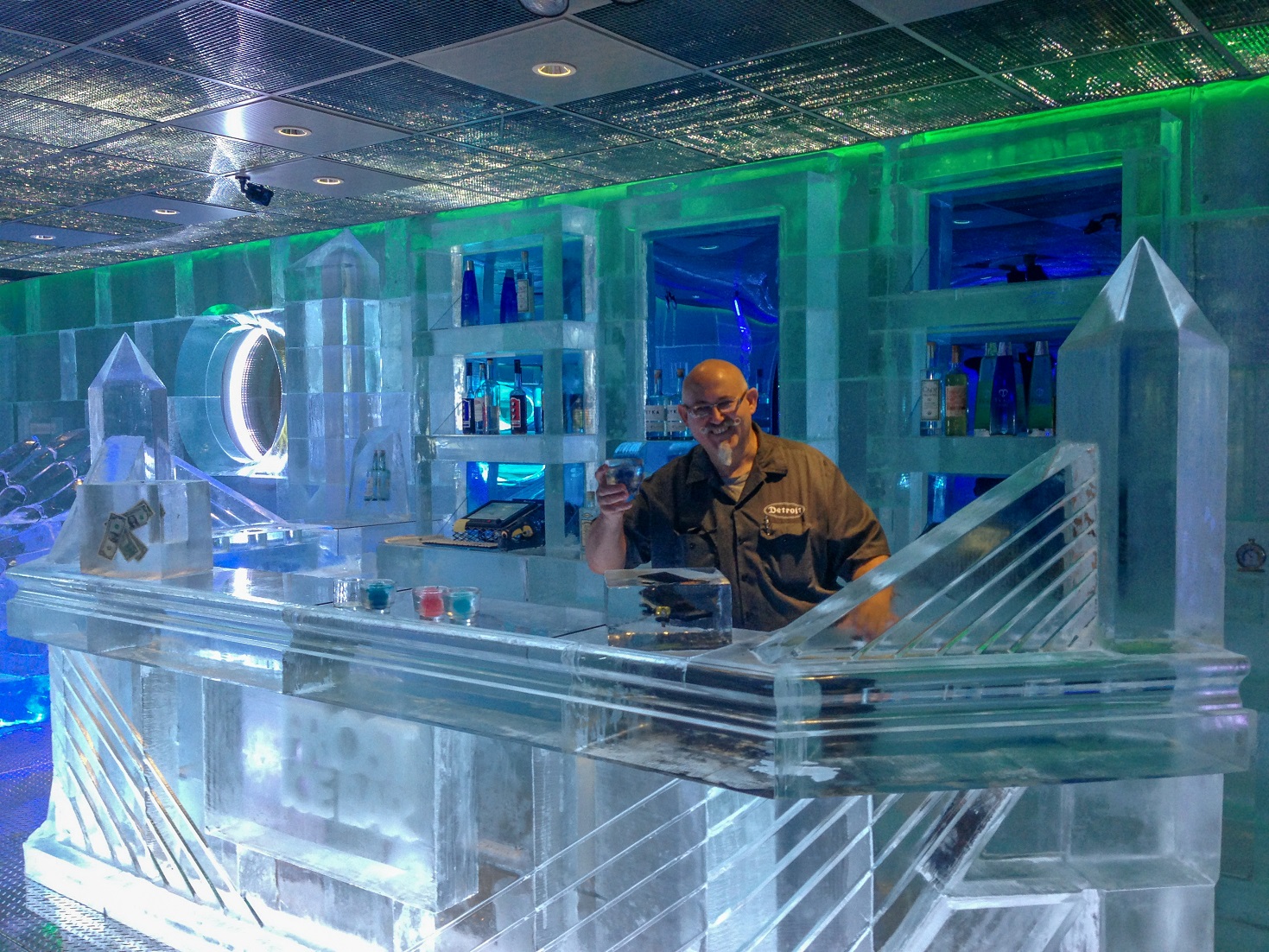
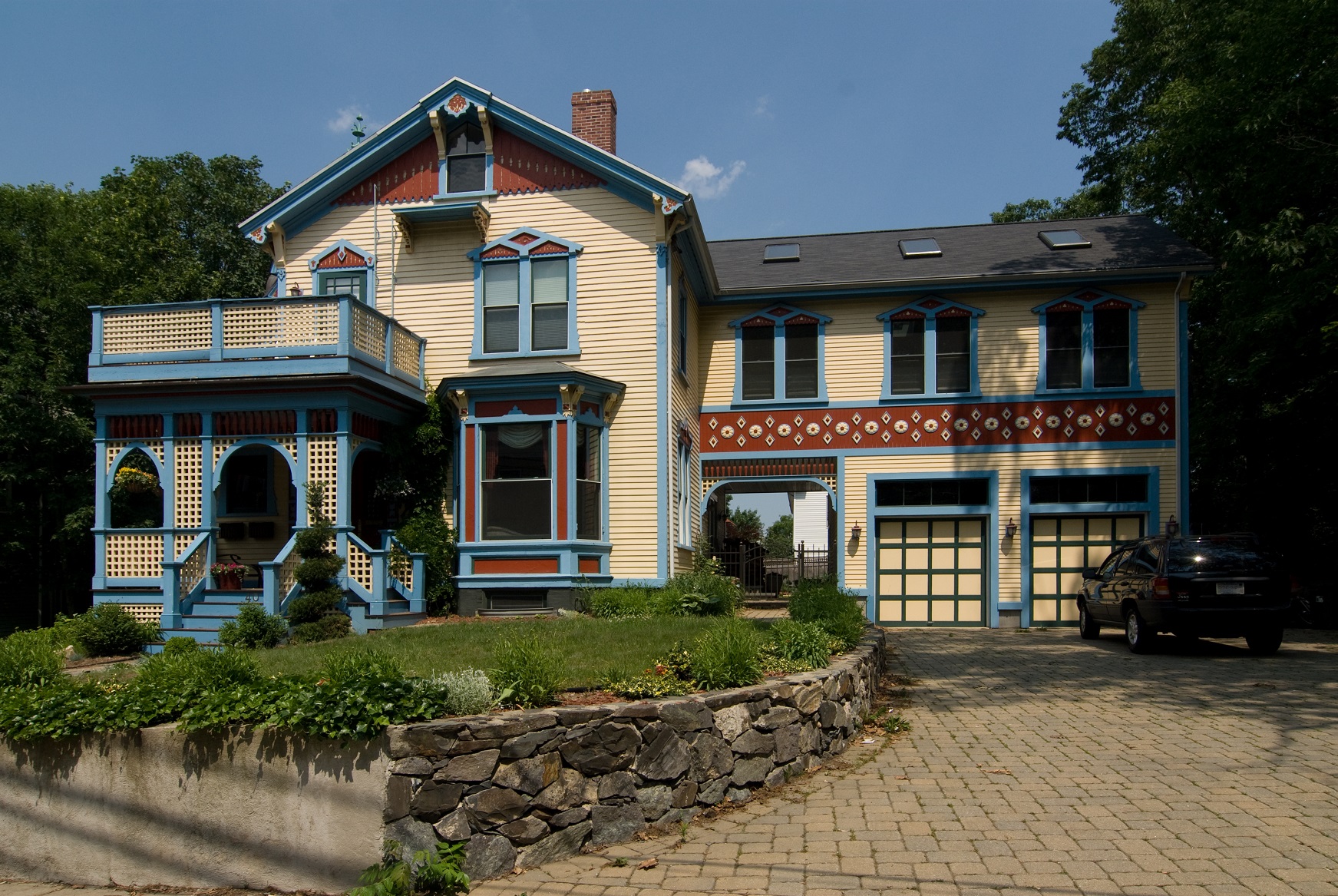
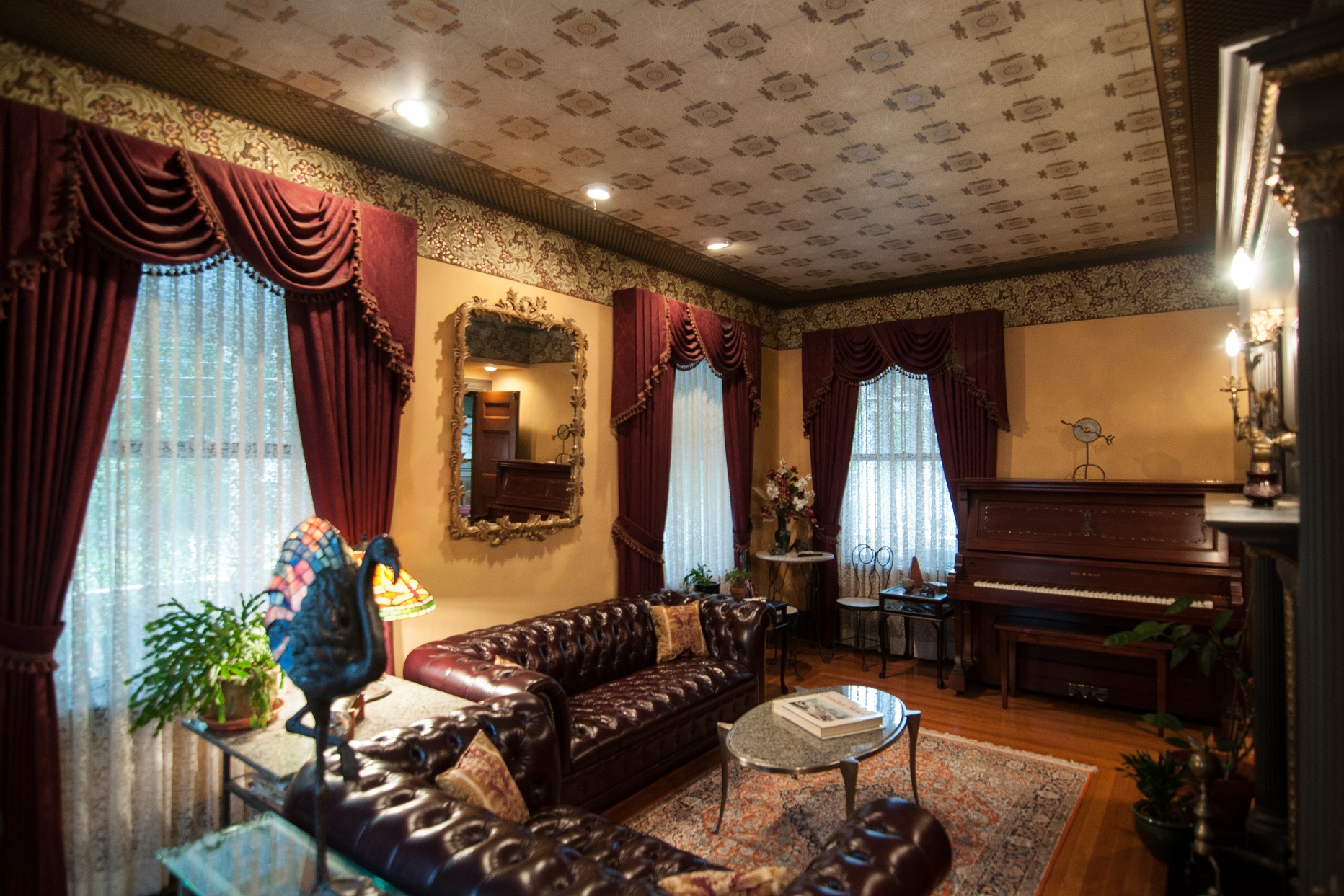
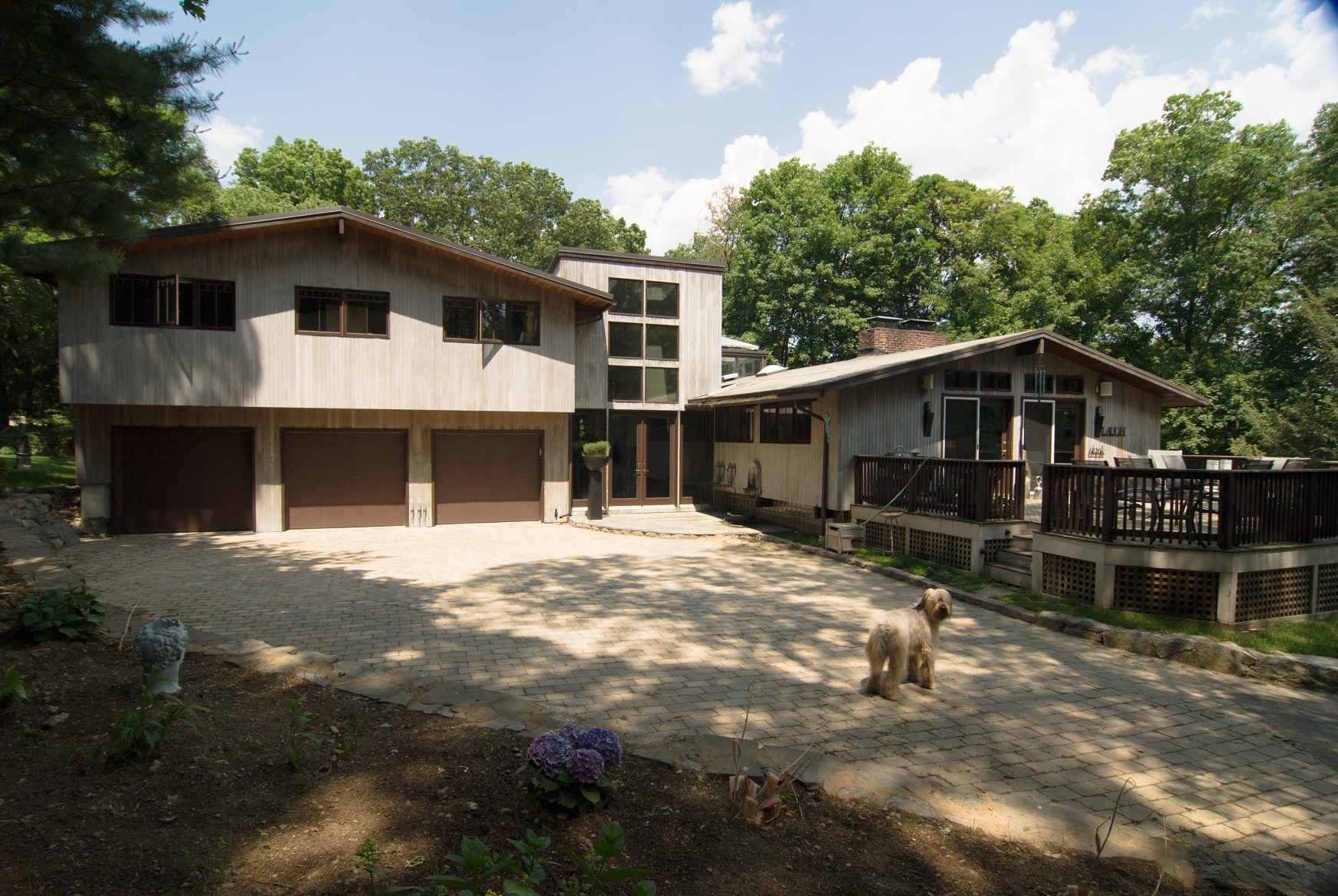
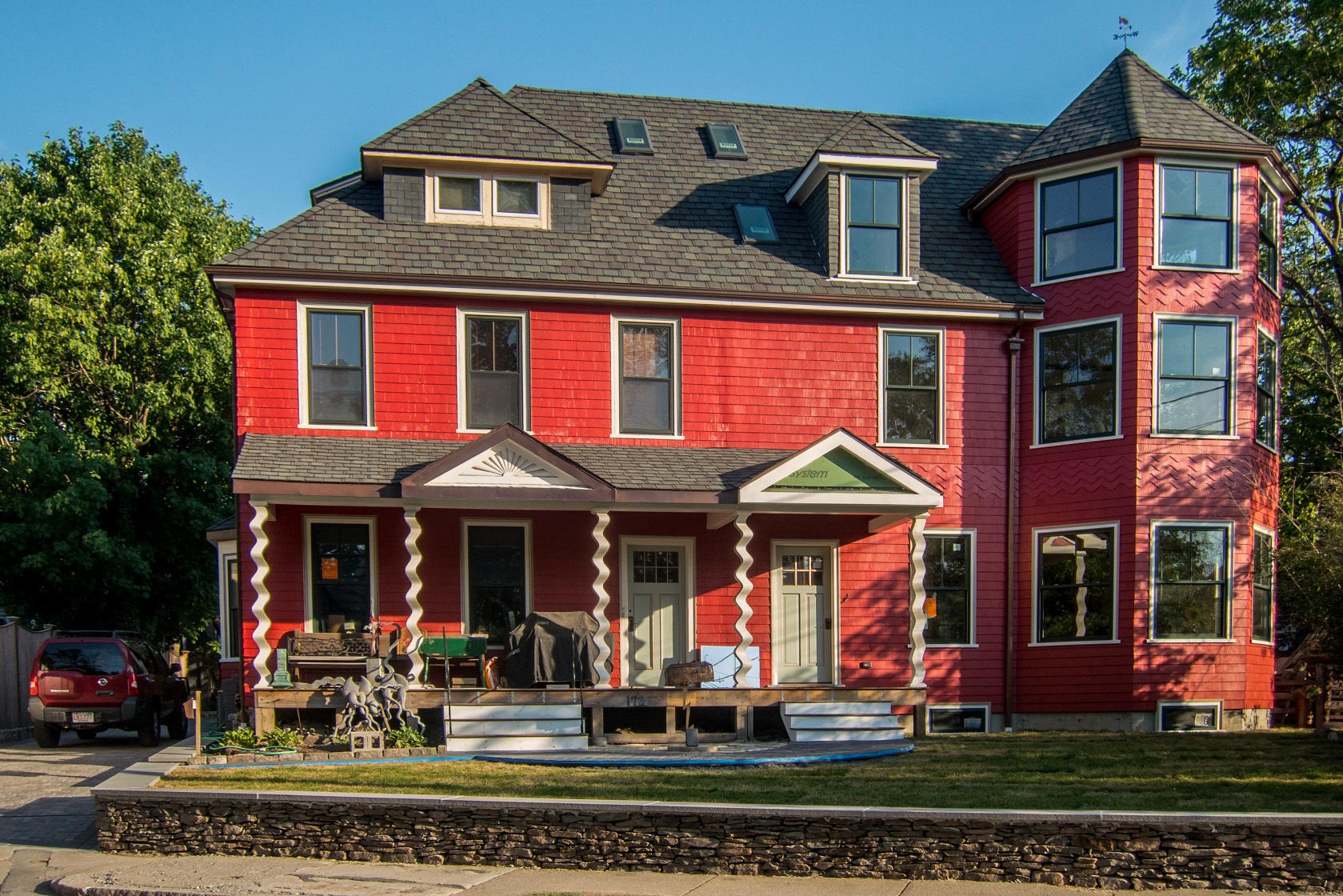
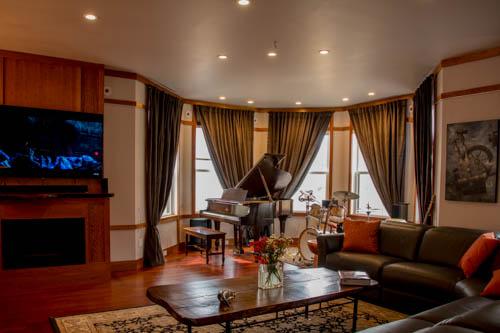
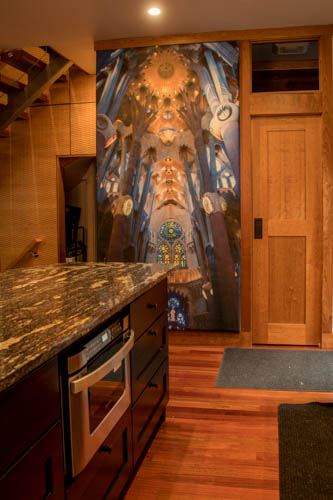
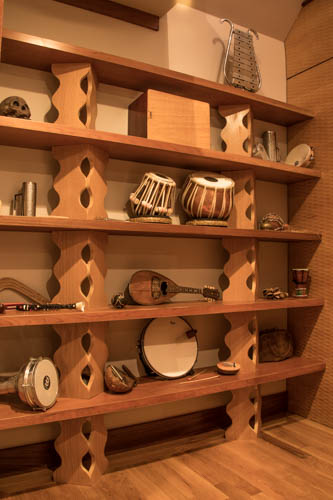
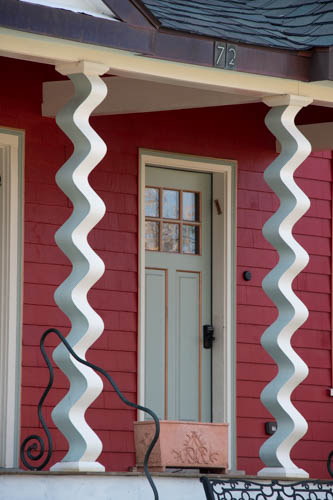

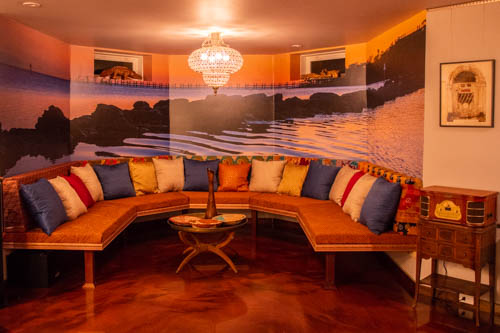
Image Credit:
Mark Landsberg/MLA Consultants
Getting in touch: BostonVoyager is built on recommendations from the community; it’s how we uncover hidden gems, so if you know someone who deserves recognition please let us know here.