





Today we’d like to introduce you to John Burns.
Thanks for sharing your story with us John. So, let’s start at the beginning and we can move on from there.
I am a person in long-term recovery and also am the father of two daughters, one of whom is 21 and has struggled with substance use disorder since she was 14. In 2014 I founded a family support group named Families Hoping and Coping which has two chapters in Dover and Portsmouth, NH for families and loved ones who are struggling with or in recovery from substance use disorders.
In June of 2015 a group of us in the recovery community sat down to discuss whether Families Hoping and Coping should become a 501c3 non-profit and in that discussion we had some people in recovery that had been allies of our group indicate a need for starting a recovery community organization model in Strafford County. We decided it was a separate mission from the family support group.
Shortly after this initial meeting, several community-based outreach meetings were held to gather stakeholders and identify resources for an RCO and how we could make it a reality. Through the fall of 2015 and spring of 2016 those meetings SOS Recovery Community Organization was born. This then led to identifying Goodwin Community Health as a fiscal agent for 501c3 non-profit standing as well as numerous meetings to create a name, logo and basic infrastructure of the mission and vision.
Initially, I served on a community steering committee for SOS and was also hired to start and get Safe Harbor Recovery Center open in Portsmouth NH. Over the summer of 2016 SOS, without a physical location, SOS worked with Safe Harbor and launched a peer-based recovery coaching program named Community Access to Recovery in 6 communities with SOS serving the Dover and Somersworth, NH police departments.
This program allowed anyone to walk into those police stations requesting assistance to connect to substance use treatment resources without risk of being arrested. Those who requested help were transported to a local hospital where they would meet up with a volunteer peer recovery coach that SOS dispatched to help them navigate treatment resources.
In August and September of 2016, the stakeholders secured $5000 in funding from the NH Charitable Foundation and decided to open our first to Recovery Community Centers in Durham, NH and then Rochester, NH. The initial vision found that the need was so great we would staff the centers with volunteers alone. SOS RCO was offered space in St. George’s Episcopal Church in Durham and First Congregational Church in Rochester.
Numerous peer recovery coaching training was set up for a 5 day, 30-hour Recovery Coach Academy that was created by Connecticut Community for Addiction Recovery (CCAR). Numerous volunteers collected supplies, donations and volunteered time to set up the office spaces with virtually no budget.
During this same time, SOS applied for a grant through a state-funded facilitating organization for recovery community organizations. The facilitating organization chose SOS RCO as one of 5 out of over 30 applicants statewide for a development contract based on readiness for national accreditation through the Council on Accreditation for Peer Recovery Support Services (CAPRSS). This provided SOS with over $200,000 in annual funding to prop up our RCO’s with paid stuff.
In November 2016 I left Safe Harbor and was hired by SOS to become a director. Simultaneously Goodwin Community Health, our fiscal agent, recognized as a federally qualified health center engaged in substance use disorder treatment, the need and value of funding our program and provided funding through some of the federal grant monies for assisting with that staffing for ancillary recovery supports for their medically assisted treatment programs.
All of this funding allowed SOS to have a full-time Director (John Burns) as well as two full-time capacity building specialists to help staff centers and build volunteer capacity as well as programming and services. SOS was also chosen to launch a pilot program in the community to allow the recovery centers to train and distribute state provided naloxone (the life-saving medication that reverses an opioid overdose) to family members and individuals identified as at risk for overdose.
December of 2016 Wentworth Douglass Hospital awarded another $110,000 one year grant to SOS RCO to help fund a center in Dover, NH. In April of 2017 utilized those monies to lease, renovate and open a 3500 square foot recovery community center in Dover, NH. SOS also hired an additional full-time capacity building specialist and a part-time marketing outreach coordinator.
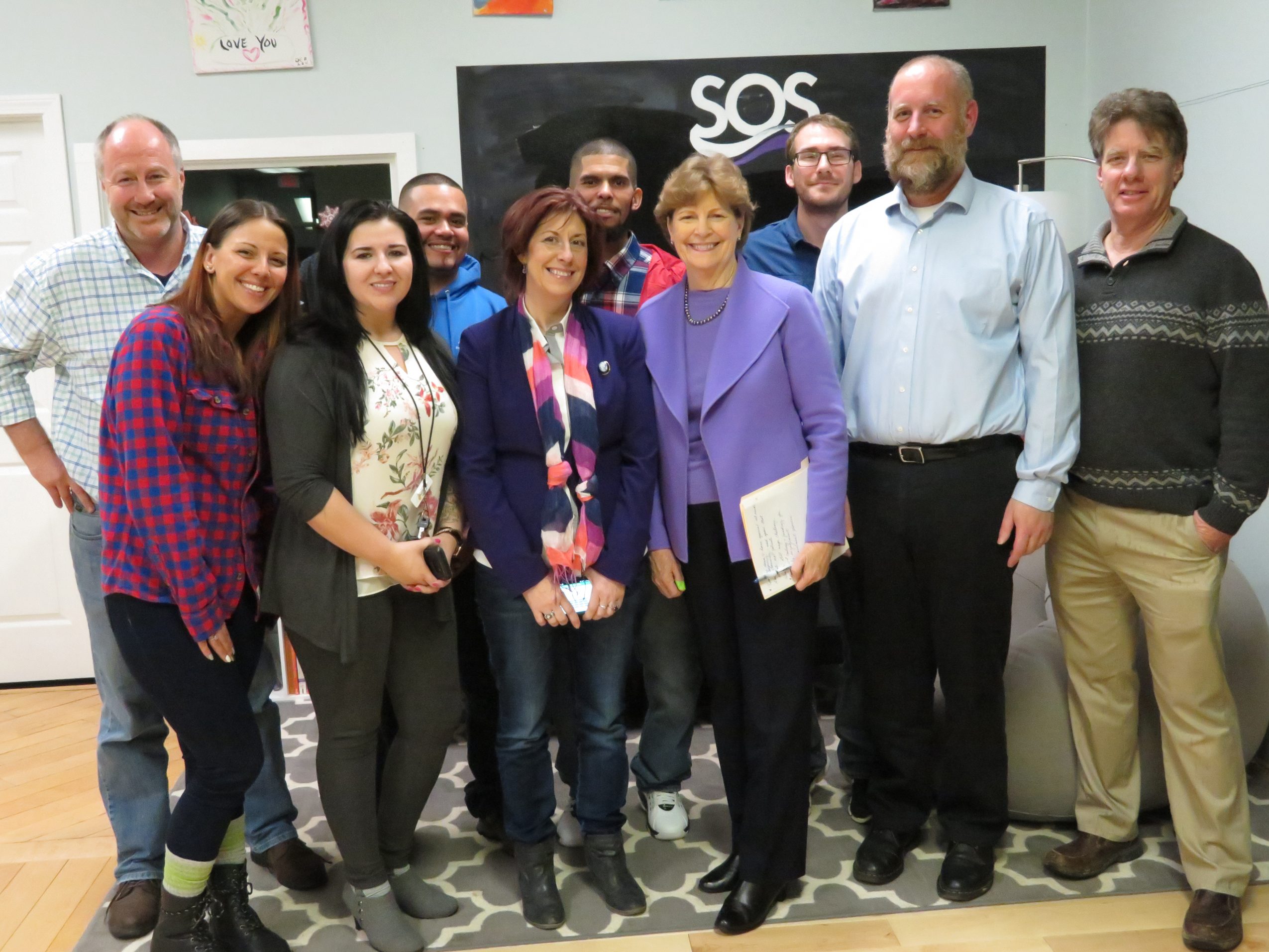
In May of 2017 SOS in Dover was open and a grand opening was attended by over 150 attendees including U.S. Senator Maggie Hassan. During the summer of 2017, Goodwin Community Health again recognized the demand and engagement that SOS was getting with our programs and services and the value of our services. Goodwin agreed to fund two additional part-time positions to help provide offsite coaching services within the health center as well as provide us additional capacity at the recovery centers.
In the fall of 2017 SOS was receiving such heavy engagement in Rochester but limited in Durham that we shut down the Durham center and focused on an expansion of the church in Rochester. The site expanded from 500 sq ft in Rochester to 2000 square feet with a negotiated agreement with First Congregational Church.
In November of 2017 SOS launched a program with Strafford County Corrections to be the first correctional facility in the state of NH to allow SOS to come in and provide outreach within the jail and train those incarcerated with naloxone training. Those who volunteer to take part in the program receive naloxone kits in their property upon release from the jail.
Individuals incarcerated are identified as being some of the highest risks for individuals with substance use disorder who get released and overdose. In February of 2018 SOS Wentworth Douglass Hospital and SOS launched a recovery coaching in the hospital. This program allows individuals identified in either emergency department or throughout the hospital with a substance use disorder to have a recovery coach sent to them.
Within one hour of receiving a call from the hospital, SOS sends recovery coaches to the hospital. Today SOS in Dover has an average of 600 visitors a month and typically averages about 60 new members walking through our doors each month. Our Rochester center averages about 150 visitors a month and usually sees about 20 new members each month. All services are free and we support multiple pathways to recovery for individuals.
We do peer recovery coaching with individuals usually all volunteer driven with 25-30 coaches that usually coach about 50 individuals each month. We also provide a weekly check in for a program called telephone recovery supports where we average about 200 calls a week and provide recovery check-ups on 65-75 individuals on an ongoing basis.
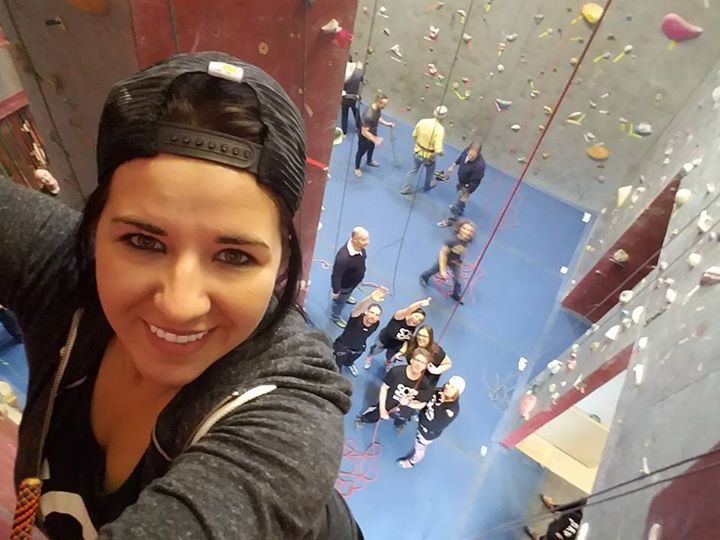
These individuals usually lack transportation or have obstacles that make it difficult to come into the center and we are often their connection to resources and recovery supports. Our centers also offer everything from recovery meetings, art and music programs, family support meetings and various social events like bowling each month and indoor rock climbing to provide sober and safe social activities to build positive and supportive connections in the recovery community.
We’re always bombarded by how great it is to pursue your passion, etc – but we’ve spoken with enough people to know that it’s not always easy. Overall, would you say things have been easy for you?
The road has been somewhat smooth. Our greatest obstacle is always funding. NH is 49th out of 50 states for access to treatment supports. We often average crisis navigation for 40-60 people each month to help navigate people seeking treatment resources.
Unfortunately, the system in NH is overburdened and access to treatment can often require waiting for several weeks. We try to bridge that with recovery supports. The funding is very limited through state and federal funding and it is also unstable. We have an incredible demand for services which makes balancing our resources and capacity with that demand very challenging.
Fortunately, our model is one that involves volunteers and giving back so we have a service model that provides us with an average of over 500 volunteer man-hours per month to supplement our capacity in the two centers. We are constantly faced with needing to provide admin support to collect and disseminate outcome-based data to justify the success of our services for additional funding but this can put a strain on services in order to do so effectively.
We’d love to hear more about your business.
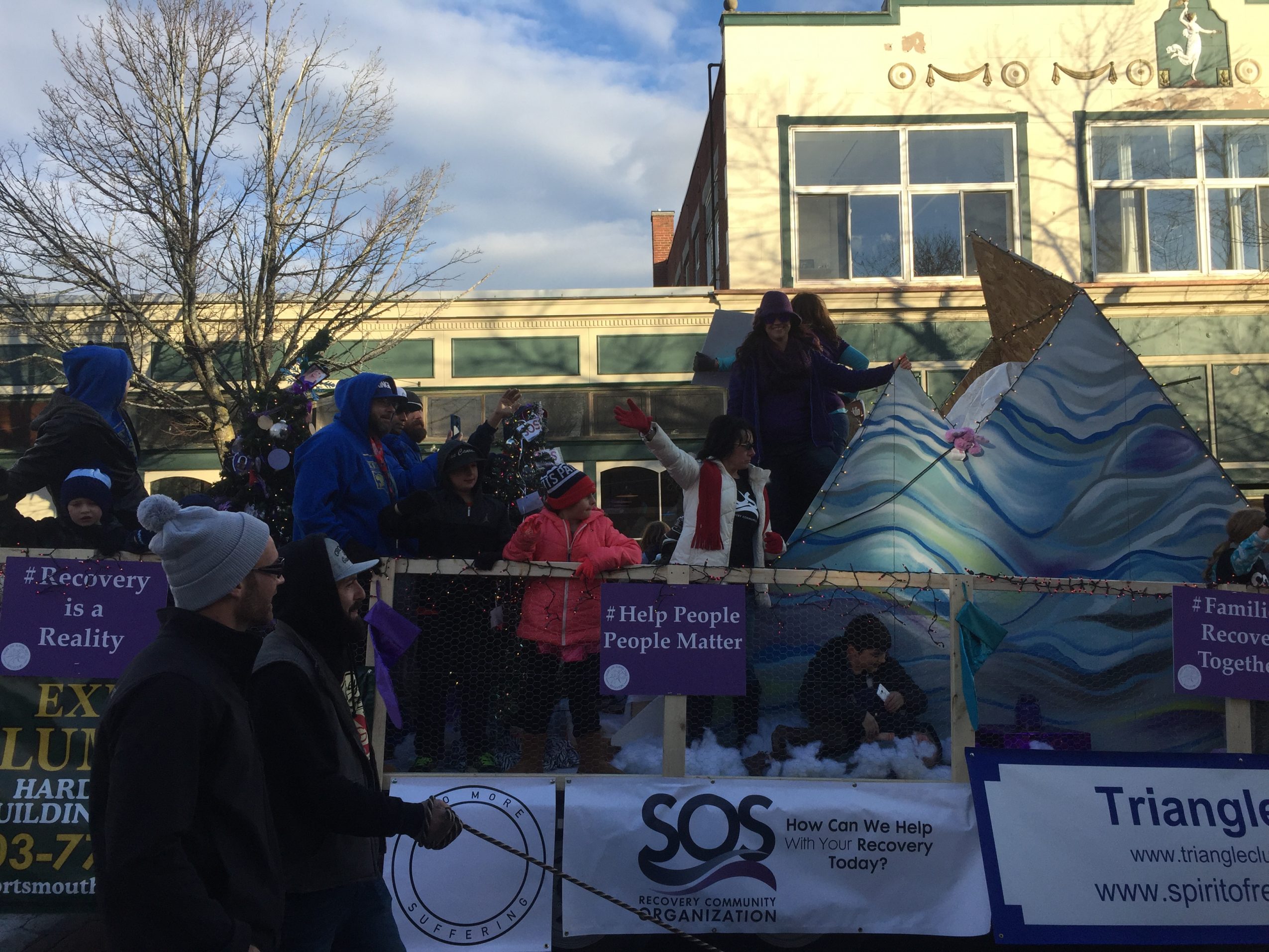
The mission of SOS Recovery Community Organization is to reduce stigma and harm associated with substance misuse by providing safe space and peer-based supports to people in multiple pathways of recovery.
The vision of SOS Recovery Community Organization envisions a world in which recovery from addiction to alcohol and other drugs is possible and widely embraced through low-barrier access to inclusive and respectful support, care and the resources needed to accomplish self-defined goals SOS is known for our ability to collaborate in the community with healthcare, substance use disorder treatment providers and mental health providers to provide a continuum beyond clinical care.
Our goal is to provide peer-based supports and support individuals seeking or maintaining recovery. What we are most proud of is that in such a short time we’ve been able to prop up so many successful and robust programs and services that have served our community. What sets us apart is we provide a safe and nurturing environment for people who have faced incredible challenges, have been marginalized and are able to thrive in their recovery despite those challenges. We are really about human connection.
Finding people who have lived experience and have gone through similar experiences and are able to support each other with love, empathy, and support while maintaining an approach that is person-centered, self-directed and builds on personal strengths. We are currently offering more peer recovery support services as an organization than any other recovery support provider in the state. In 2017 we were chosen by the NH Providers Association as the recovery support provider of the year.
What were you like growing up?
Growing up I tended to be involved with a lot of activities early on and was involved in swimming, baseball, and sports. I was also a loner of sorts. I always kept a small group of friends but for the most part, I also kept to myself. My interests included some sports and activities but had a lot of challenges as I lost my father when I was 4 in a tragic work-related explosion and then lost a step-brother when I was 14 (he was 19) to an alcohol-related boating accident. I had two younger sisters as well.
Contact Info:
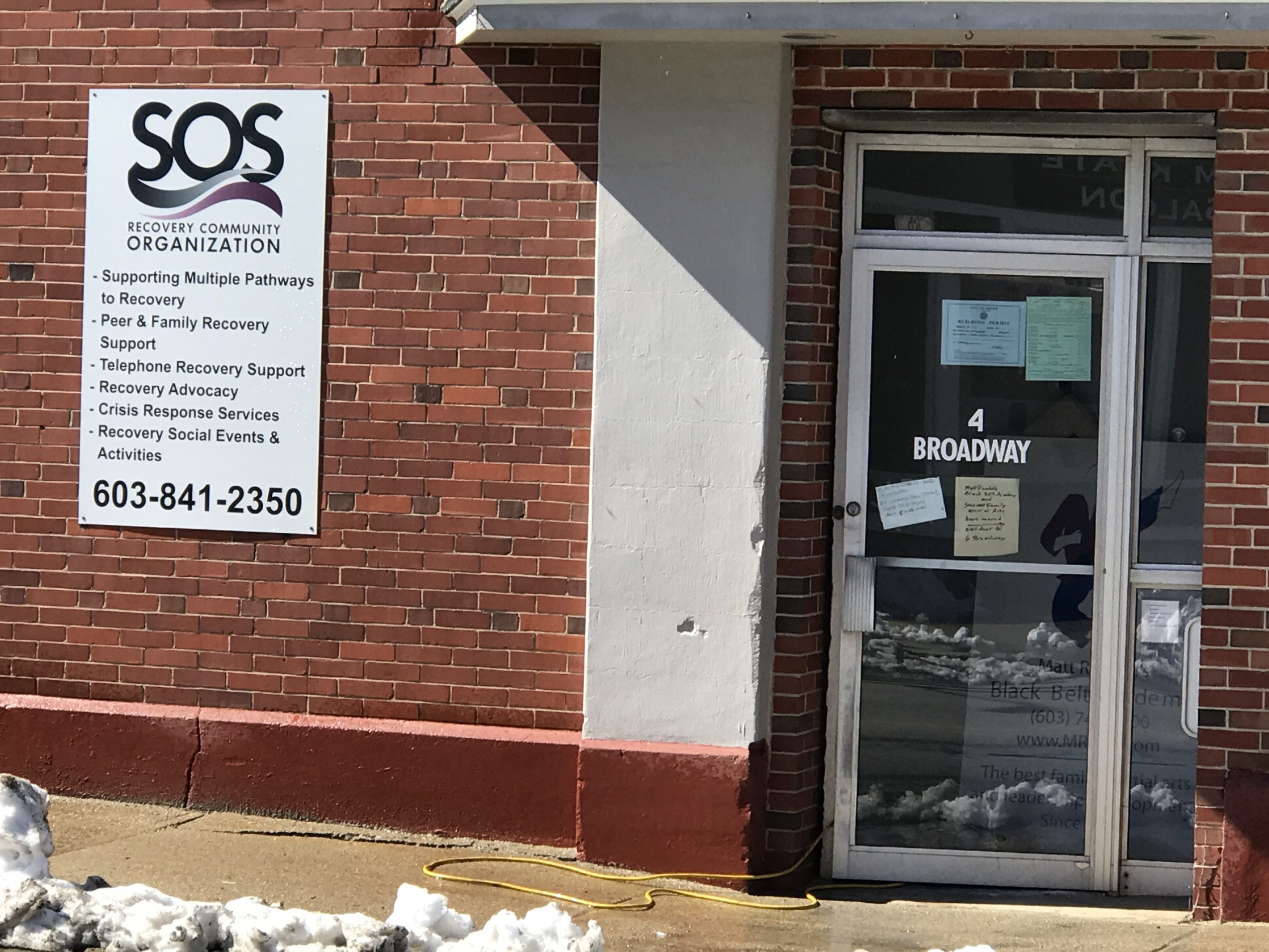
- Address: Dover SOS Recovery Community Center – 4 Broadway, Dover, NH 03820
Rochester SOS Recovery Community Center – 63 S Main St. Rochester, NH 03878 - Website: www.sosrco.org
- Phone: 603-841-2350
- Email: info@sosrco.org
- Instagram: sos_rco
- Facebook: https://www.facebook.com/sosrecovery
- Twitter: @sos_rco
Getting in touch: BostonVoyager is built on recommendations from the community; it’s how we uncover hidden gems, so if you know someone who deserves recognition please let us know here.