






Today we’d like to introduce you to Jennifer Higgins.
A graduate of the Gerontology Ph.D. Program at the University of Massachusetts, Dr. Higgins has spent more than 25 years in the field of gerontology. For her dissertation, she conducted a nationwide study of senior center gambling policies designed to regulate problem gambling. Results of the preliminary analyses conducted for this dissertation have recently been published in the Journal of Aging and Social Policy and the Journal of Aging Studies. Dr. Higgins has presented her work at gambling conferences in the United States and Canada. Over the course of her academic career, Dr. Higgins has conducted policy analyses and participated in numerous research projects at the University of Massachusetts/Boston Gerontology Institute, the Boston University School of Social Work, Simmons College School of Social Work, the Massachusetts Department of Public Health, the then Massachusetts Department of Mental Retardation, and the Massachusetts Council on Compulsive Gambling. In 2002, she was invited to join an Expert Panel of problem gambling clinicians and academics at the University of Windsor Ontario for the purpose of designing the first senior problem gambling diagnostic tool. Presently, Dr. Higgins is the Director of Research and Policy at the Association of Developmental Disabilities Providers. ADDP is a trade association representing 135 developmental disabilities provider agencies across the Commonwealth. Dr. Higgins is responsible for reviewing research affecting older adults and persons with developmental disabilities, and making policy recommendations for the agency. Also at present, Dr. Higgins is serving a four-year term on the FDA’s Anesthetic and Analgesic Drug Products Advisory Committee. In her role, she reviews a considerable amount of medical research on opioid drug products and opioid abuse-deterrent drug products. She is called to vote for approval or disapproval of the products under review by the committee.
Great, so let’s dig a little deeper into the story – has it been an easy path overall and if not, what were the challenges you’ve had to overcome?
Dr. Higgins experienced some difficulty landing jobs following graduate school. It has been a slow and steady climb over the years. However, she is grateful for all of the hard work she has put in and the many associates she has met along the way.
Association of Developmental Disabilities Providers – what should we know? What do you guys do best? What sets you apart from the competition?
In her present role as the director of research and policy at the Association of Developmental Disabilities Providers (ADDP), she manages research and policy initiatives for the trade association which represents 135 developmental disabilities providers across the state of Massachusetts. She performs legislative affairs work and serves as one of the agency’s lobbyists. She also develops research products, grant proposals, and trainings provided to ADDP’s provider members. ADDP’s mission is to promote and ensure strength of community-based providers so provider members can be successful in improving quality, access and value of services in the community. ADDP is committed to enhancing political, financial, and educational health of member organizations that serve people with disabilities, including intellectual and developmental disabilities and acquired brain injuries.
Where do you see your industry going over the next 5-10 years? Any big shifts, changes, trends, etc?
There are many changes anticipated for the field of I/DD over the next 5-10 years. On the federal level, for instance, there are continuous threats to the Medicaid health program, which is one of the main health care delivery programs for the individuals served by ADDP’s providers. Without this program, individuals served would not only lose critical medical care, but many of the community-based programs that enable them to remain independent and integral members of their communities. Similarly, on the state level, there is a major shift in the way health care is being delivered to individuals served. Once again, changes in MassHealth and the growing prominence of managed health care will affect how services are delivered and these changes have the potential of dropping a number of individuals served from their rolls. ADDP and its provider members advocate strongly for the continued access of health care and community-based programming critical to the continued independence of individuals served and support for the workforce that enables these services to exist.
Contact Info:
- Address: 1671 Worcester Road, Suite 201, Framingham, MA 01701
- Website: www.addp.org
- Phone: 508-405-8000
- Email: jenniferhiggins@addp.org
- Facebook: https://www.facebook.com/jennifer.higgins.507
- Twitter: @MassADDP
- Other: https://www.linkedin.com/in/jennifer-higgins-81794b84/

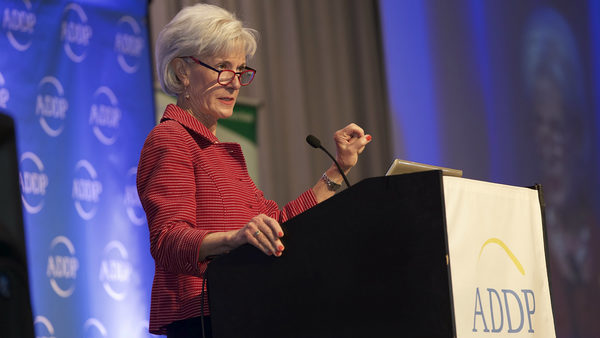


Image Credit:
U.S. Rep. Joe Kennedy; ADDP Legislative Luncheon at the Massachusetts State House; Former U.S. Secretary of Health and Human Services Secretary Kathleen Sebelius; U.S. Senator Elizabeth Warren
Getting in touch: BostonVoyager is built on recommendations from the community; it’s how we uncover hidden gems, so if you know someone who deserves recognition please let us know here.