

Today we’d like to introduce you to Gabby Sumney.
Every artist has a unique story. Can you briefly walk us through yours?
I didn’t consider filmmaking an option for me until I was a junior in high school. My Theatre Arts teacher, Kim Bledsoe, was a filmmaker in addition to being our teacher and an actor in an improv comedy troupe. She wasn’t rich, she didn’t live in LA, and she wasn’t a man. I think prior to that moment I assumed you had to be all of those things to make a film. It was a classic case of you can’t be what you can’t see. After spending about a year asking her questions and unofficially studying film, I enrolled in the Film Studies program and the University of North Carolina at Wilmington–at the time, the only film program that offered in-state tuition.
At the time, I imagined that I would go to school and learn how to be the next Spike Lee–we’re both black, we’re both from New York, we like the same sports teams–but my first class was definitely not preparing me for that. It was called “History and Appreciation of Modern Cinema” and it was mostly geared toward non-majors. The woman registering us for classes made a point to tell us we weren’t going to be watching Transformers or James Bond, but it seemed more interesting to me than watching a bunch of silent films all semester. The course was nuts! We watched films from Romania, India, Palestine, Mexico, Hungary… I never even heard of most of these filmmakers or considered the kinds of stories they were telling or not telling. That was also the class where I saw my first experimental films, which, ironically, I didn’t really get or enjoy at the time.
Once I actually got into production courses, it was really clear to me that I wasn’t interested in being Spike Lee at all. I still wanted to tell stories, but just in a different way. I fell in love with making documentaries, and I made one about an artist I really admired for my capstone project. More than that, I really fell into experimental filmmaking and started to consider teaching and arts administration. I lovingly blame my professors, Shannon & Andre Silva for that. They both encouraged me and pushed me to develop my voice and my technique while also showing me other ways of communicating and how to help teach other artists how to craft their own voices. They probably knew before I did that I was going to graduate school so that I could continue to learn and eventually teach others.
Please tell us about your art.
I feel most comfortable describing my work as Experimental Documentary. I don’t make fiction work and I don’t focus on a clear space-time relationship. Most of my work deals with abstraction and metaphor.
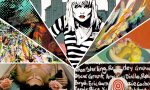
While I was in graduate school the majority of the work I produced was Direct Animation. Simply put, I physically bleached, scratched, painted, and otherwise altered film—like the actual plastic stuff. I find this work really rewarding and fulfilling for a few reasons:
1) I can do it alone, which lends itself to a kind of meditation. It’s me in my home studio and maybe some music playing with my toolbox full of inks, nail polishes, sandpaper, etc. sort of reliving arts and crafts time in elementary school.
2) My dad worked with his hands all through my childhood. He was a mechanic, a construction worker, and he worked with arcade games for a while. Working with my hands reminds me of being underfoot while he was at work or being our personal handyman. Those are happy memories.
3) There’s a tangible thing at the end of the day. So much of media work is digital now—I understand why and I work digitally fairly frequently, especially with paid work—but it can feel impersonal to me when working on things that are specifically about me and my surroundings. A film I’m working on right now is about when my wife and I first moved in together. The idea of having a way to physically hold that memory in my hands via some footage I shot of our house on black and white film is an intimate and satisfying one.
What do you think is the biggest challenge facing artists today?
The two big ones are funding and space.
We live in a country that doesn’t really fund artists and production of art for art’s sake. I understand there are so many issues that I’d like the government to deal with first (poverty, sexual violence, racial discrimination, education, climate change, etc.), but since art doesn’t turn a profit outside of major industries like Hollywood or advertising it can be hard for people who don’t come from privilege to justify using their time and resources on something that’s not likely to yield a return on investment.
As far as space, I don’t mean physical space as much as establishing a space for your voice and your work. With technology being so pervasive, anyone can make work now, which is incredible. It means that not being able to afford a fancy camera or a MacBook is no longer a barrier to expressing yourself, but it also presents challenges for artists, who aren’t already famous or don’t already have connections.
How or where can people see your work? How can people support your work?
www.gfollettsumney.com is my portfolio website. You can also find me on Vimeo and Tumblr (where I keep process pictures and other thoughts about art and education). I’m also delving into printmaking over the last year and I’m selling still hand-painted celluloid work. It’s on a contact basis at this point, but I’ll likely set up an online store if the demand is there.
Contact Info:
- Website: www.gfollettsumney.com
- Email: gfollettsumney@gmail.com
- Instagram: blackandwhitefilmmaker
- Other: www.gfollettsumney.tumblr.com
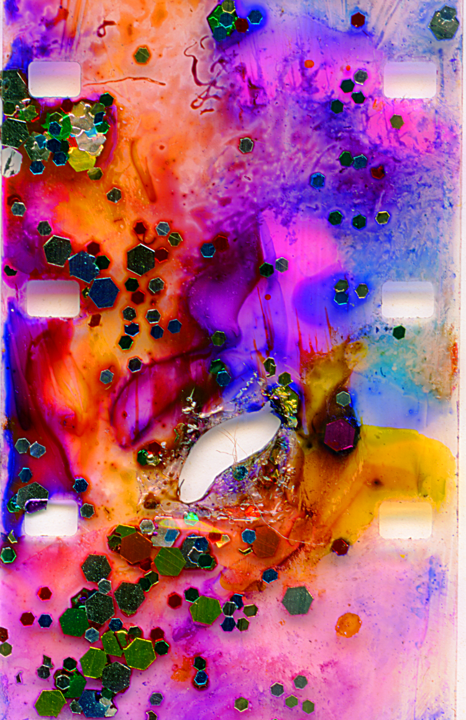
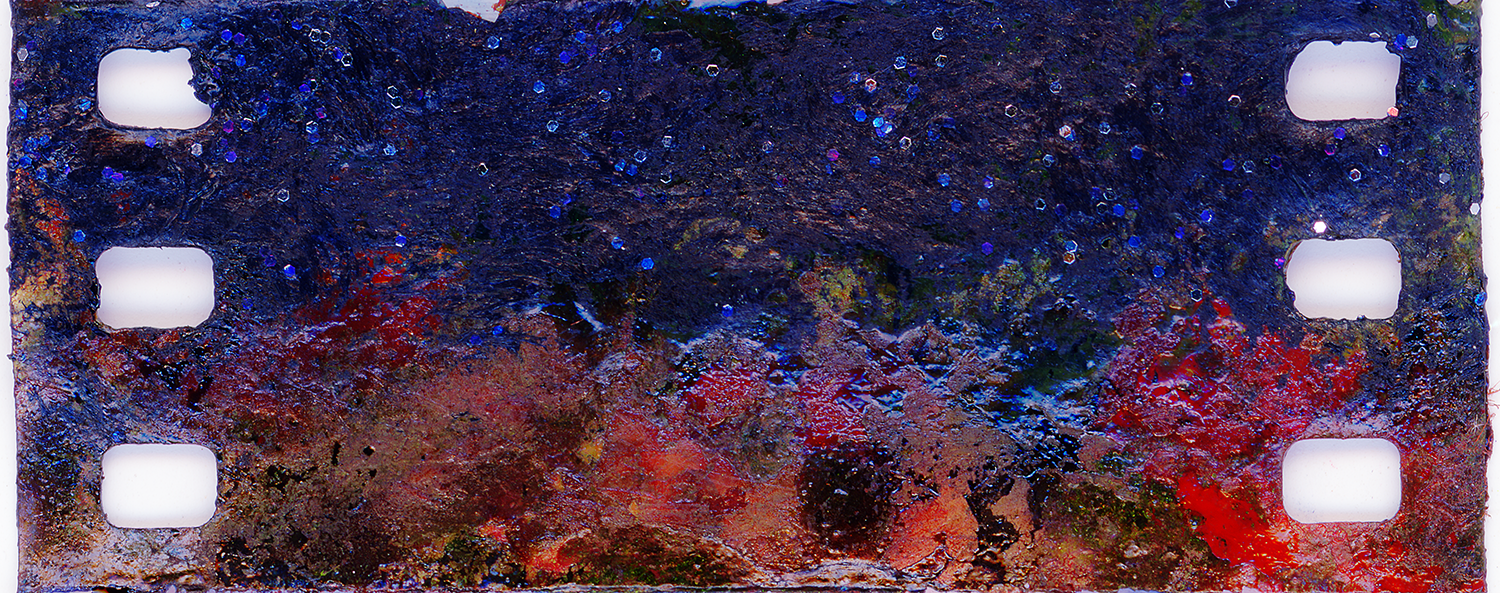
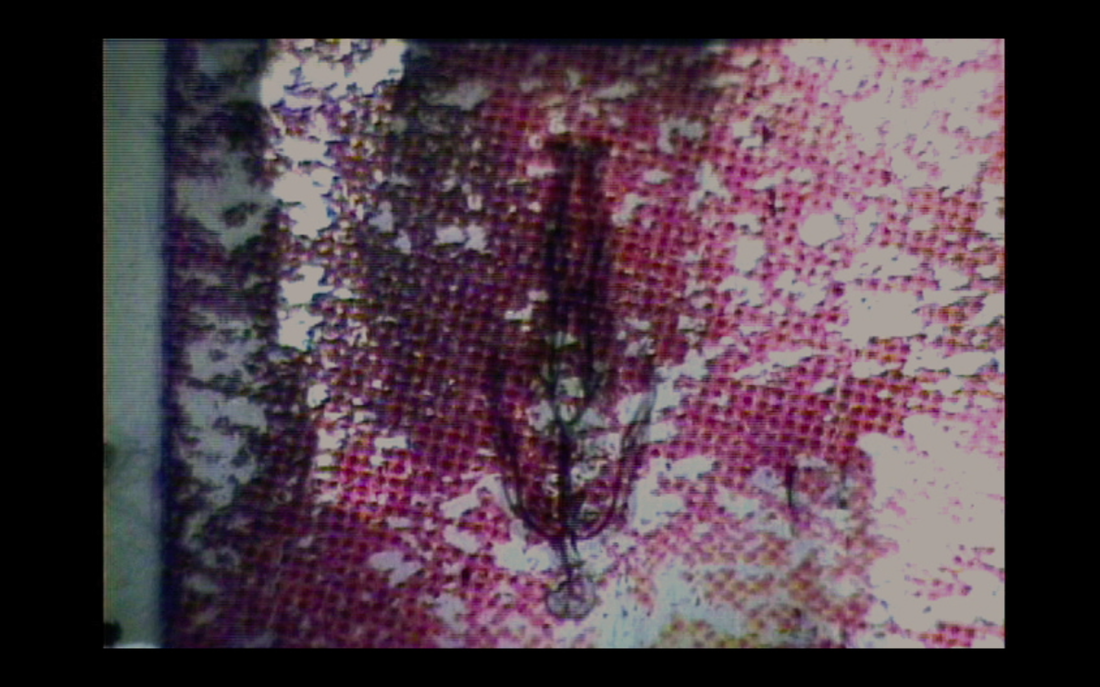
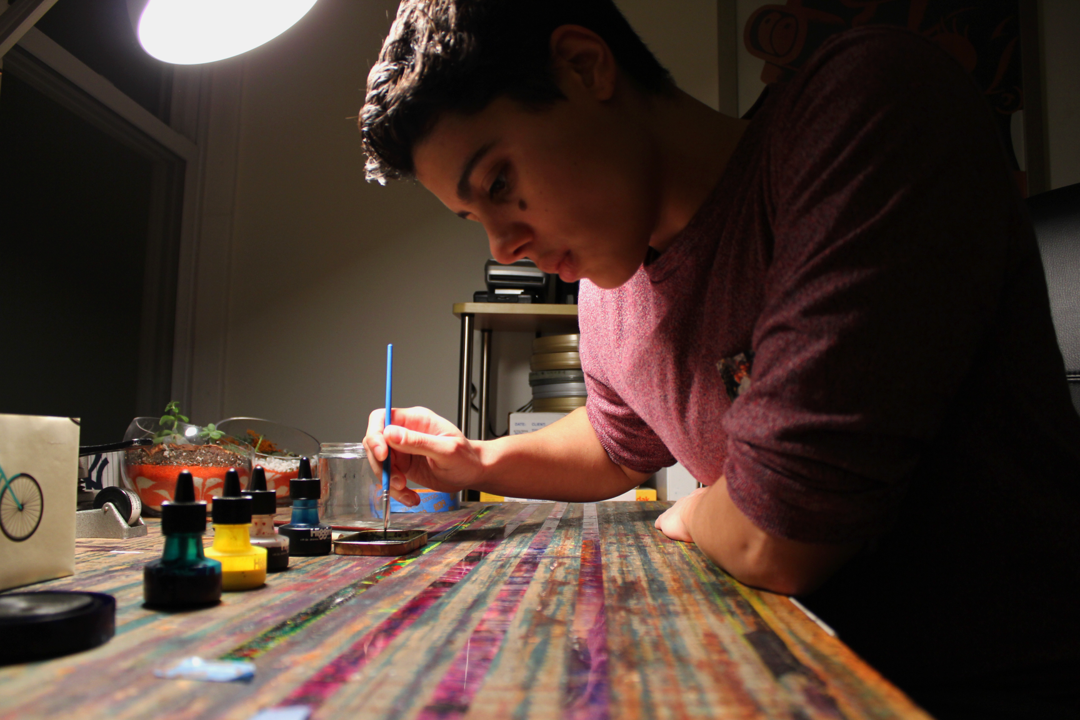 Image Credit:
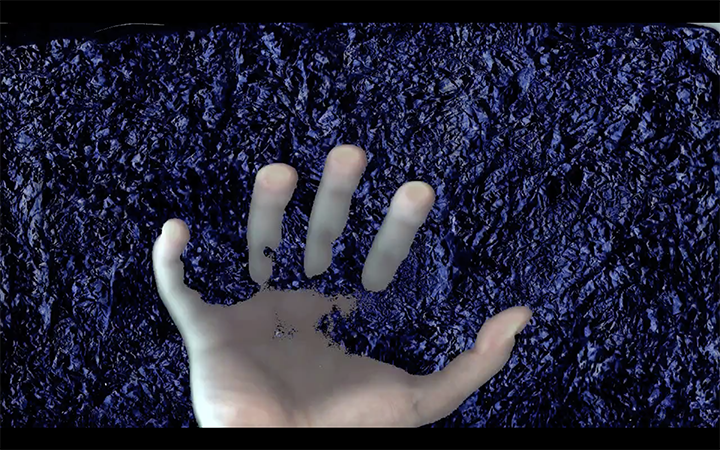
hand picture is a still from Aquaphobia (2011), blue & red hand painted still is from a still series I painted on clear 35mm celluloid called Moore-Cohen (2018), mulitcolored still with the burn whole is a single still from a series called QFJ (2018), Photograph of me painting film at my drafting table taken by Shauna Seaver film still of an upside skeleton from my film Faulkner (2015)
Getting in touch: BostonVoyager is built on recommendations from the community; it’s how we uncover hidden gems, so if you know someone who deserves recognition please let us know here.