



Today we’d like to introduce you to Fang Chih Lee.
So, before we jump into specific questions about the business, why don’t you give us some details about you and your story.
My story begins in Taiwan where I was born. Growing up I studied many forms of martial arts, including Tai Chi. When I was 17, I became Taiwan’s national champion. My specialty then was kendo. This led to a scholarship at Taiwan’s National College of Physical Education where I engaged in many kinds of athletics and learned sports management.
After graduation, my department head asked me to join the faculty, which I did and eventually became an associate professor. In 1998 I received the Teacher of the Year Award from Taiwan’s president. Along with my rigorous class schedule, I coached athletes and organized tournaments with a thousand competitors. Then the college’s administration gave me leave to do graduate study at Springfield College here in Massachusetts.
My personal life had gone through changes too. By this time I was a widow with two young sons and a cancer survivor. A colleague who had studied at Springfield gave me much encouragement. I liked living in America, and my colleague told me about the excellent ESL program in Plymouth Public Schools. After receiving my Master’s degree, I moved to Plymouth and split my first few years between teaching at my college in Taiwan and running my Tai Chi school. In 2006 I became a U.S. citizen. Shortly after that, I committed myself fulltime to my classes in Plymouth.
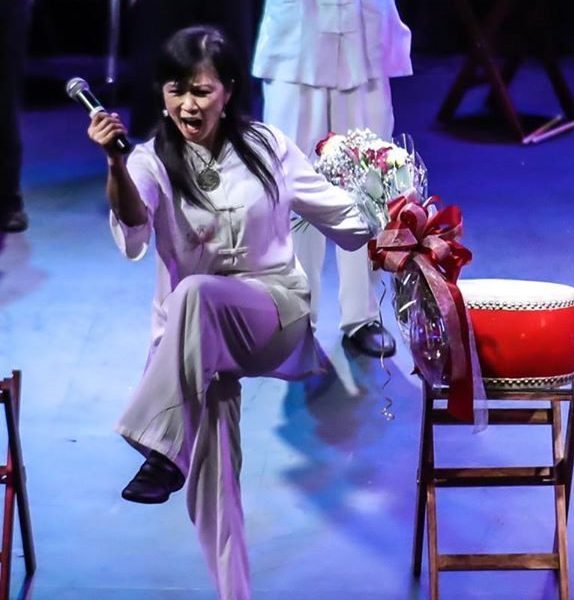
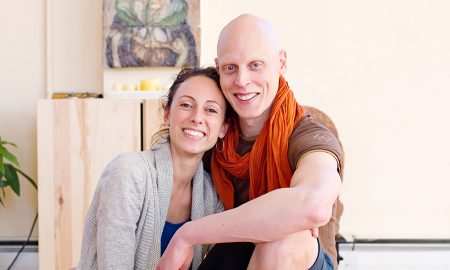
Over the next eight years the enrollment grew, and I was also teaching Tai Chi in nearby health clubs. In 2008 I married my husband Peter Trenouth. Together with nine of my best students, he intensified his Tai Chi studies with me, and being a sifu (a master instructor) I certified Peter and the others as instructors. Since 2014 we have held classes at the Spire Center for the Performing Arts in Plymouth, a great location, and teach at area senior centers, health clubs, senior housing, and other locations—fifteen sites altogether. Together Peter and I own and run Asian Crane Tai Chi, LLC, with its main activity my school in Plymouth, the Tai Chi and Qi Gong with Fang Association.
Along the way, a deep conviction drove my efforts. It affirms that Tai Chi’s synthesis of slow, graceful motions with slow breathing brings health, flexibility, improved balance, and tranquility to its practitioners. Many scientific studies over the last two decades, together with testimonies from my students, keep confirming this belief. By the way, my two sons, Jeff and Drake, did very well in Plymouth schools. They each received scholarships to Massachusetts Maritime Academy. Both are happily married, and Jeff’s wife is pregnant. I’ll be a grandmother in April!
We’re always bombarded by how great it is to pursue your passion, etc – but we’ve spoken with enough people to know that it’s not always easy. Overall, would you say things have been easy for you?
Along with the adjustments of moving to a new country, improving my English skills, helping my boys through school, and maintaining a home, the greatest struggles were finding adequate space for my school and attracting students.
Unlike western exercise regimens with their emphasis on cardio and muscle strengthening, Tai Chi and Qi Gong work from a different perspective. Some of my earliest American students had studied elsewhere and sought a school closer to home. They’re still with me, but in 2000 for folks unfamiliar with either discipline the appeal was hard to grasp. Of course, there were people drawn to the hard and fast martial arts like Karate and Kung Fu. Though rooted in similar traditions, Tai Chi is slow and soft—a movement therapy. Indeed, when practicing Tai Chi the farthest thought from the practitioner’s mind in combat.
My first attempts to maintain a Tai Chi school of my own put me under the authority of two different Karate instructors at different times. We shared hours and space, according to their dictates, and I traveled to other sites that invited me to teach. Enrollment was erratic because several students spent their winters in Florida. Scheduling conflicts became more common. The Karate instructors wouldn’t allow me to create classes for children because they saw this as competition.
Fortunately, two developments came into play. First, from television and publications, people were learning about Tai Chi’s benefits. Doctors recommended it to their patients. In addition, at every opportunity available I explained the therapeutic benefits of Tai Chi and Qi Gong and helped people understand their differences from yoga. Second, a nonprofit organization, originally called the Greater Plymouth Center for the Performing Arts, which had no home, eyed a downtown building.
Built in 1876, it was originally a Methodist church and later used as a second meeting place for the local synagogue. It went on the market. The town of Plymouth bought it. The nonprofit with the help of donations, state grants, and many volunteers brought the grand, old building up to code, converting the sanctuary to a performance hall and attracting top-notch musical and theatrical groups. The majestic steeple still stands, and in 2014 the building became The Spire.
With a tip from Bob Hollis, the president of The Spire’s board, I asked whether the Tai Chi and Qi Gong with Fang Association could rent the large downstairs space because Tai Chi is a performing art as well as a martial art and healing art. Shortly afterward we signed the lease. Our enrollment grew, and invitations to teach off-campus grew as well.
We’d love to hear more about your business.
Our oldest student is ninety-four. The youngest is seven. Some of my students are wheelchair-bound. Some others are gold medalists in national and international Tai Chi tournaments. Dispersed among these students are people who have been studying with me for years and beginners attending their first classes. To understand their attraction to Tai Chi and Qi Gong, a person should picture the yin-yang symbol. It’s a circle divided in half by a wavy line. One side is white, the other black. Inside the white side, there’s a black dot. Inside the black side, there’s a white dot. The circle is eternal and encompasses diverse elements, each inseparable from the other. It symbolizes harmony, unity, and balance—the essence of the universe—and it’s also the symbol for Tai Chi.
Both Tai Chi and Qi Gong synthesize slow breathing with slow, graceful motions. Their respective complexities define the differences between the two. Qi Gong is simpler with much less footwork. Tai Chi is a set choreography with many steps. Anyone walking into a Qi Gong class could just follow the leader and pick up the motions quickly. Tai Chi, though, takes longer to learn. Perfection usually remains a distant horizon, yet no one needs to be a gifted athlete to perform all the motions adequately. There are several styles of Tai Chi with various established forms within each, some going back many hundreds of years.
The Chinese word “Qi” (pronounced Chee) designates a natural, positive energy that falls from the stars. We absorb it. Chinese tradition says Qi Gong and Tai Chi get this energy circulating through our bodies. Both disciplines enhance our physical postures, breathing techniques, and focus. Students learn correct posture and engage in gentle, rhythmic movements with slow, deep abdominal breathing. Modern studies have shown regular practice with Tai Chi and Qi Gong reduces stress, builds stamina, increases vitality, and invigorates the immune system. Each improves our cardiovascular, respiratory, circulatory, lymphatic and digestive functions, leaving students more energized. Tai Chi and Qi Gong have also eased arthritis discomfort.
Because Tai Chi is the more challenging of the two, it brings deeper results. When routinely practiced, Tai Chi goes further towards that yin-yang balance of mind, body, and spirit. There are two basic types of Tai Chi forms. Most are handsets, which means there are no objects held in either hand. A few others utilize weapons such as a fan, sword, or dao (cutlass). By using such Tai Chi props, the challenge and coordination become more concentrated which in turn yield deeper benefits. In other words, these weapons do not feed combative fantasies—just the reverse, they promote meditation while increasing students’ range of motion, deep breathing, and mental focus.
Many of my students have entered tournaments. Tai Chi, like figure skating, can be judged. A panel awards points according to the proficiency of the performance. My students always do well, whether at local or national competitions. The highest level of international competition comes every two years in Taipei, the capital of Taiwan. The Tai Chi Chuan World Federation runs it. It’s a two-day event called the Tai Chi Chuan World Cup.
In 2016 there were two thousand participants from thirty different countries. In 2014 I brought ten of my students who entered individual and synchronized group competitions. We billed ourselves as America’s Hometown Team and loved mixing and learning with people from all over the world.
Along with other accolades, including a plaque for team excellence from the Federation’s president, we brought home four gold medals, seven silver, and one bronze in divisional form competitions. In 2016 Sherry Malone of Plymouth became the overall world champion in weapons with her fantastic double sword performance, beating her third-place finish two years earlier. In six divisional events, Sherry also won four gold medals, one silver medal, and one bronze. Sherry was one of my very first students when I started in Plymouth. Over the 2014 and 2016 tournaments, my husband Peter won two gold medals and one silver. He’s 72-years old.
Our success on the world stage has brought us much pride and recognition, but I think it matches our work with the elderly and handicapped we teach at senior centers and other facilities. They come regularly to our classes, many in wheelchairs. I’m especially proud of the students in our children’s class who were among the stars at our 2017 Celebration of Tai Chi, a demonstration of all we do we held last October in The Spire’s performance hall. Fifty of my students participated, thrilling a full house of friends, family, and people who came knowing barely anything about Tai Chi.
We have created a Qi Gong DVD and another for Tai Chi. Last year we published Peter’s novel, Cloudy Hands: A Tai Chi Love Story. The three are selling well. With all this growing business we created a parent company, Asian Crane Tai Chi, LLC, that includes our school, The Tai Chi and Qi Gong with Fang Association, along with our DVDs and other products. Our trademark is a flying crane, a magnificent bird headed towards new horizons.
Any qualified instructor can bring the benefits of Tai Chi to his or her students. I know several and respect them very much. I think two factors set us apart from some other schools: We offer only classes in Tai Chi and Qi Gong, no other martial arts, and the vast ranges in age, capability, and long-term goals among our students. They’re all living happier and healthier lives, which for me means they’re all champions.
What were you like growing up?
I am the second child in a family of three girls and one boy. I started martial arts training while in a middle school and continued throughout high school which was a private boarding school. An aunt saw something special about me and paid for this education.
From the beginning, I was very competitive and worked hard at my studies, but sports, especially the martial arts, became my focus. This dedication separated me from my brother and two sisters who went to public schools. I had little time for socializing. Romance came much later. My father treated me as the older son. This contributed to my sense of myself as a leader, one with a determination and confidence most teenagers don’t have. Later, I became a demanding teacher, but once in America, my firmness softened a bit.
Pricing:
- PAY AS YOU GO CLASS: (Please note: Tuition prices listed are for classes at the Spire Center only)
-Drop-in Classes: Adults – $15 each, Children, $10 each (Tai Chi, Qi Gong & Meditation), $20 each (Advanced Class or Weapons)
-One class, weekly: Adults: $50/month, Children $30/month (Tai Chi, Qi Gong & Meditation), $70 per month (Advanced Class or Weapons), $100 per month (Tai Chi, Qi Gong, Meditation & Weapons)
-Two classes, weekly: $80 per month (Tai Chi, Qi Gong & Meditation), $120 per month (Advanced Class or Weapons), $120 per month (Tai Chi, Qi Gong, Meditation & Weapons)
-Unlimited Classes: $100 per month (Tai Chi, Qi Gong & Meditation), $150 per month (Tai Chi, Qi Gong, Meditation & Weapons) - V.I.P. PACKAGES FOR UNLIMITED CLASSES: (TAI CHI, QI GONG & MEDITATION)
-SILVER: $275 THREE MONTHS of Unlimited Classes (A $25 SAVINGS!)
-GOLD: $550 SIX MONTHS of Unlimited Classes (A $50 SAVINGS!)
-PLATINUM: $1200 ONE YEAR of Unlimited Classes (A $180 SAVINGS!) - TAI CHI, QI GONG, MEDITATION & WEAPONS:
-SILVER: $400 THREE MONTHS of Unlimited Classes (A $50 SAVINGS!)
-GOLD: $750 SIX MONTHS of Unlimited Classes (A $250 SAVINGS!)
-PLATINUM: $1260ONE YEAR of Unlimited Classes (A $540 SAVINGS!)
Contact Info:
- Address: The Spire Center: 25 ½ Court Street, Plymouth, MA 02360
- Asian Crane Tai Chi, LLC, Mailing Address: 23R Nicks Rock Road, Plymouth, MA 02360
- Website: www.taichiwithfang.com
- Phone: 781-588-5421 ( Fang Chih Lee)
- Email: fang@taichiwithfang.com
- Instagram: fangchihlee
- Facebook: Tai Chi and Qi Gong with Fang Association @TaiChiAndQiGongWithFang
- Twitter: @taichiwithfang
- Yelp: fang@taichiwithfang.com
- Other: Linkedin: linkedin.com/in/fangchih-lee-85714831
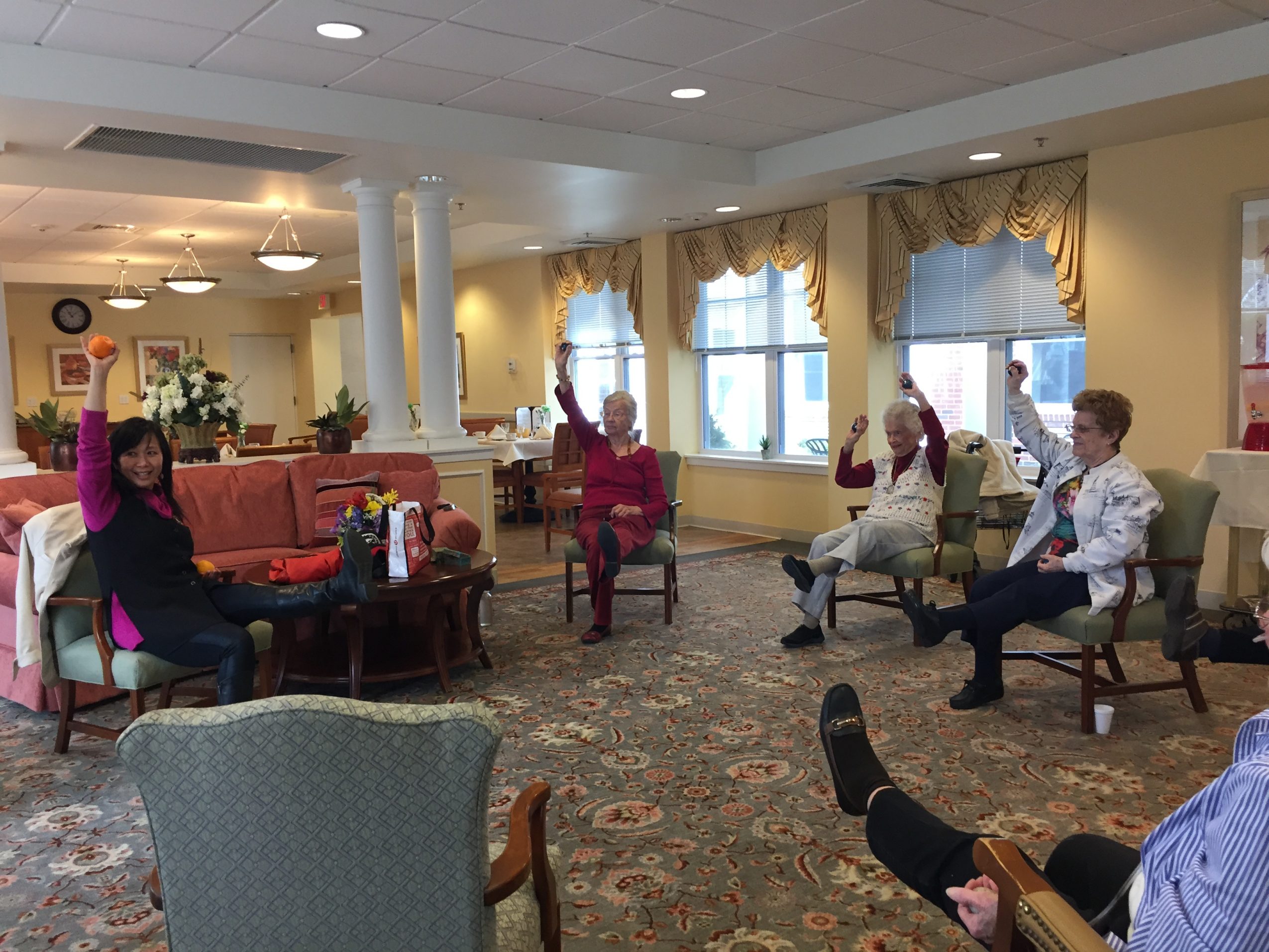
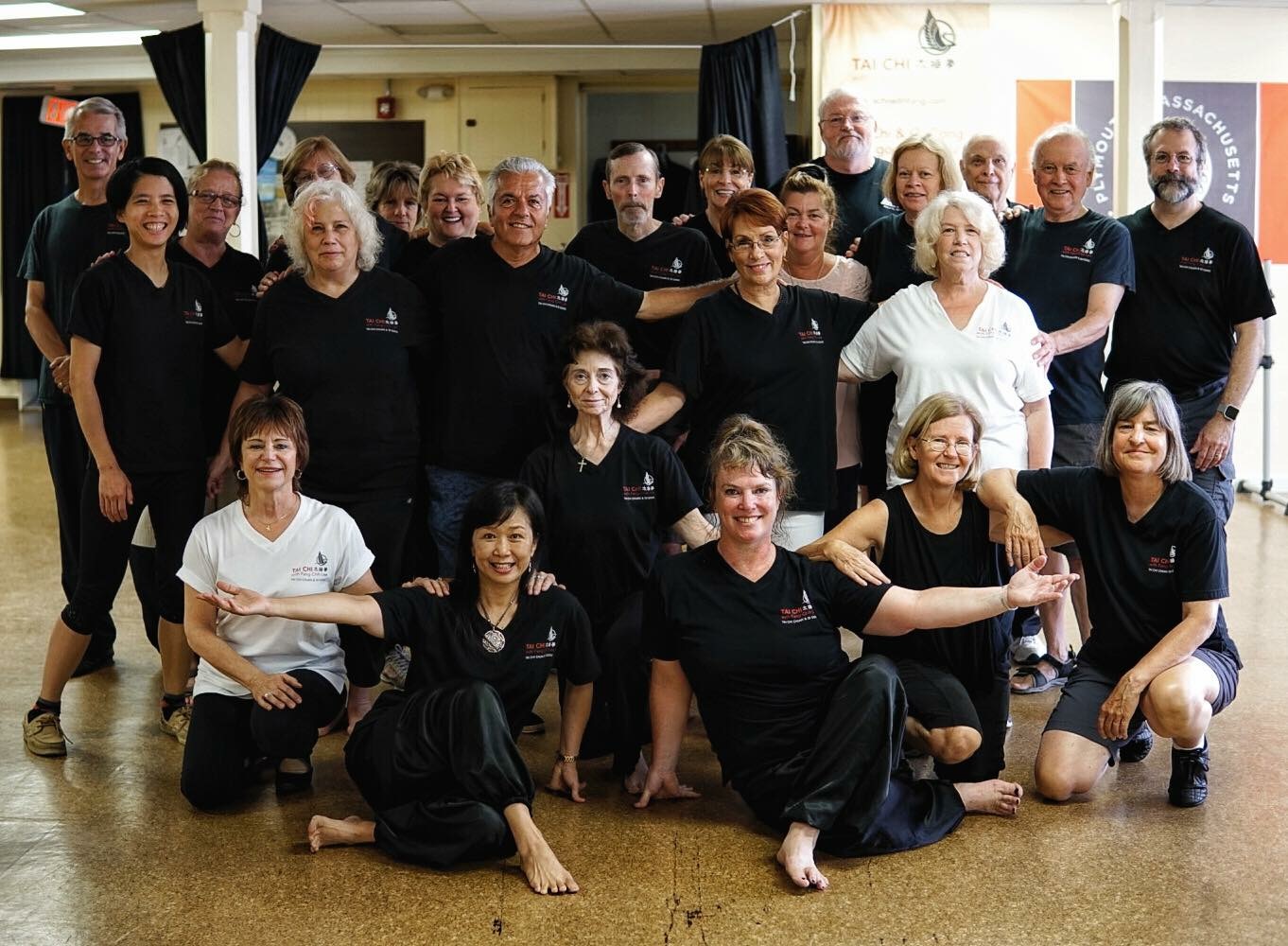
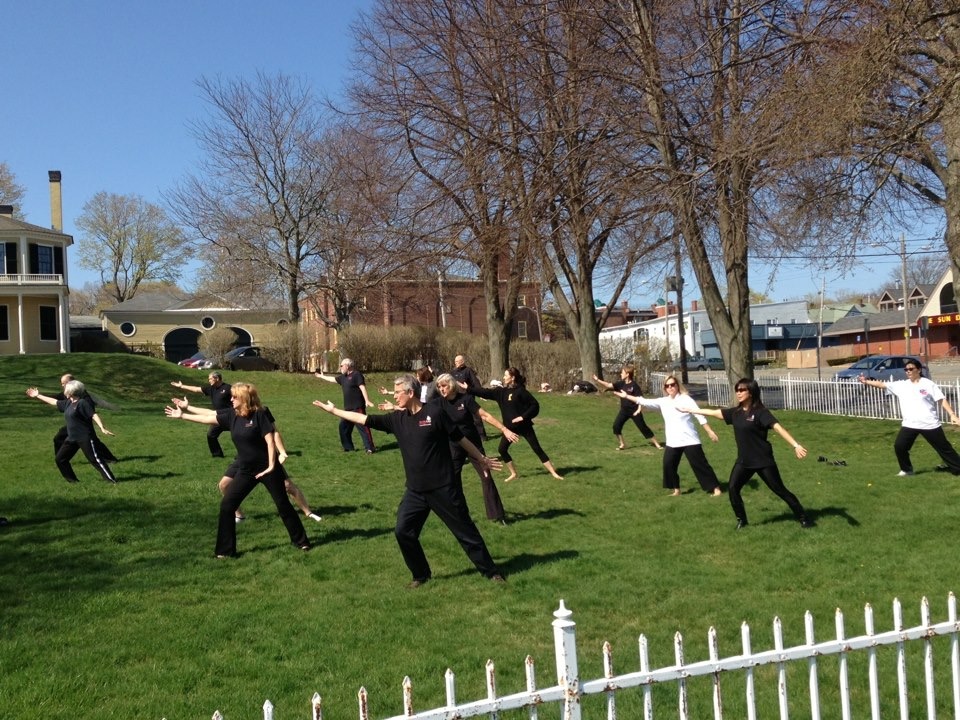
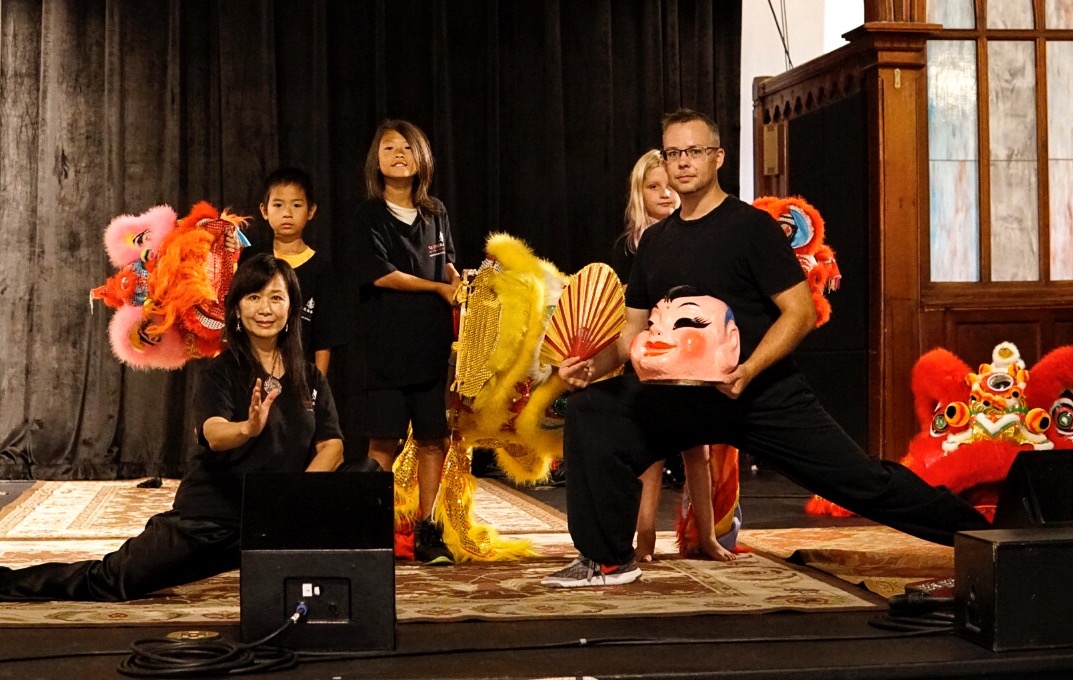
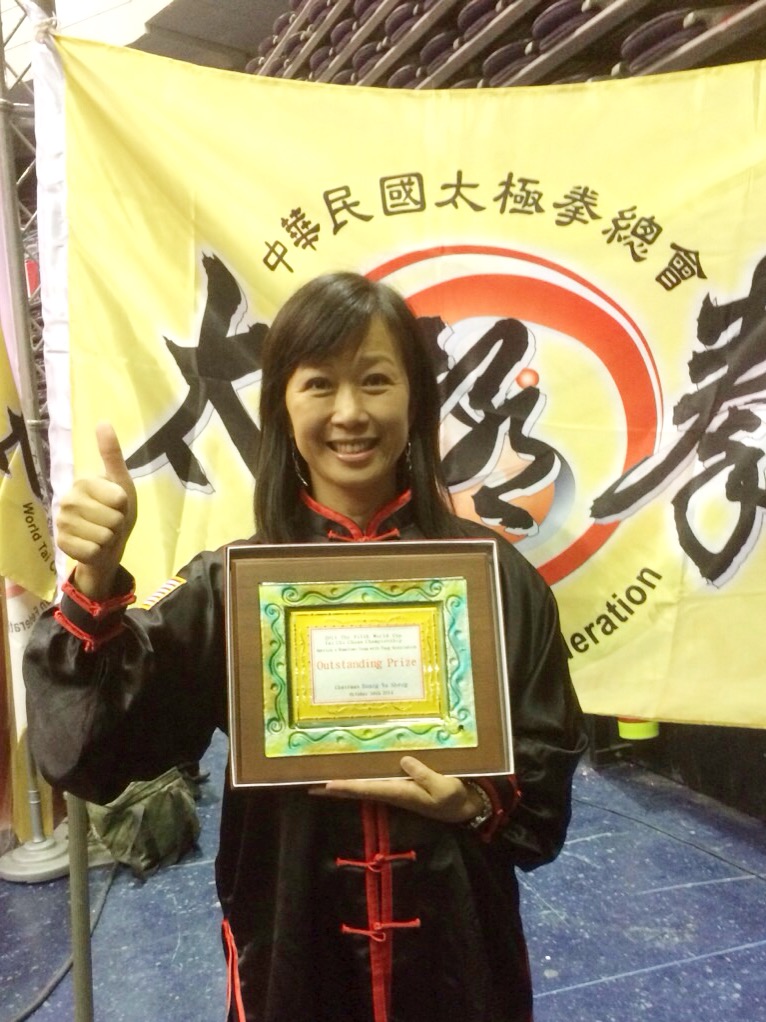
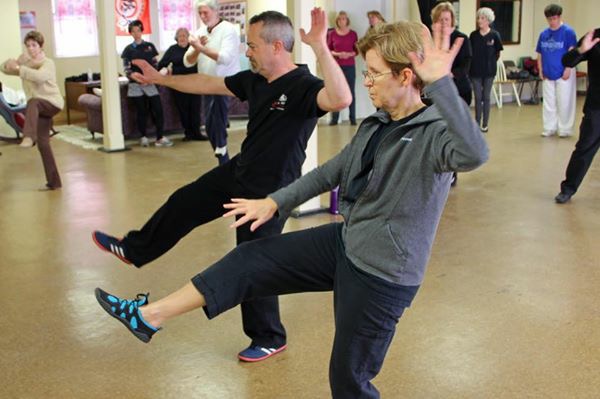
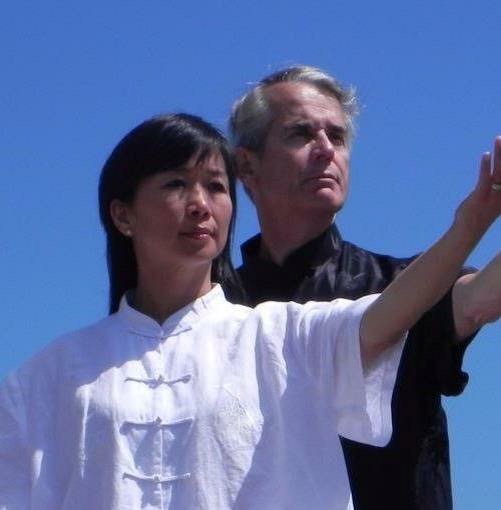
Image Credit:
Denise Maccaferri
Getting in touch: BostonVoyager is built on recommendations from the community; it’s how we uncover hidden gems, so if you know someone who deserves recognition please let us know here.








Claire Loughlin
December 19, 2017 at 5:08 pm
Loved this story about Fang and Peter. I am a student and honored to have had them both as teachers. They are patient and dedicated to all their students whether experienced or beginners. The best!
Fang Chih Lee
December 18, 2018 at 5:34 pm
Thank you Claire. Merry Christmas 🎄 🎊🎉☯️