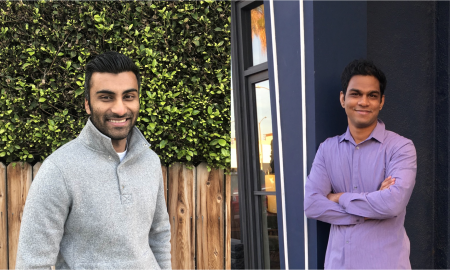





 Today we’d like to introduce you to Eric J. Friedman.
Eric, please share your story with us. How did you get to where you are today?
I started eSkill in 2000, just two years after graduating MIT Sloan School of Business with my MBA. The concept of my original co-founder, eSkill lets companies (or other employers) select or customize skills tests online for assessing the skills of job candidates and staff. Today, eSkill features over 600 test subjects ranging from Typing, Office software, and Customer Service to Healthcare, Industrial, and much more..
Having grown up in Manhattan in the gritty 1970’s and ’80s, I chose to live and work in Boston at that time for its comparative beauty, sophistication in a smaller package, and closeness to nature. So I settled in Back Bay upon graduation, and started to look for a start-up to join or co-found.
I met eSkill’s “inventor” VB through a college friend. VB was a software architect who had to constantly build qualified development teams, and foresaw a need for skills testing software that could customize multi-disciplinary tests for any technical role. This sounded like a viable market – so I joined him as a 50/50 partner.
As an entrepreneurially inexperienced team, VB and I were unable to raise institutional venture funding. We did however raise $60K from the University of Massachusetts Lowell…which stipulated that we must use the money on university resources. So we started eSkill in a charming UML-owned mill in Lowell, paid rent, and hired UML grad students to start programming our software.
After a year, two things became clear: 1) VB couldn’t realistically leave his well-paying job to work on the eSkill experiment, and 2) eSkill needed a more professionally experienced software team to create a functional product.
So VB stepped back to become an advisor, and I became a solo founder. VB helped me find a qualified software development team based in Romania…and I invested a substantial chunk of my family savings into hiring them to develop our testing software. By 2003, the software was ready to launch, and I hired our first salesperson.
It was a long and slow road as I learned how to run a software company with limited hiring resources, but we’ve grown sales every year since. We’ve also remained self-funded and profitable once over the hump of my original investment. Today, nearly 50 people work for eSkill – at our Chelmsford HQ as well as in Texas, Nebraska, Tennessee, and Romania (where the same growing team has managed our product since 2002).
Our over 1,400 clients include Coca Cola, Stanford University, American Airlines, 1-800 Contacts, and LG. It’s not been easy to compete against other vendors that are backed by public companies such as IBM, but focusing on doing a limited number of product functions as well as possible, and hiring the best salespeople we can find and afford, gives us our competitive edge.
Great, so let’s dig a little deeper into the story – has it been an easy path overall and if not, what were the challenges you’ve had to overcome?
Our biggest challenge upfront was lack of money and experience. At first, it seemed important to match the product capabilities of every competitor, and to make every design element look as polished as possible. This led to a lot of time and money spent burnishing features, content, and designs that customers really didn’t notice or care much about. The idea of a minimal viable product – the least developed product that would be saleable to start with – would have been a useful concept for me to be aware of earlier.
Another misconception was that the best product always wins, and that “if you build it they will come”. I knew Marketing for product awareness was important – and always invested whatever we could afford in trying out new Marketing initiatives – but severely underestimated how important an aggressive and sophisticated-sounding salesforce is for revenue vs. salespeople who simply take orders and follow up without good messaging tactics.
Once I was knowledgable and well-budgeted enough to hire more appropriate salespeople, our large deal sizes went from $10,000-$20,000 to over $100,000…and our average deal size also increased. Clients were now trusting our staff with larger testing initiatives than we’d been able to sell before.
eSkill Corporation – what should we know? What do you guys do best? What sets you apart from the competition?
eSkill is an online testing company that lets employers set up skills tests tailored for their job requirements, or other training objectives. Our biggest advantages are our tools for easily customizing online tests from over 600 combinable subjects, realistic simulation tests, and premium live US-based client support.
We’ve never had a legal challenge to our tests since our 2003 launch, an unbeaten record of employment law compliance.
Do you feel like our city is a good place for businesses like yours? If someone was just starting out, would you recommend them starting out here? If not, what can our city do to improve?
The Boston area is great for startups for a few reasons. One is the density of well-educated business professionals and grad students who are looking to work, advise, and consult. Boston combines the seriousness of a larger temperate city with an elegant small-town feel that suits my lifestyle. Suburbs like Chelmsford are also affordable to rent in, with plenty of parking, and with light traffic for those commuting from the Lowell-Nashua area.
Boston’s disadvantages would be for businesses that – for reasons of prestige or proximity to the city center – locate on Route 128 or downtown Boston/Cambridge. The traffic in these zones is time-and-soul wasting, and parking in Boston/Cambridge can be prohibitively expensive or hard to find.
Contact Info:
- Email: efriedman@eskill.com


Getting in touch: BostonVoyager is built on recommendations from the community; it’s how we uncover hidden gems, so if you know someone who deserves recognition please let us know here.