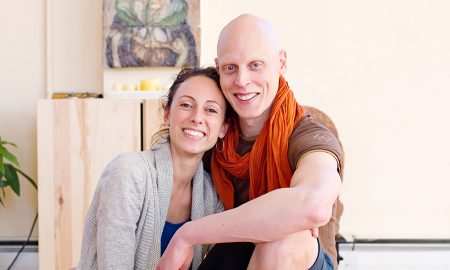






Today we’d like to introduce you to Dr. Erik Gregory.
So Dr. Gregory, before we jump into specific questions about the business, why don’t you give us some details about you and your story.
Gerald Lesser, one of the co-founders of Sesame Street, was a mentor, professor, and set me on the path of understanding the power of story. The stories he created for public television helped to educate and entertain children. I listen to individual stories as a therapist to understand what about one’s personal narrative is no longer creating constructive outcomes for life.
I started my career in Hawaii working as a public health practitioner with Native Hawaiian populations to reduce their risk for cancer. Mortality and morbidity rates rose rapidly with Hawaiians as traditional diets of protein and fish gave way to high fat, salt, and sugar diets. It was through listening to the stories of the people that I worked with that I found that we did the best work. It was an inside out approach (a personal story to the world) rather than an outside-in (attempting change from the outside world telling one how to think, feel, or be).
My later studies psychology at Harvard University and the University of Wisconsin-Madison began with an interest in human strengths and individual factors of resiliency. When I began my doctoral program, I was told that the program focused on clinical pathology. It was near the year 2000 when positive psychology was getting more attention and I decided to forge a path towards this field nonetheless.
Clinical pathology for a psychologist is critical to know. It, however, tells only half the story of human functioning. Why is it that two people with similarly traumatic experiences can have very different outcomes in their ability to move on with life. These were the questions I asked during my clinical training in London where I worked with refugee children and their families who had been relocated to the city.
Early strong attachments, models of resiliency, and nature seemed to be the answer to many of these questions.
I have more degrees than a thermometer (PhD, MPA, and EdM). Learning (and teaching) is a life-long pursuit. My North Stars (aspects of life that guide me) are education, community, social justice, nature, animals, and supporting constructive social change.
I worked on the television programs “Sesame Street” and “Sid the Science Kid” to promote an interest in learning and in particular science. Most recently I have been involved with Ron Suskind’s start-up called Sidekicks that uses mediated technology to support learning and engagement for children with autism.
For the past several years, I have been the resident therapist of the Harvard Humanist Hub in Cambridge. Under the guidance of the Harvard Humanist Chaplain, Greg Epstein, I found a community of deeply caring people interested in learning more about themselves and the world. I see clients there using a strengths-based model to change. It is clear to me that in the 21st century, we are feeling more alienated, isolated, and unsure which leads to feelings of anxiety and depression.
I have published a chapter in the Handbook of Media Psychology (today’s major story-teller); recently released a textbook with a former doctoral student on Positive Psychology (Exploring Positive Psychology: The Science of Well-Being and Happiness); and am starting work on a Leadership Psychology textbook.
Besides Gerald Lesser, I count as my Heroes, David Gergen, Robert Coles, and Helena Bonham Carter (who I had the chance encounter to share a yoga class with as a student and who encouraged me in your own way to complete my doctoral dissertation).
Giving back has and will always be a theme for me. I have been on the board of NoBully.org; the Boston Philharmonic; and the Boston Strings Academy (which brings music education to underserved areas).
Having said all of this, I do have to say that this was not one easy, happy, effortless experience or path. So often these personal reflections, as I have just written, reflect that which we want to shine out in the world most. I had my share of setbacks, losses, fear, anxiety, upset, questioning, and existential dilemmas along the path. I think with time I am learning to simply prioritize a bit better what I get wound up about as reacting to everything and anything is too much.
Change is part of life. It isn’t so much change that we have difficulty with given how adaptive human beings are as creatures (finding a place to live in most parts of this planet). It is the loss that comes with change that is difficult. In closing, find a sense of hopefulness and helpfulness in daily life and it will often feel richer.
Has it been a smooth road?
I am not sure if life truly offers smooth roads (or if it does, to a few). I can bring up the losses and pain readily as well as the confusion of trying to place myself in a specialized world when I wanted to be expansive in my approach to understanding and being.
In part, my struggle has been with cultural identity. My family fled Europe as Jews and generational trauma certainly is very real. My father was an Economist who taught internationally. We grew up in Austria, Germany, Spain, New Zealand, and England. When people as where I am from, I tell them spiritually Hawaii; culturally London; and physically Boston.
Coming out was a bit of an ordeal as growing up I didn’t have models of same-sex relationship.
Being disappointed when pursuits and outcomes that I wanted didn’t pan out was par for the course. I still struggle when people dismiss others or exhibit reptilian brain influenced behavior that harms others at the expense of their own ego whether politically, socially, and or economically.
But I have developed points of refuge/sanctuary/retreat for myself so rest and restore. One of these places is in a library; another is a hiking path. Nothing grandiose, but certainly important when challenges of life hit.
We’d love to hear more about your business.
If I may say, I received some very good training in both the science and practice of psychology. In particular, I was on the ground level when positive (or resiliency psychology) was unfolding and feel as if I have been a vehicle in my own academic and professional work in promoting it.
I look underneath the surface to understand individual, group, or organizational functioning. One of the most impactful courses I took was Ron Heifetz’s “Adaptive Leadership.” He sees change at the level of an organism. When intense change comes into our experience, we as an organism can adapt and continue to survive and perhaps even thrive, or stay in our default way of being and go extinct.
We can often distract ourselves with a focus on technical fixes. These fixes sound like “once I get my degree, then I will be happy,” or “once we get a new CEO, then all will be fine.” Technical fixes are important, but the harder work of individual, group, and organizational change is shifting culture, believes, values and attitudes.
I have worked with CEO’s of top companies; high ranking government officials around the world; and many people working to the best of their ability to move towards something authentic and meaningful. And we always have to move that distracted way of thinking to the side to do the real work.
This sort of shift is longer lasting and promotes flexibility and adaptability for the incredibly fast-paced changes we are all experiencing on this planet.
Is our city a good place to do what you do?
Haha. Massachusetts is flooded with well-trained therapists and consultants. It is also a very demanding state in which to be licensed. But I wouldn’t trade it for anything (except going back to Hawaii during the months of November to May).
I was drawn to Massachusetts like many…for education. While I left for additional training for a while, I was drawn back because of the progressiveness of our communities here; the incredible intellectual and academic opportunities; and for the beautiful architecture and history.
There are amazing opportunities for work in start-ups, continuing education, and excellent supervision. So yes, I can say that we are lucky to have Boston and it is a gift to be able to do business here.
Contact Info:
- Address: 30 JFK St
4th Floor - Website: www.erikgregory.com
- Phone: 617.645.7871
- Email: egregory@post.harvard.edu
- Yelp: www.bostonstringacademy.org
- Other: www.humanisthub.org


Getting in touch: BostonVoyager is built on recommendations from the community; it’s how we uncover hidden gems, so if you know someone who deserves recognition please let us know here.