



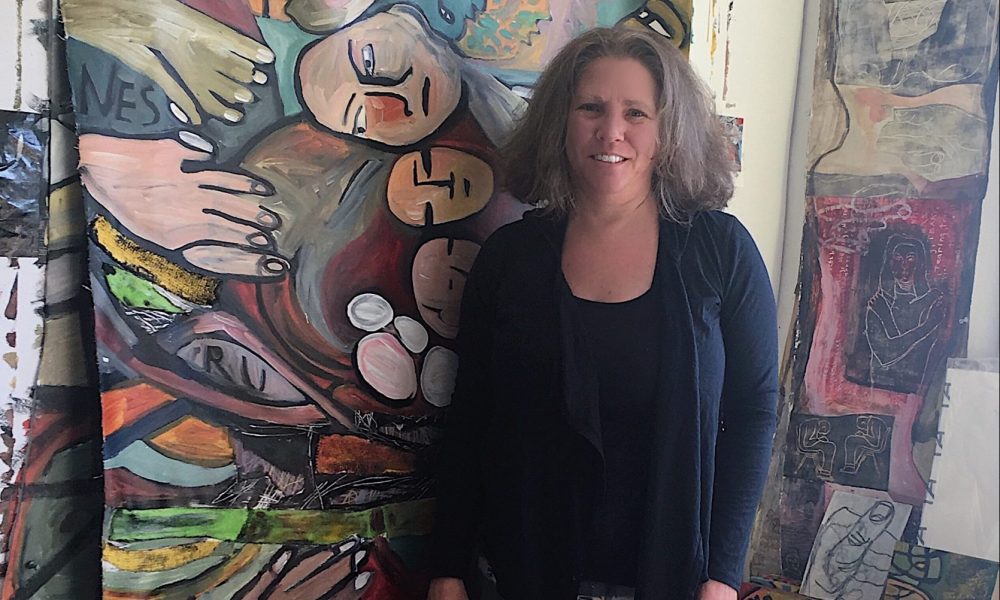
Today we’d like to introduce you to Deborah Putnoi.
Deborah, let’s start with your story. We’d love to hear how you got started and how the journey has been so far.
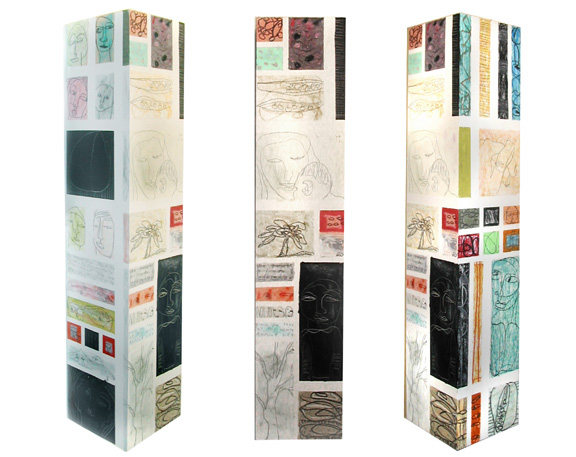
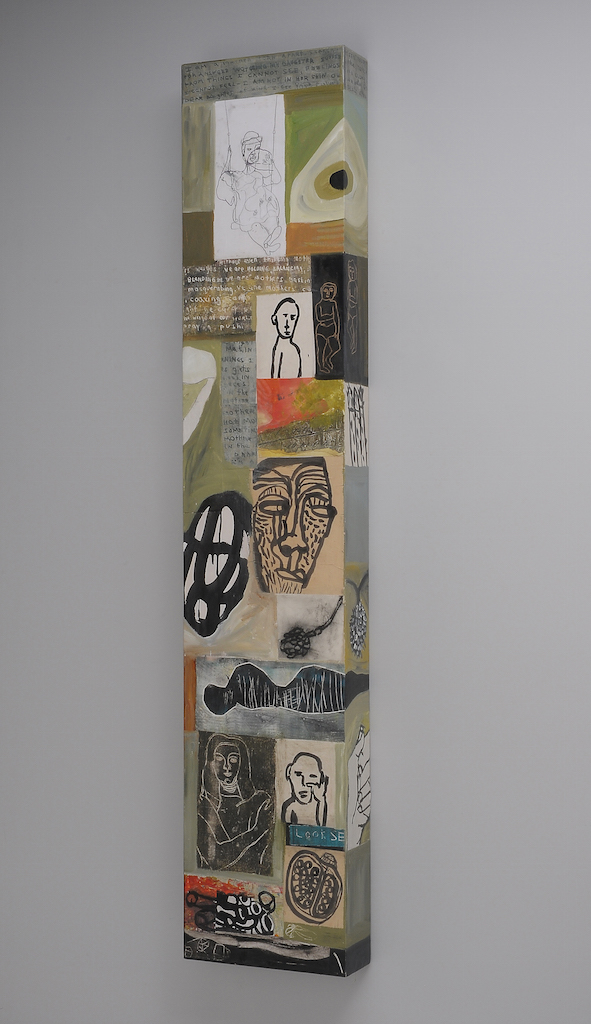
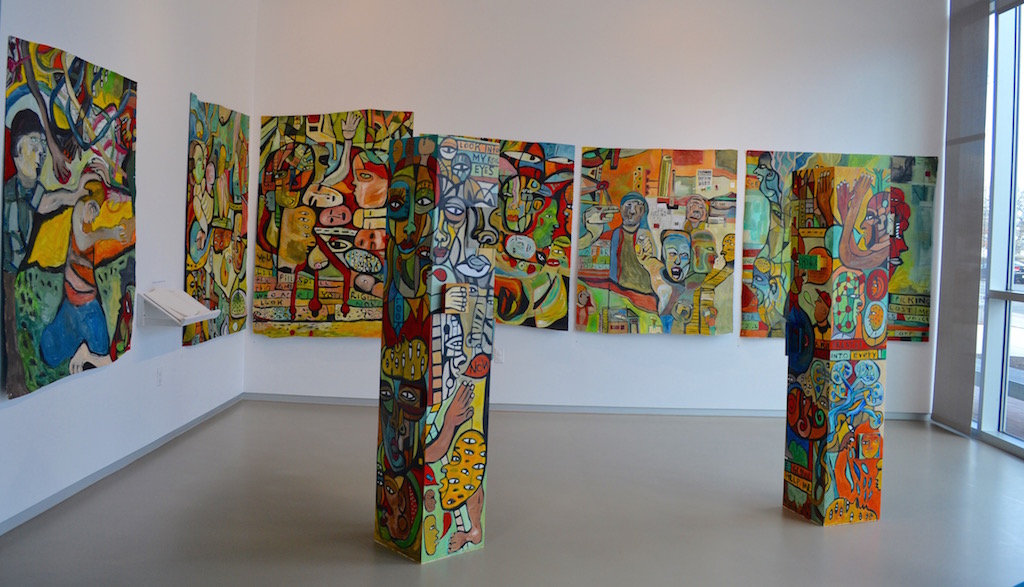
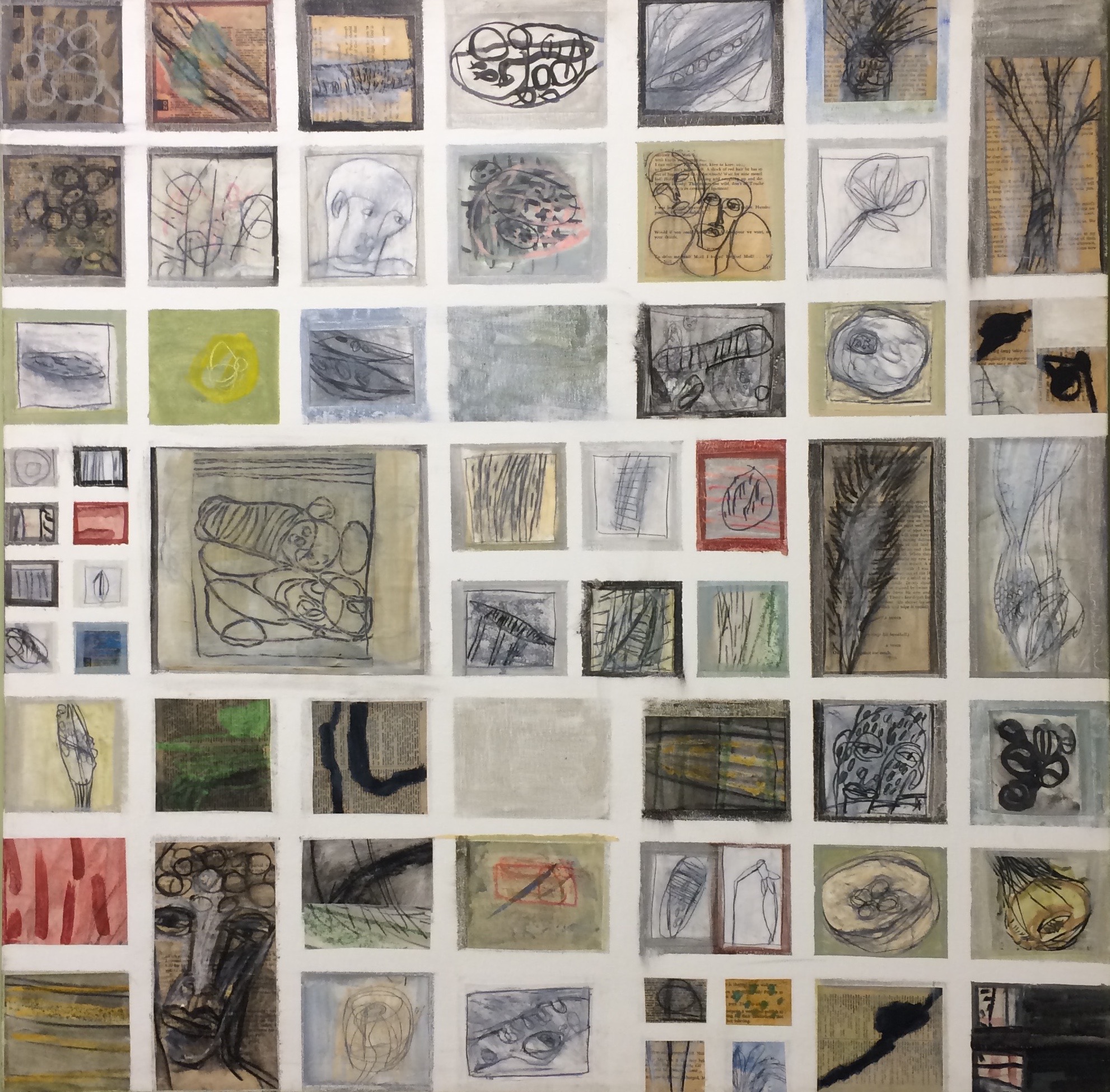
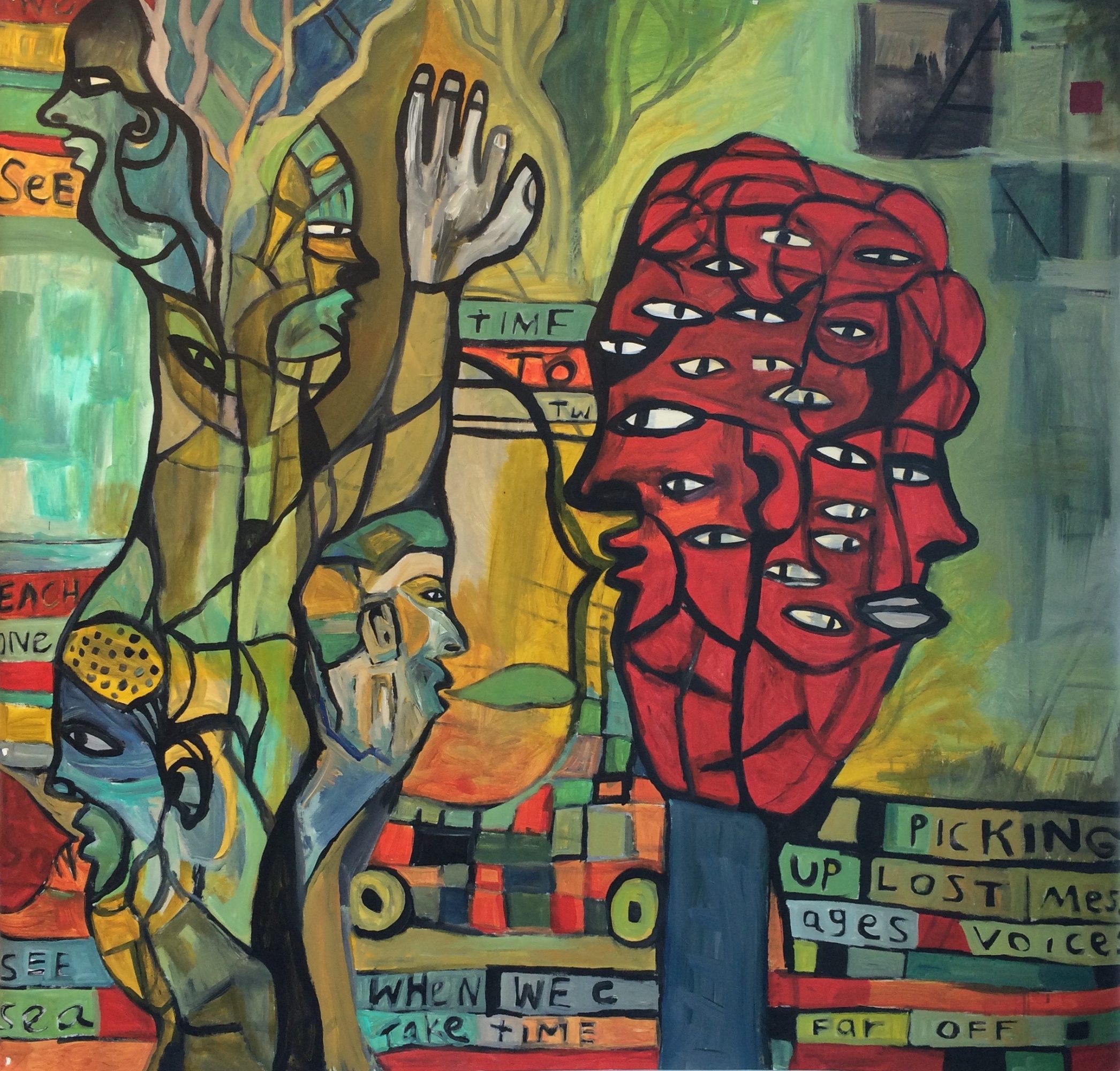
I don’t ever remember a time I didn’t have a pencil in my hand. As a visual thinker I made sense of my world through a drawn line or marks on a blank page. It was my way to make sense of the world. I followed my passion into college and went to Tufts University and The School of the Museum of Fine Arts where they offered a dual degree. I got a B.A. in political science and a BFA in painting and drawing. From early on my work used narrative elements to tell multiple stories simultaneously. My grandfather was a Holocaust survivor had escaped from concentration camp and his stories were etched deep into my psyche and my artwork became the vehicle where I tried and make sense of one of the darkest times of history. I was obsessed with the idea that while he was in the camps on the other side of the “wall” people were living their lives. This became the through line, the synchronicity of all things from the microscopic to the macroscopic world. I used a grid structure and created wall installations to try and capture the infinite stories and actions in one moment. I was exhibiting my work in galleries across the country but also felt a need to understand creativity in a deeper way. I went back to school and received my Masters in Education from the Harvard Graduate School of Education and studied with and worked for Howard Gardner. From my time at Harvard and Project Zero I was able to witness firsthand the power of arts and creativity to transform communities. I was balancing my work in education and my time in the studio painting each part of my life enriching the other. Soon after that I became a mother. Focusing on my painting and being a full time mom I learned how to use micro moments to create. I was exhibiting my work, selling my work and then soon after my second child was born 9-11 shocked my world and my creative journey. 9/11 changed everything. Up until that moment I was a painter, an artist. Exhibiting my work across the country and working alone in the studio. I had made that choice, left educational research at Project Zero and decided my calling was as an artist. But after 9/11 everything shifted. The idea of making and selling art for people’s walls seemed a selfish act. I wanted my pieces of art to be more than just passive objects. I needed to be on the front lines, with people, to change something at the core of our society. As the granddaughter of a Holocaust survivor, I knew I needed to help people see each other as individuals, as interdependent, not in stereotypical terms. I needed something simple.
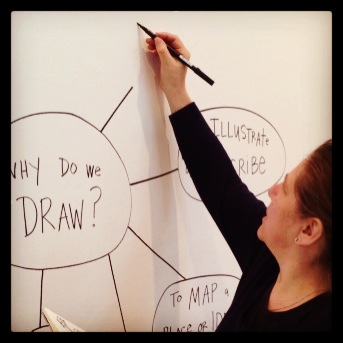
The art form that is central to my work is drawing. I draw all the time. I always have a sketchbook tucked away in my bag or next to the driver’s seat of my car so that I can draw even in the small in-between moments of my life. I need to draw, like I need to eat. And I know that there are others out there in schools starving in classrooms across the country because their way in the world is through the tip of a pencil, through visual thinking and they are not being taught how to nurture or develop what I call their “Drawing Mind.” Drawing doesn’t happen in schools, if it happens at all it is shunted to the side. But my question was how do I bring drawing into the heart of classroom learning not as a way to develop artists but to use drawing as a thinking skill, as a language that could help students solve problems and enter different curricular material, be it a math problem or a science experiment or the journal of a historical figure through drawing solutions and ideas. When students enter kindergarten drawing is a natural language—stories, ideas, discoveries naturally erupt from the tip of a pencil. But quickly students are required to learn and master writing, reading, and math and the Drawing Mind is shut down. Walking into any classroom I begin to uncover students and teachers drawing mind. For the visual thinkers it is a relief to draw in the classroom, to be asked to draw an experience instead of writing about it. For the verbal/logistical learners although perhaps uncomfortable at first by using their Drawing Mind they are stretched in new ways. Building their brain in ways that may have been dormant for a while.
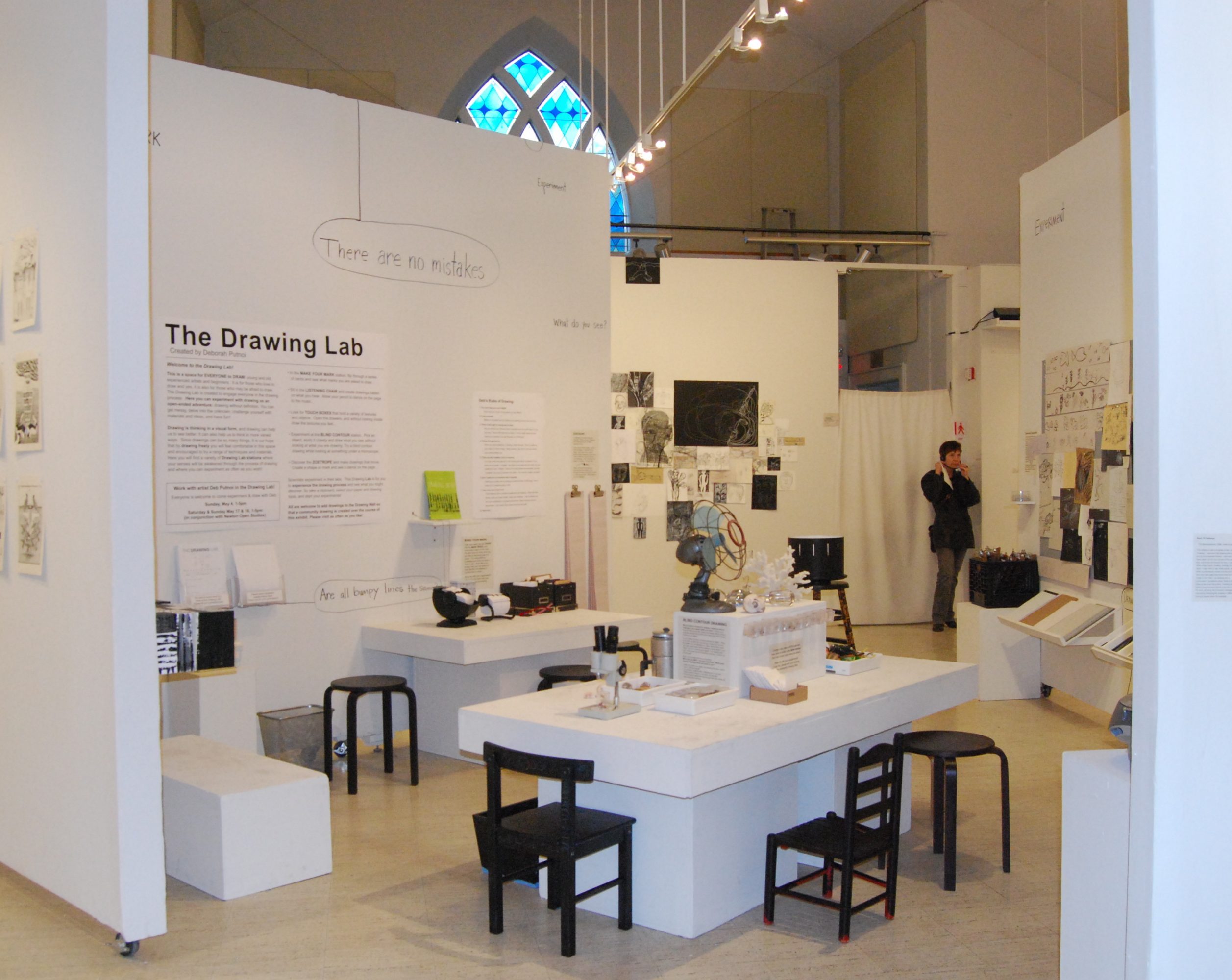
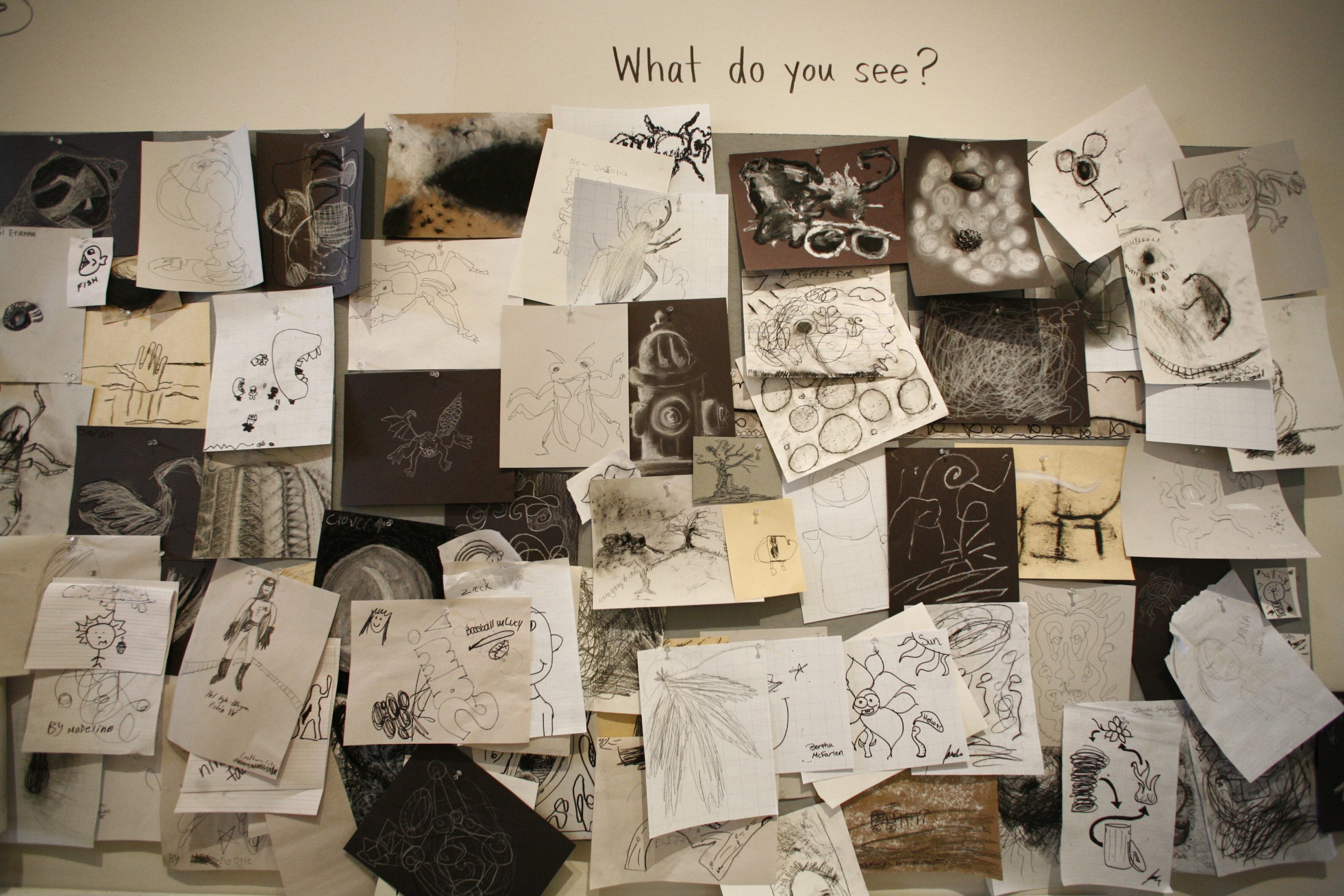
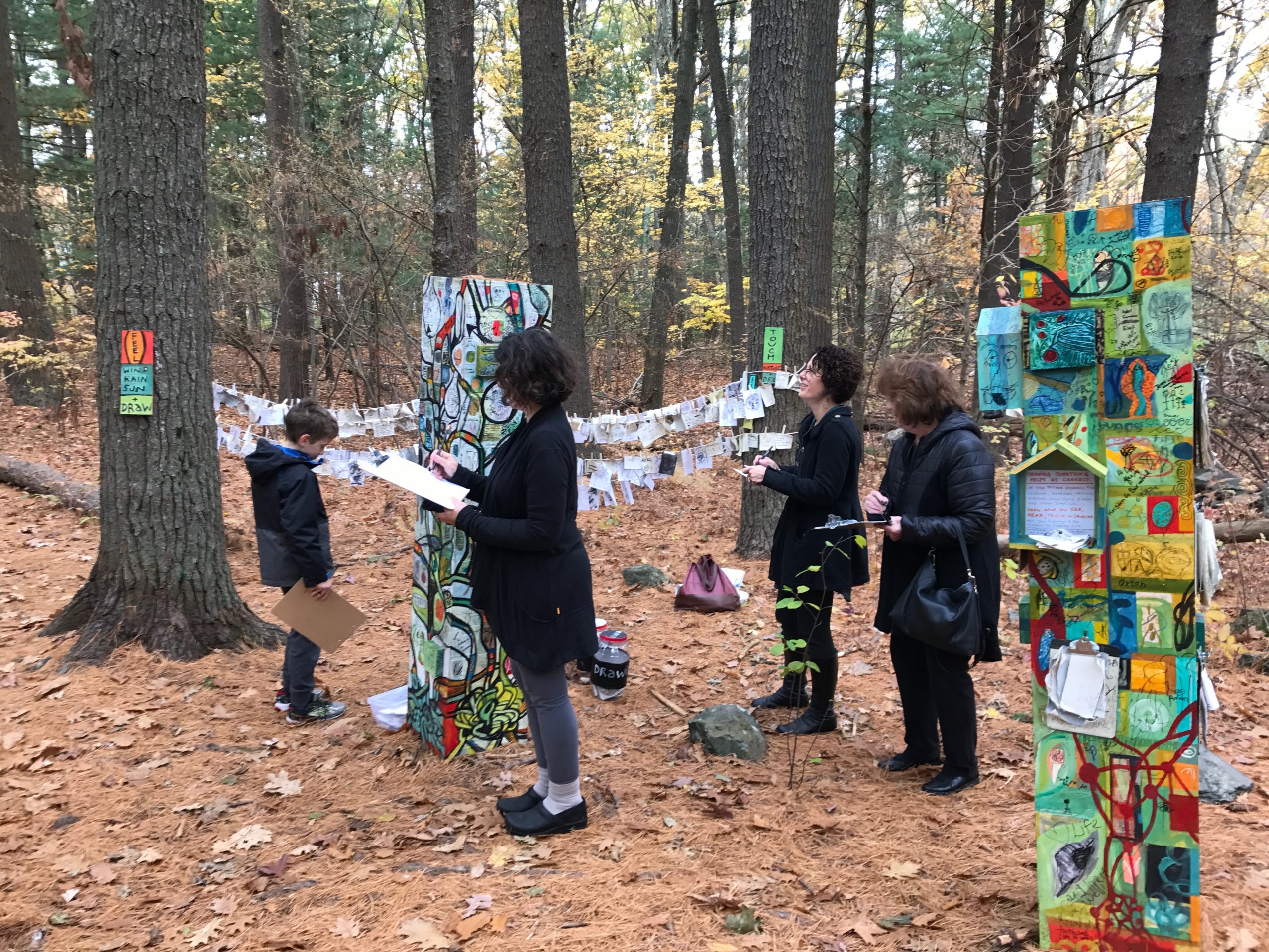
For most people the mere thought of drawing something, anything, sends a wave of panic—“but I can’t even draw a straight line.” As an artist I always think, “What artist cares about drawing a straight line?” As an educator I think, “How can I fix this problem—teach people to find embrace and explore their innate drawing abilities. Even the students as young as first grade would sometimes look at me in panic when I say, “Draw a bumpy line” They ask, “but where? how? Is this ok.” And I just say, “There are no mistakes,” and in some ways it is this assertion in the classroom, that when I come in and we draw together, there are no mistakes, is the most important thing I say. “Your line is YOUR line no one else’s and the way you interpret something visually is your interpretation, there are no mistakes just explorations and discoveries.” And for some it is the act of drawing that first line that is scary but activating. There is a permission to make a drawing not in service of drawing something to look like something but to problem solve visually make some marks on a page to record an experience. For example, listening to the sound of a heartbeat I ask the students to draw the experience of the sound using only marks, not to draw a heart but draw the experience of listening to that sound. And then looking at all the ways the students and teachers can draw their experience of a heart beating. There is no right way to do this. But there is the individual’s auditory experience and then using drawing as a way to capture what is heard. It is solving a problem visually. How do I capture an experience in a purely visual way? I worked in schools and then took what I had developed out of schools and started creating Drawing Lab installations in libraries, community centers, temples, museums, in parks and anywhere that I could bring drawing to the people.
Has it been a smooth road?
When I was at the School of the Museum of Fine Arts I had a teacher, Domingo Barreres that said: ‘if you can quit now do it. If you have a choice not to paint then make that choice.’ I never had a choice and still don’t. It is the most core, elemental need that I have like food and water. It is my soul. And I would say that it is my consistent practice that has gotten me through some of the toughest struggles in my life. So in reality it is the art making that has saved me. Both my kids have weathered some very difficult health situations and if I did not have my consistent studio practice, even if that meant drawing in my tiny sketchbook in the ER at 3am then that was my practice for that day. I wasn’t always given the luxury of being alone in the studio for hours on end. I had to make due at times with what I call, “mother moments of creativity.” I would squeeze in 10 minutes here or there or draw a blind contour in the pickup line waiting to get my kids at school. Making art makes the struggles of life bearable. You can witness your life through your line, through the marks on the blank page. For me the other struggle has been my own introversion. I love making the work and sharing my work but the marketing, the gallery scene, the being out there talking and sharing has been an obstacle for me.
So, as you know, we’re impressed with Deborah Putnoi, Art For A Change Studio and The Drawing Lab – tell our readers more, for example what you’re most proud of as a company and what sets you apart from others.
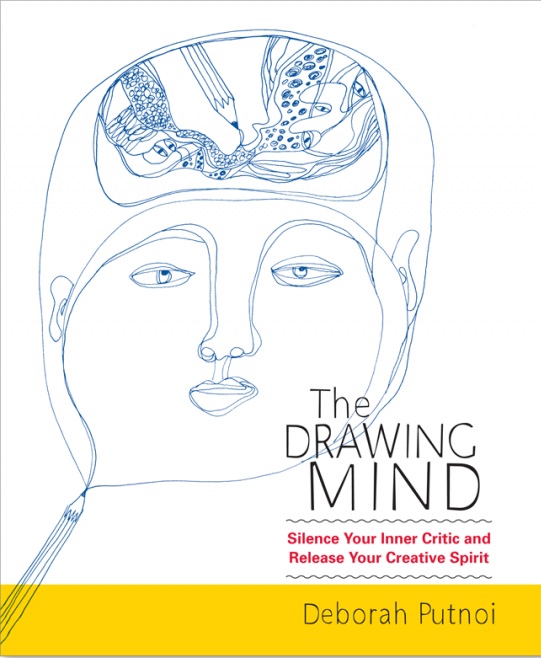
I am a visual artist, writer and an educator. I have been making and selling art for a long time. I now also create “Drawing Lab” installations in spaces to encourage community participation in drawing and the creative process. These Drawing Labs encourage people to reconnect to their one of a kind “Drawing Mind.” I set up different drawing stations and experiments where visitors are asked to draw in a variety of different ways. For example drawing to music and sounds, drawing to a variety of things hidden in boxes and drawing what you feel but don’t see, etc. I have been hired to create these installations in schools, libraries, temples, community centers, a mikveh, and other venues. Each “Drawing Lab” is created to reflect the venue it will be exhibited within. I also wrote a book on this approach to drawing called, “The Drawing Mind.” It is an interactive sketchbook and allows readers of any age and creative ability to use drawing as a way to connect with themselves, their community and the world.
Let’s touch on your thoughts about our city – what do you like the most and least?
I am a native Bostonian. I was born in Boston raised in the suburbs, did my art training a couple of blocks from where I was born and now have my studio/business in Brighton. Boston has changed a lot over the years and it is really starting to see the power that the arts can bring to transform communities. I think that artists and community leaders are beginning to use innovative approaches to fund artists and fuel creativity in and around Boston. I think the universities like Harvard, MIT, BC, Tufts, and Northeastern are also adding their commitment and vision to the arts community broadening the range of possibilities.
Contact Info:
- Address: 29 Leicester St, Brighton, MA 02135
- Website: www.deborahputnoi.com, www.thedrawinglab.org, www.artforachange.org
- Phone: 617-640-7176
- Email: artforachange@mac.com
- Instagram: @artforachange
- Facebook: https://www.facebook.com/TheDrawingMind/
- Twitter: https://twitter.com/artforachange
- Yelp: https://www.yelp.com/biz/art-for-a-change-studio-boston
Getting in touch: BostonVoyager is built on recommendations from the community; it’s how we uncover hidden gems, so if you know someone who deserves recognition please let us know here.