



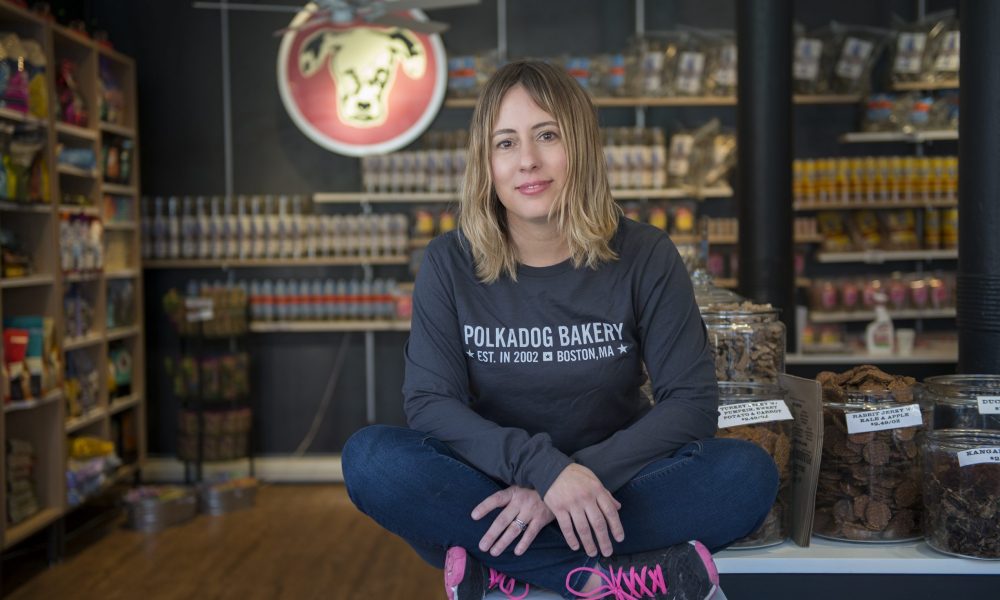
Today we’d like to introduce you to Deb Suchman.
Deb, let’s start with your story. We’d love to hear how you got started and how the journey has been so far.
To start a business you need to have an idea, or an ideal, maybe—something that you can see yourself bringing through to this side of reality. But to survive the reality of running a business, you must anticipate the crumble and glue and grime.
I can remember Lassie, Snoopy, Wags, Tasha, Hershey, Machika and the four or five litters of puppies I grew up with as a girl on New Hampshire farmland. And of course, there’s Pearl, the scrappy one-eyed rescue dog brought to me in Boston, by a friend of mine working in Puerto Rico.
Pearl is the icon, the origin story, you know. She’s the Reason for Polkadog. When Pearl moved in with me, I was a starving artist . . . starving in the well-fed sense that only recent liberal arts college graduates can manage. I was working at a Zimbabwean Stone Sculpture Gallery, and then with a wedding photographer. Pearl moved in, and suddenly there was an Idea: a healthy home for her, a healthy neighborhood, a community . . . because dog treat stores didn’t exist then the way they do now. And even now, they don’t exist the way we do. We make treats ourselves, and then we sell them, and the neighborhood where I live now is the one I imagined fifteen years ago. That’s cool.
But to survive anything, you must accept what’s waiting on this side of reality. Life is business. It’s not a job. It’s what you are. Someone asks, “What do you do?” There’s only one answer. I mean, I’m a wife and I’m a mother. But these aren’t separate things, and sometimes when people ask, “What do you do,” I think it’s because they don’t understand about business.
I grew up with business in and around my family. So, maybe that’s the real beginning, because without that beginning, I would never have survived Polkadog’s beginning.
We’re always bombarded by how great it is to pursue your passion, etc. – but we’ve spoken with enough people to know that it’s not always easy. Overall, would you say things have been easy for you?
Nothing is smooth. Well, sometimes I like to imagine smooth . . . in the “one day maybe I’ll run this baby from the beach” way, but I would get bored of that quickly enough. Maybe.
When I started Polkadog in 2002, I had nothing. You know, I mention that often, because I like to remind people that we really had nothing.
What did I have? I had a friend, Rob, with a writing degree from a liberal arts school in Colorado. I had an art degree from the same school. I had work experience answering a phone that never rang at a Zimbabwean Sculpture gallery. That was my résumé. And then there’s a small loan for a brick and mortar space in my neighborhood, in the South End, but nowhere near enough for a kitchen, for an employee, for a computer that needed only one attempt to boot. We made treats in my artist studio. We carried them to the shop, where we hoped to sell them to customers we didn’t have.
There’s no business logic to how this works, but I think this is the sort of path that works for someone like me. Dogs liked our treats, people in the community liked our idea, and the press liked the story. Growth was a problem because we had no resources to meet demand. But an Idea, when it’s all you have, is powerful fuel. We needed money, space, employees. We found a loan, a warehouse in South Boston, and hired some people. We created more stores, sold wholesale to Whole Foods and to national distributors. We hired store managers and operations managers. Every single step was a gamble, and it’s all very frightening, but I can say that the rewards for making something from nothing are like nothing I could have imagined back then. Seriously, I was 28 years old. Wow!
We’d love to hear more about your business.
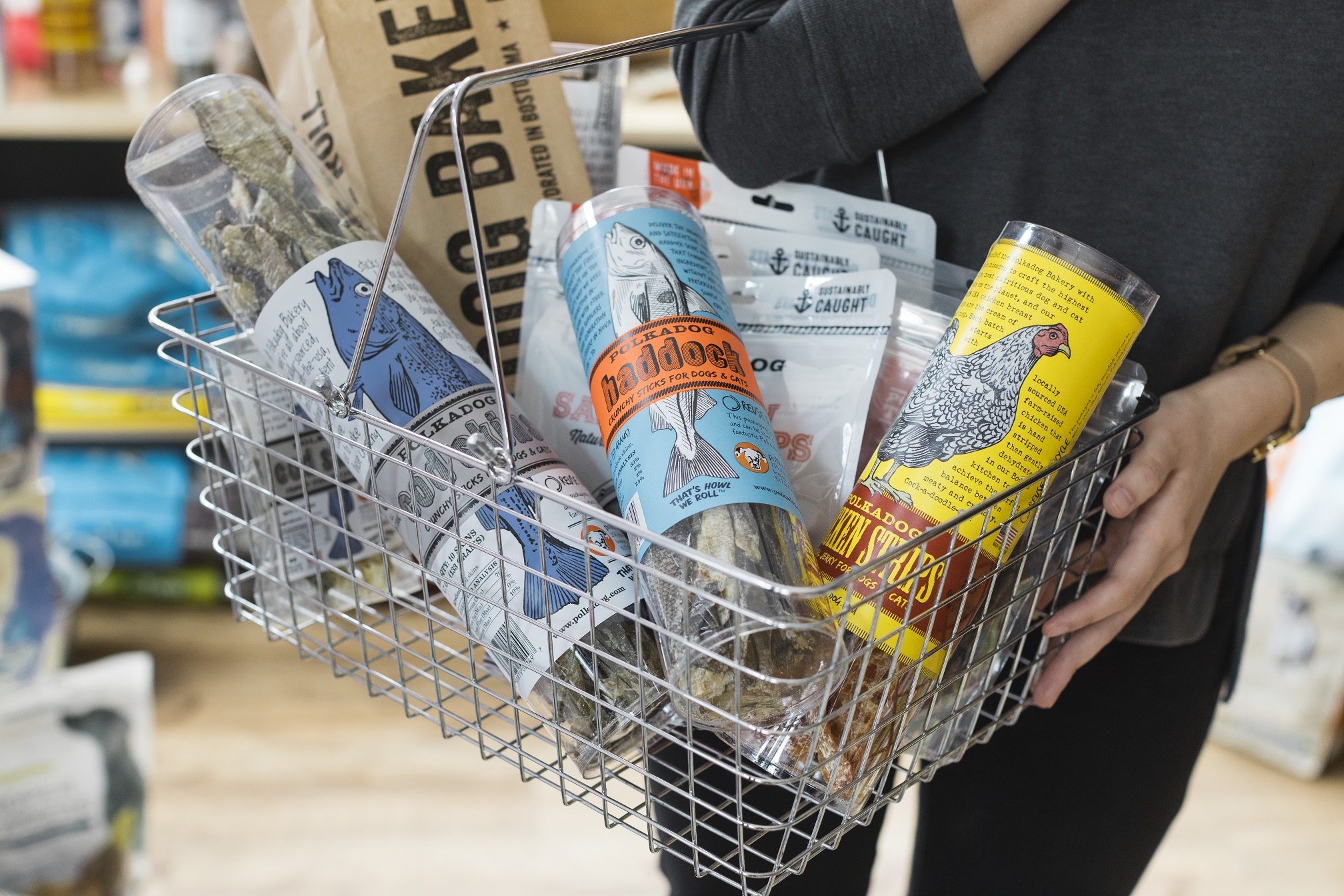
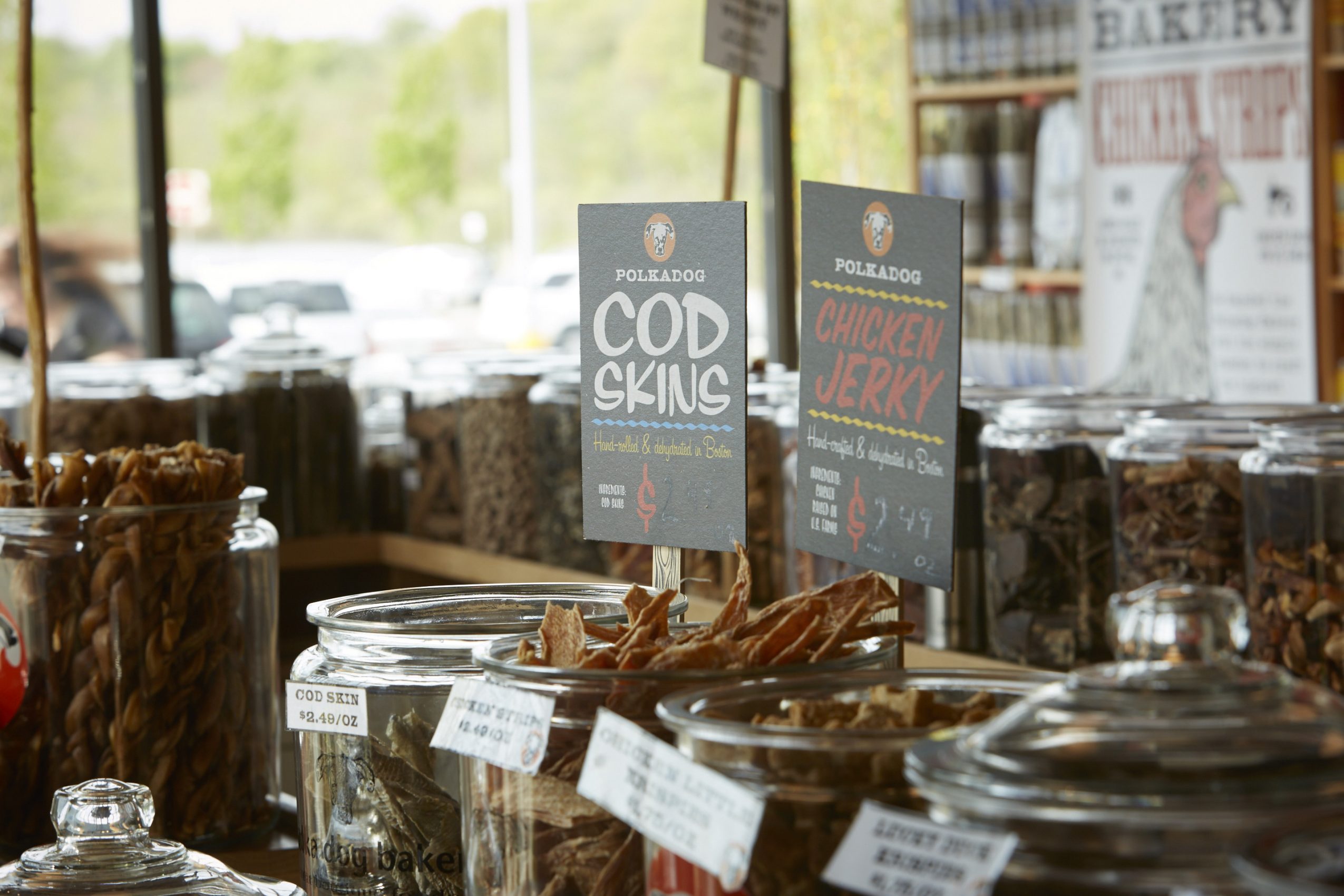
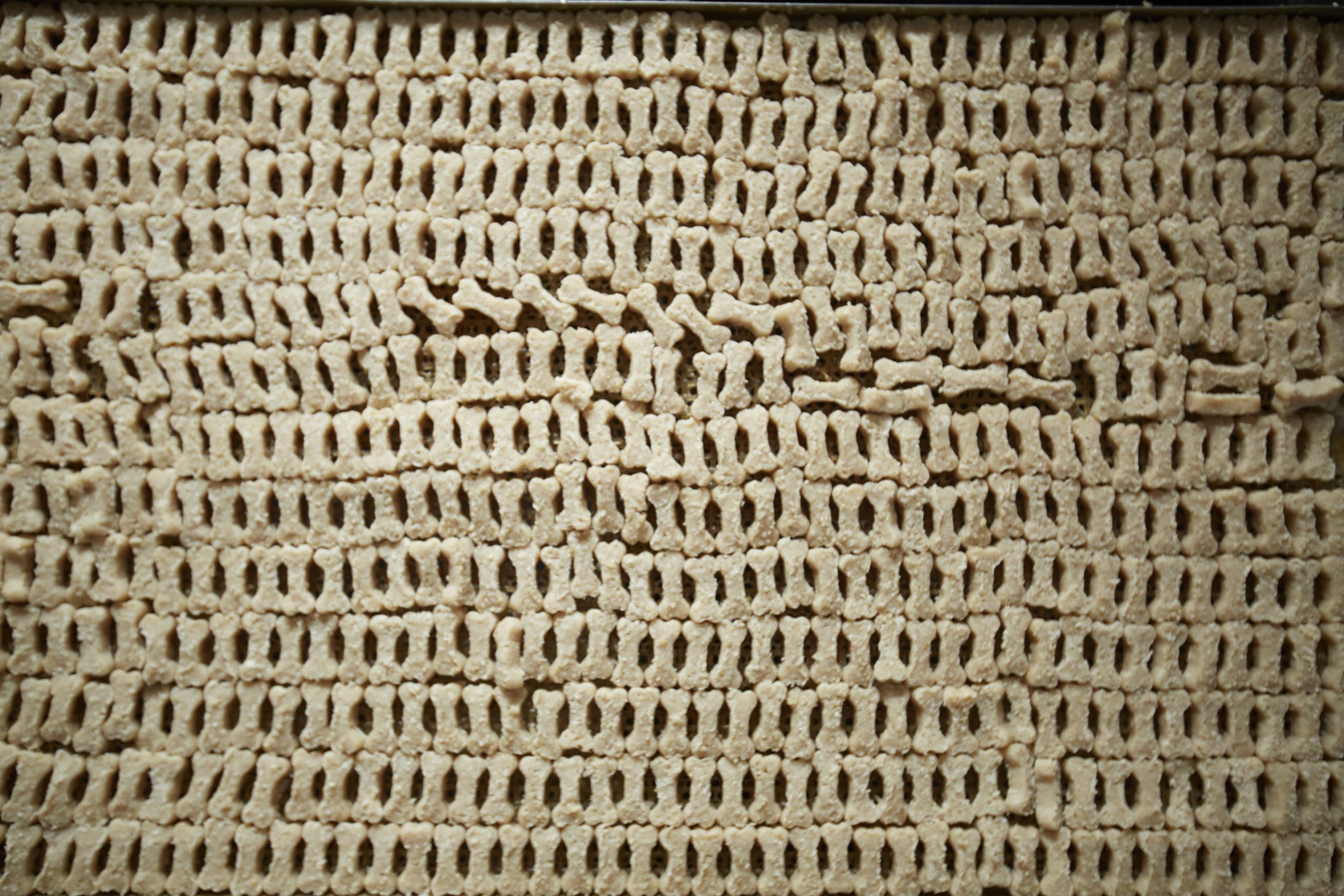
Polkadog is a Boston-based pet treat kitchen. We make healthy dog and cat treats from sustainable ingredients, and we partner with other similarly minded businesses we know and trust and consider part of a special community.
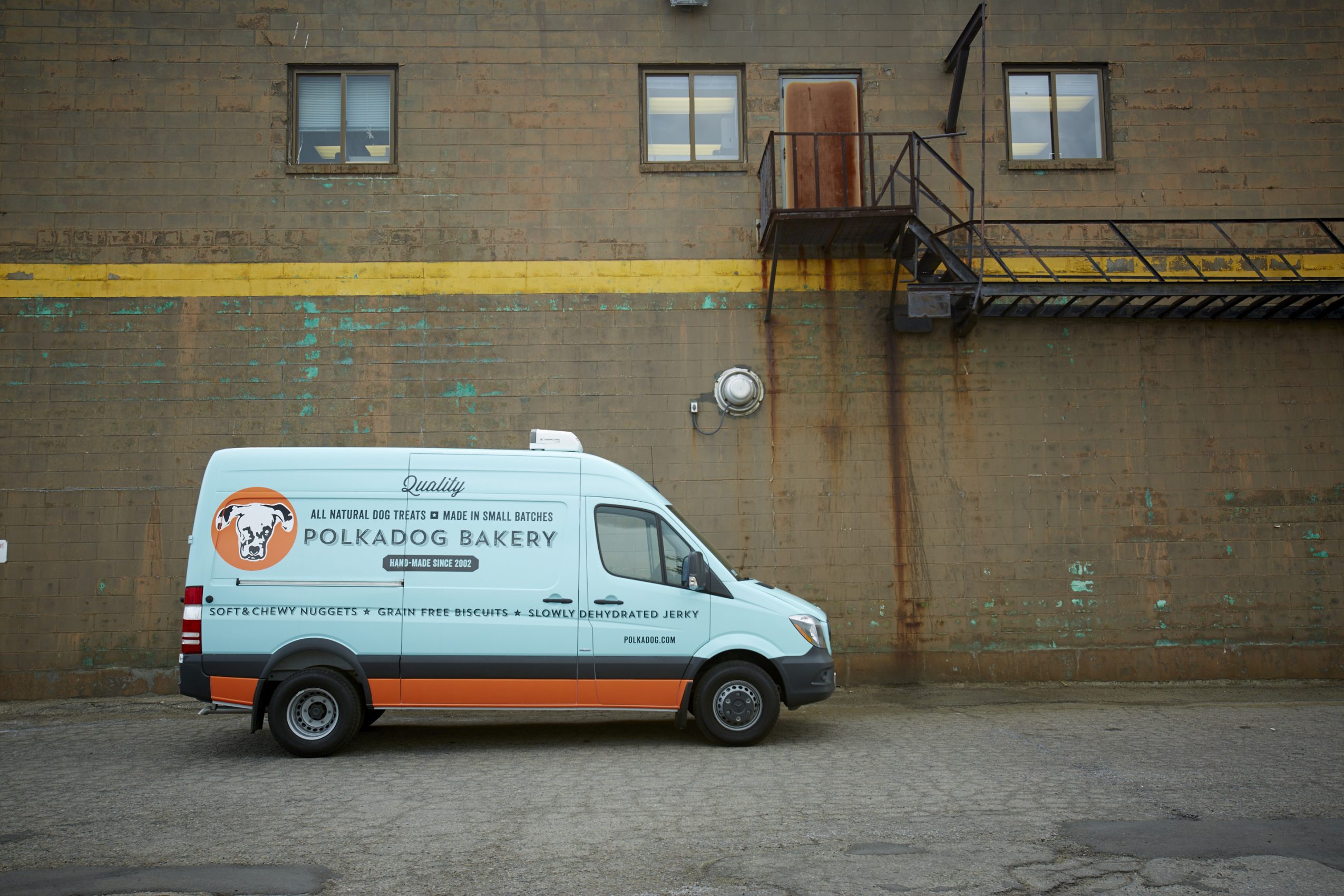
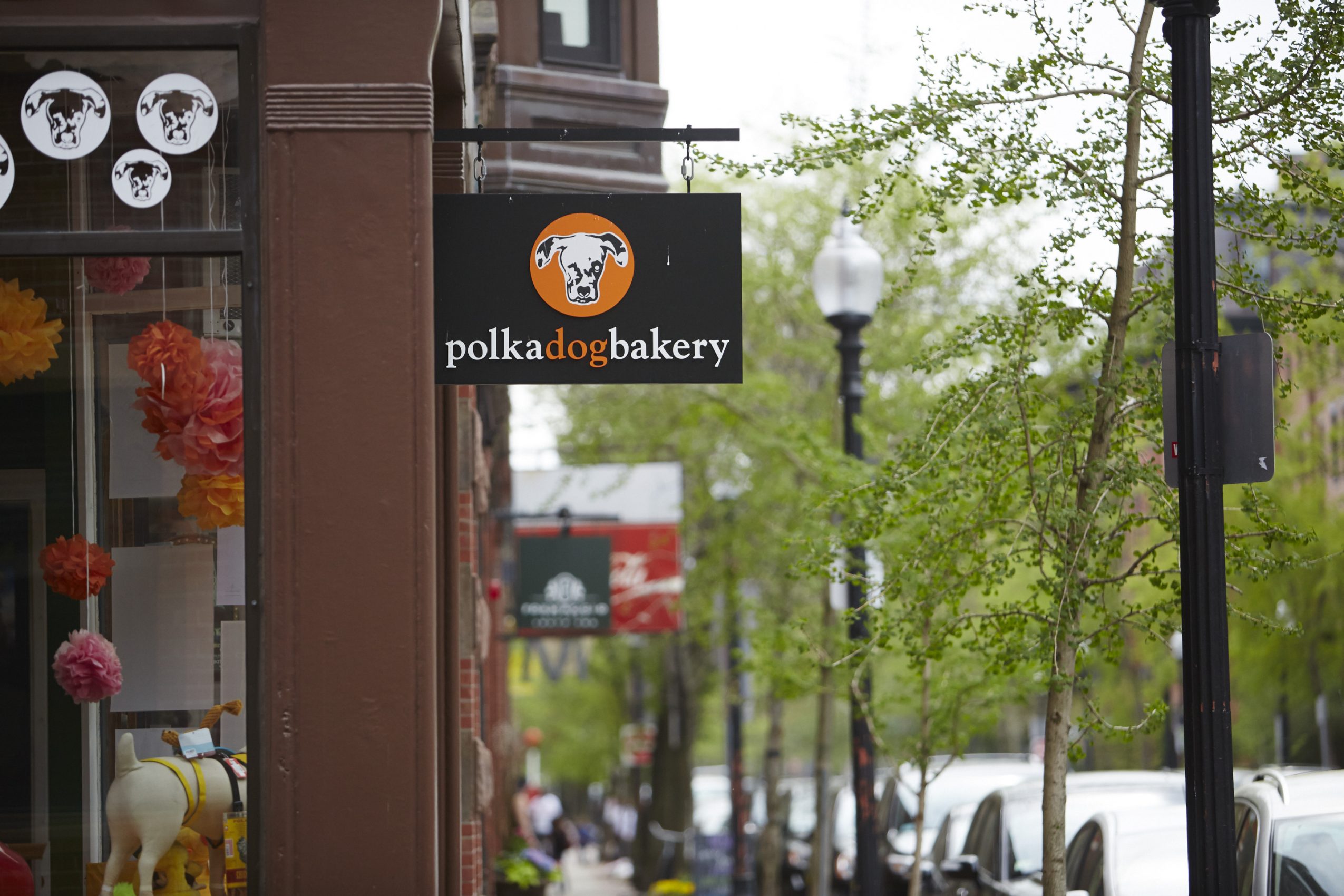
We have an industrial kitchen at Boston’s Fish Pier where we make our own treats. We have our original neighborhood shop here in the South End; and we have Greater Boston-area shops in the North End, Jamaica Plain, Chestnut Hill, and Lynnfield.
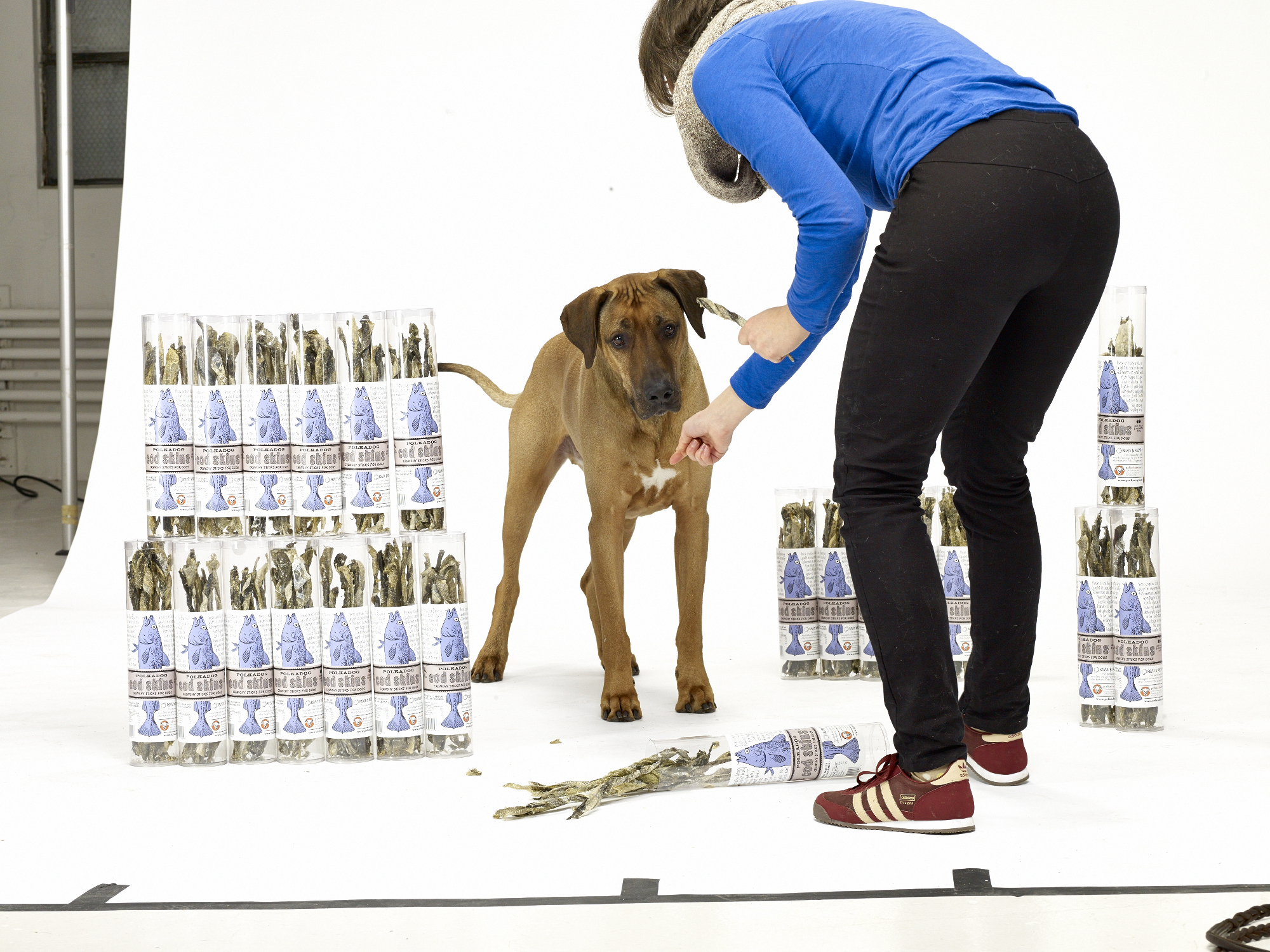
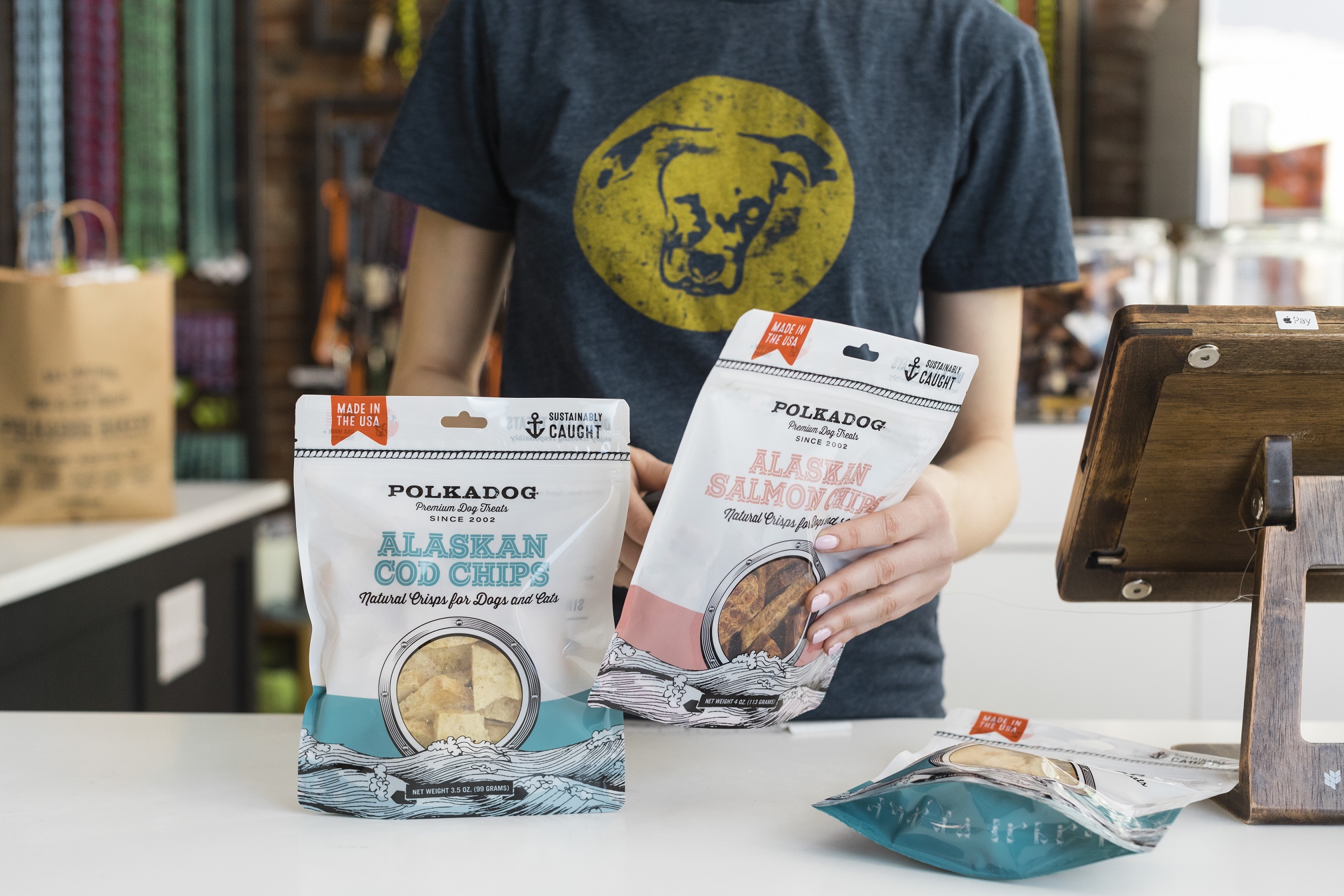
So, Polkadog treats are made here in Boston. We write, “Made in the USA!” on our packaging because we know the people who make our treats and we know where: we make them, and we make them here in Boston. We know where our ingredients come from . . . we know who catches the fish!
There’s a fantastic photographer who lives in our apartment building, his name his David Binder. He introduced us to Jan Moscowitz, the local graphics designer who’s worked with us constantly to develop our brand imaging. We also know who draws the pictures for our packaging. Joe McKendry is his name, by the way: he’s an artist who has a studio next to our first wholesale kitchen in South Boston.
That’s Polkadog. Knowing that stuff about us is the key to understanding why Polkadog has had success, and why Polkadog stands out in a growing industry. A product that says Polkadog is a product that I know is healthy; that I know comes from good ingredients; that I know is a deliberate argument for sustainability and quality and kickass, healthy neighborhoods.
There are pet treat brands all over the place now and some claim to sell “homemade” healthy treats. “Made in the USA,” of course. I don’t suppose they ever made those treats themselves, certainly not at home. I don’t really care about that, though I admit I’m very proud of how Polkadog carries out our own way of doing business. But I do not like substandard products made from unknown ingredient sources, with no care given to sustainability or community health.
Most treat brands source their treats from third-party manufacturers. At most, these treat brands will provide a general recipe; but the third-party manufacturers are the ones who find the ingredients from wherever and package the treats somewhere else. Who does their branding? Someone else.
As an idea and as a business practice, Polkadog means gathering what is healthy and good from your community and putting it back into your community. There really isn’t any other way to commit to health, growth, and sustainability.
What were you like growing up?
I grew up in a small rural farming town on an open, beautiful plot of land in New Hampshire, with my two older sisters and one younger sister. I loved to catch tadpoles in our muddy pond, and I loved chasing skunks with our dogs. Not really. I don’t know how many times I had to bathe Wags . . . it was her fault. She’s the one who chased the skunks. Honest.
So many animals . . . we had tomcats, hamsters, guinea pigs, mice (the official family member mice and the squatter mice), rabbits, a parrot named Jack, and once we even had a raccoon for a while. And lots and lots of dogs. The animals were part of the family.
I was competitive! I loved racing my classmates at the playground, arm wrestling, doing the most Swirlies on the parallel bars until I walked funny. I was the kid who jumped off swings at the highest point because it was the highest. Any type of math quiz that was timed—those were the best.
Contact Info:
- Address: 256 Shawmut Ave
Boston, MA 02118 - Website: www.polkadog.com
- Phone: 617-307-6733
- Email: deb@polkadog.com
- Instagram: https://www.instagram.com/polkadogbakery/
- Facebook: https://www.facebook.com/polkadogbakery
Getting in touch: BostonVoyager is built on recommendations from the community; it’s how we uncover hidden gems, so if you know someone who deserves recognition please let us know here.