




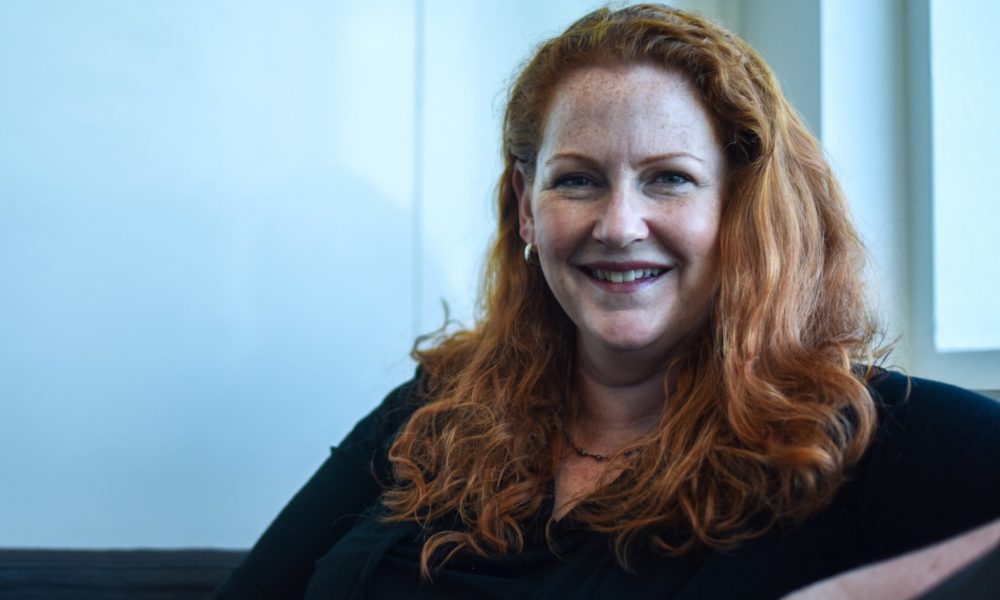
Today we’d like to introduce you to Christi Barb.
Thanks for sharing your story with us Christi. So, let’s start at the beginning and we can move on from there.
Since the work I do is very specialized, I get asked this question a lot so I should be better at telling it but I’m not. The short version is: When I realized my “have-to job” was pushing away my “want-to job” I knew I had to make a change and give my dream a chance. I left teaching full-time at a university to devote all of my attention to doing what I had always done on the side. I help people who speak English with the influence of a foreign accent improve their spoken communication skills. This is usually called “accent reduction” but I’ve always followed in my mentor’s footsteps by calling it “accent modification” because it’s not about taking something away, it’s about adding something new and giving people more choices of how they want to sound and be perceived.
The longer version goes into the question that people most often ask next, “What did you study to do that?” As an undergraduate, I changed my major six times and at various times it was linguistics, sociology, psychology, and the degree ended up being in English. I returned to school after not doing much with my English degree and got a master’s in Speech-Language Pathology, but not in the traditional sense. I combined the coursework with teaching English as a second language in the international studies department. Everything I learned about the specifics of speech production and language acquisition from speech-language pathology, I applied to speakers who were learning English as their second or additional language.
Because I wasn’t interested in doing traditional speech therapy, I continued on for the PhD where I was very fortunate to have a flexible department that allowed me to customize my degree to include courses in psychology, theater, and business because they all approach communication from different perspectives. I customized and created my own specialty degree by focusing only on accented speech. That’s not something that you can easily find when doing a job search and I wasn’t ready to venture out on my own yet. So, I taught English as a second language at Kyungpook National University in South Korea immediately after graduation, then moved to Boston to be closer to my sister and nieces and taught at Northeastern until I left to do exactly what I had always wanted to do.
Great, so let’s dig a little deeper into the story – has it been an easy path overall and if not, what were the challenges you’ve had to overcome?
That first year, I described my learning curve as a wall. It wasn’t a road or path or curve at all. I was smacked with the reality that I didn’t know anything about business, I only knew the highly specialized niche that I had created for myself in speech. I read as much as I could, watched videos online, talked to as many people as I could, and got out and attended everything that interested me. I did a lot of research for every single product that I use for my work such as software, websites, and apps for accounting, invoicing, client management, scheduling, graphics and so forth. I had never used social media for my own personal use, just didn’t care about spending time on it, but I had to jump in and start using it for business use. After finding and trying products and services that I felt were best for my needs and budget, then each of those required learning how to use it myself because I couldn’t afford to hire someone to do it for me. Every single thing was so time intensive. I didn’t realize how much of my time would be spent away from doing what I really wanted to do, the one thing that I’m good at. I was overwhelmed by how much I didn’t know and wasn’t good at. In that sense, it reminded me a lot of the dissertation process. It’s very isolated work and there’s no way out but to push through it and come out the other side stronger and wiser than before. That learning curve isn’t a wall anymore, it’s a real curve, but after getting over that initial wall, a steep curve doesn’t intimidate me at all.
Please tell us about Adastra Speech.
I am a speech coach that specializes in foreign accented English. I help people who already know and use English daily reach a higher level of success in their spoken English communication skills. My clients are already successful in their academic or professional careers, but they are dedicated to improving themselves. I’m constantly amazed by the level of dedication that my clients exhibit because they are taking on something that isn’t easy or fast. They know that this is the beginning of a long process and they are making the time in their lives for this. Making changes to speech is similar to learning how to play a musical instrument, it takes practice that starts slowly and deliberately before it begins to become more automatic and expressive. For many people, the detailed information I’m giving them about speech production and pronunciation is providing a foundation that they missed in the early stages of their acquisition of English. It’s like they know how to play a song on the piano but never learned how to read the score. One client described it as, “It’s like I’ve built a big house by becoming successful with the way I speak now, but it’s built on a shaky foundation. Now, I want to go back and make a stronger foundation. If I came this far without a good foundation, think of how much more I could do with a strong foundation.”
What sets me apart from others is that I’m not selling a prepared program. I didn’t take a special course on how to do this and I don’t use materials created by someone else. I created my own specialized degree from the master’s level through the doctorate. I’m not one thing or the other as in, “I’m a speech-language pathologist who does accent modification” or “I’m an English teacher who does accent modification.” I didn’t fit into a drop-down menu when looking for jobs and I still don’t. I did my thesis and dissertation research in foreign-accented English. I modified my mentor’s method of accent modification for my own approach. I am inspired from the many different professions that also work with accents such as theater dialect and voice coaches, areas of psychology that focus on memory, and the processes of agile and lean from engineering. I have trained my ears for almost 20 years by evaluating accented speech. I used to be in awe of my mentor who could hear things I struggled to identify, and now I think he would be very proud of me (unfortunately, he passed away before I finished my doctorate). I enjoy analyzing speech and identifying exactly what’s going on. It’s never as simple as just identifying the characteristics of a specific language such as, “oh, that’s due to the influence of Mandarin.” Accents tell a personal story. They are formed from a person’s life experiences and personality. Accents are more than the sum of the individual sounds, they create a full picture of a person’s life. That is why my goal is never to “reduce” an accent because that implies something is wrong and must be taken away. My goal is to increase a person’s awareness of how they currently sound, how they may be perceived by American English listeners, and give them the tools they can use to make the changes they want, when they want, to have control and options over how they sound and are perceived.
I’m not sure what I’m known for, but I know that I’m good at helping very analytical people tackle the seemingly abstract concepts of speech so they can apply their analytical skills to their own speech. Many of the people I work with are in technical professions and appreciate this concrete information about something that seems so abstract at first (speech). I use software that helps people connect what they are producing with how it sounds by providing visualization of their change in pitch and loudness. This visualization is a very helpful step for many people because it not only provides a visual they can connect with the sound, but also some quantitative feedback that they can relate to and make distinct changes in. I recommend free software and apps and teach people how to use free online resources to practice listening and speaking skills. The key is to learn to use the world around you as your own laboratory to experiment in and learn from.
I’m proud that I’ve made it as far as I have without paying for any advertising. All my clients have found me on their own or through referrals and recommendations from others. I’m proud that my clients have chosen me to teach them the essentials and I will be there for them when they are way down their own path. I don’t just meet with them for a few classes and then wish them well. It’s a relationship that’s always going to be there. Making change to speech is a very personal, emotional, and psychological process. It’s not about the sounds that come out of the mouth, it begins with the thought and intention and hopefully results in a connection with another person. I always offer free consultations because there’s no secret about how to pronounce English, many people can teach it, but there needs to be a level of trust with the person someone chooses to learn from. If someone doesn’t feel comfortable or supported by that teacher, then how will they feel comfortable making sounds that feel and sound strange coming out of their mouth? It has to be a good match and that’s what anyone who is looking for a speech coach should be looking for. All the facts and information aren’t unique or helpful on their own.
Do you look back particularly fondly on any memories from childhood?
At the time I didn’t think it was so great, but now that I look back on it, I appreciate it in a whole new way. My parents had a 1965 Mustang convertible and we’d often “take a drive” which meant getting in the car and just going, no plan or destination. This was in Kansas and we didn’t live in a big city anyway, so it didn’t take long to be on an empty road. Now, when I think about it, I can remember so much of it through all of my senses: how it hurt when my hair whipped me in the eye, how cold the wind could be, how warm the floor felt, how hot the vinyl upholstery would be, how sunburned I’d get, the radio set to the “oldies” channel playing music from the 50’s and 60’s, how the smells changed with the scenery, the view of beautiful sunsets, clouds, and open fields. I sold my car when I moved to Boston and I didn’t drive for the first 5 years I was here. I just started driving last year and I don’t enjoy it at all so now I can look back at those drives on the open road with a fondness and appreciation that I didn’t have at the time.
Contact Info:
- Address: 45 Prospect Street, Cambridge, MA, 02139 (Workbar)
- Website: http://www.adastraspeech.com/
- Phone: 617-971-8505
- Email: christibarb@adastraspeech.com
- Facebook: https://www.facebook.com/adastraspeech
- Twitter: https://twitter.com/ChristiBarb
- Yelp: https://www.yelp.com/biz/adastra-speech-cambridge
- Other: https://www.linkedin.com/in/christibarb/


Getting in touch: BostonVoyager is built on recommendations from the community; it’s how we uncover hidden gems, so if you know someone who deserves recognition please let us know here.