




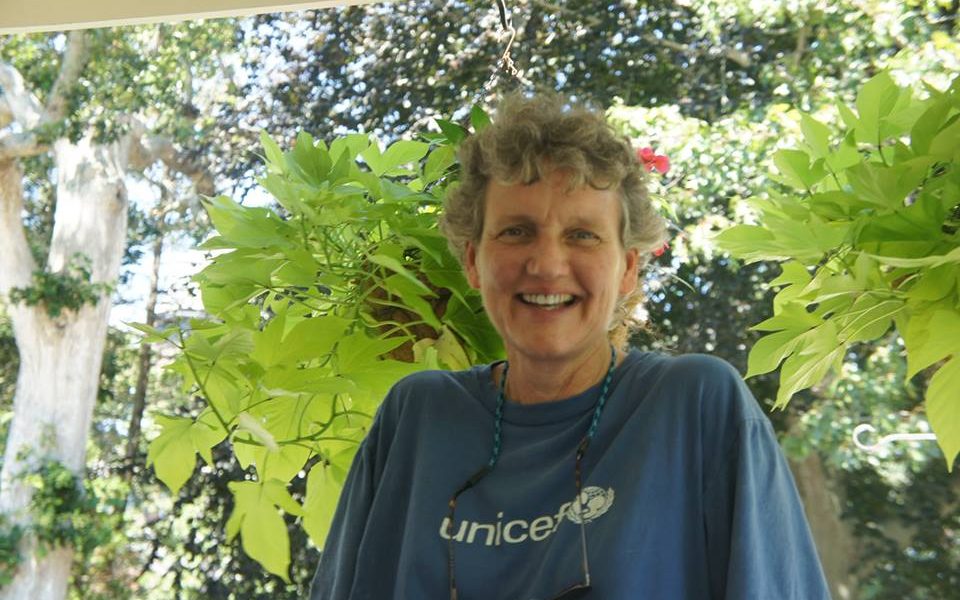
Today we’d like to introduce you to Alynne MacLean.
Alynne, let’s start with your story. We’d love to hear how you got started and how the journey has been so far.
I’ve wanted to be a scientist since I was in the 5th grade. As I got older, my love of science continued to grow, so I went to Gordon College for a B.S. in chemistry. It was in-between my sophomore and junior years when I went on my first mission trip. That’s when I developed a heart for people in the poorest places of our world. After getting Ph.D. in bioanalytical chemistry – specializing in the technology that eventually gave us the home pregnancy test – I worked for pharmaceutical and biotech companies for 8 years. However, I continued to see the need for accurately diagnosing diseases in the Developing World. This means we needed diagnostics that: did not require electricity – since much of the developing world does not have access to it; does not need any additional, expensive equipment; could give results rapidly – since people sometimes walk several days to reach a clinic and would not come back in two weeks for test results, they needed help right away; did not need a medical professional to “read” the results – anyone can be taught to “read” a lateral flow immunoassay result; was amenable to mass screenings. I knew immunoassays could do this, so at the end of 2000, I quit my job and Science with a Mission, Inc. (SMI) was born.
Has it been a smooth road?
The challenges have come at every stage – starting with the IRS deciding that we could not be a non-profit. Seriously, they allowed the NFL 501©3 status, but people trying to make diagnostics for the developing world – helping the poorest people on the planet – were not granted non-profit status. Gratefully, that decision was overturned upon appeal, but the challenges have kept coming. In all honesty, the hurdles have been a wonderful way to give God the credit as miraculous solutions come about to various problems.
So let’s switch gears a bit and go into the Science with a Mission story. Tell us more about the business.
We do nothing but diagnostics. Currently, we have tests for HIV, malaria, typhoid, hepatitis B, hepatitis C, chlamydia, gonorrhea, and syphilis. We are running some tests in Haiti on two different diagnostics for tuberculosis, but we do not have definitive results yet. We have been in existence for 16 years and have only 1 paid position, everyone else is a volunteer. Yet, to date, we have sent more than 366,000 diagnostics to 73 different countries around the world. Our volunteers run from high school age to octogenarians. {I tell folks it is my job to keep the elderly people in my church off the streets.} As far as I know, we are the only non-profit doing this type of work.
How do you think the industry will change over the next decade?
I think more companies located in the developing world will begin manufacturing some rapid diagnostics. As long as they can get good quality controls into place, this would be a wonderful direction for the industry.
Pricing:
- HIV, malaria, typhoid, hep B, hep C, and syphilis all cost $1 each
- chlamydia and gonorrhea cost $2 each
Contact Info:
- Address: Science with a Mission
602 Massapoag Ave.,
Sharon, MA 02067 - Website: http://www2.sciencewithamission.org/
- Phone: 781-784-6907
- Email: alynne@sciencewithamission.org


Getting in touch: BostonVoyager is built on recommendations from the community; it’s how we uncover hidden gems, so if you know someone who deserves recognition please let us know here.