




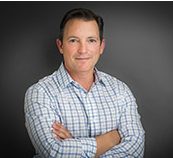
Today we’d like to introduce you to Adam Rosenberg.
Adam, can you briefly walk us through your story – how you started and how you got to where you are today.
It was not a straight line. The vast majority of biotech CEOs are PhDs, MDs and/or MBAs, and work their way up through pharma companies or other biotechs. I trained as a lawyer, and my first job with a biotech company was as CEO.
I previously advised biotech companies as a lawyer on transactions (financings, M&A, collaborations and the like), and also helped start a venture capital firm in New York City. When we moved back to Boston from stints in NYC and Seattle, I actually co-founded a law firm focused on life sciences. This led to my first CEO role in 2005, when a client asked me to run their biotech startup.
Has it been a smooth road?
Some parts have been smooth – for example I was able to become a venture capitalist, a name partner in a law firm and a biotech CEO, all before I was 35.
Some parts have been bumpier – for example we closed our Series B financing at my first biotech company on the Friday before the financial crisis officially exploded (i.e., the weekend when Lehman Brothers went under and Merrill Lynch was acquired by BofA in a fire sale). This significantly reduced funding in biotech, and failures in the neuroscience field – where I’ve spent most of my career – made investors and larger companies in the space even more skittish.
So let’s switch gears a bit and go into the Rodin Therapeutics story. Tell us more about the business.
My company, Rodin Therapeutics, is focused on discovering and developing drug to treat a wide range of neurologic conditions. We have a novel chemistry platform, and an exciting translational strategy to move from preclinical experiments to human clinical studies, which we hope to do this year. We are leveraging new, sophisticated tools – such as neuroimaging – to peer inside patient’s brains and assess the effects of our drug.
We are working in very challenging disease areas, such as Alzheimer’s disease and Parkinson’s disease, where numerous failures to reach clinical endpoints and show patient benefit have increased frustration and skepticism in the field. We believe however that our therapeutic mechanism – improving synaptic resilience, or the connections between neurons – will enhance learning, memory, function, cognition and other symptoms of neurologic disorders, and we believe that we’ve found a way to design safer molecules in a class of compounds that have previously shown some toxicity.
How do you think the industry will change over the next decade?
The biotech sector is incredibly active right now. Companies are raising record Series A rounds, and many are going public…some at much earlier stages than in the past. Many pharma companies have also consolidated research activity in Boston / Cambridge, moving large groups here from all over the world.
While the IPO window can’t stay open forever, the need for innovation in pharma pipelines is significant, and the barriers to entry for a biotech startup are much higher than for startups in other fields (retail, technology etc.). You need the right substrate – the science, the people, the right investors, the right capital allocation strategy etc. So while the size of the financings have dramatically increased – and valuations may see a painful re-set at some point – at least there is a natural constraint on the number of startups. This should keep a lid on the irrational exuberance that has plagued other sectors after periods of dramatic capital inflows.
Do you feel like our city is a good place for businesses like yours? If someone was just starting out, would you recommend them starting out here? If not, what can our city do to improve?
It is hardly an original thought to suggest that Boston is the hub of biotech. There is simply a larger – and I would argue much higher quality – collection of biotech venture capital, human capital and intellectual capital here than in any other region. This is especially true in Kendall Square, which feels like one large biotech campus.
The Boston biotech scene is also exceptionally global. I grew up in Newton, but I think I’m the outlier – most biotech CEOs and senior executives I’ve met here come from all over the US, as well as Canada, UK, Germany, China, Ireland, Switzerland, France, Australia, India, South Africa, Spain – pretty much anywhere.
New companies may struggle with the cost and commute factor in Kendall, but there are other emerging biotech destinations, such as Watertown, Seaport, Back Bay, Cambridge port etc., there are also many companies who decide to locate in the burbs, such as Waltham and Lexington. These areas may lack the concentration of talent and capital in the Kendall Square ecosystem, but still provide some nexus, and are exceedingly more affordable and generally better commutes for people who live in the burbs (especially Metro West).
What can Boston do better? Transportation, period.
• Cars: Traffic is horrible, and getting worse. It has a real, daily impact on productivity and worker satisfaction. There are no easy or inexpensive answers, but this needs to be the highest priority.
• Bike lanes are improving somewhat – e.g. the newly opened Longfellow Bridge has separate bike lanes – but it’s still a dangerous city to bike in, and very unlike European capitals to which Boston is often compared.
• Public transportation is also suboptimal. It is generally much easier to get downtown, reflecting an era where the Financial District was really the center of business in Boston. But Kendall Square is a mess; access has not caught up with all the recent construction.
Contact Info:
- Website: www.rodintherapeutics.com
- Twitter: @aj_rosenberg; @rodintx
Getting in touch: BostonVoyager is built on recommendations from the community; it’s how we uncover hidden gems, so if you know someone who deserves recognition please let us know here