
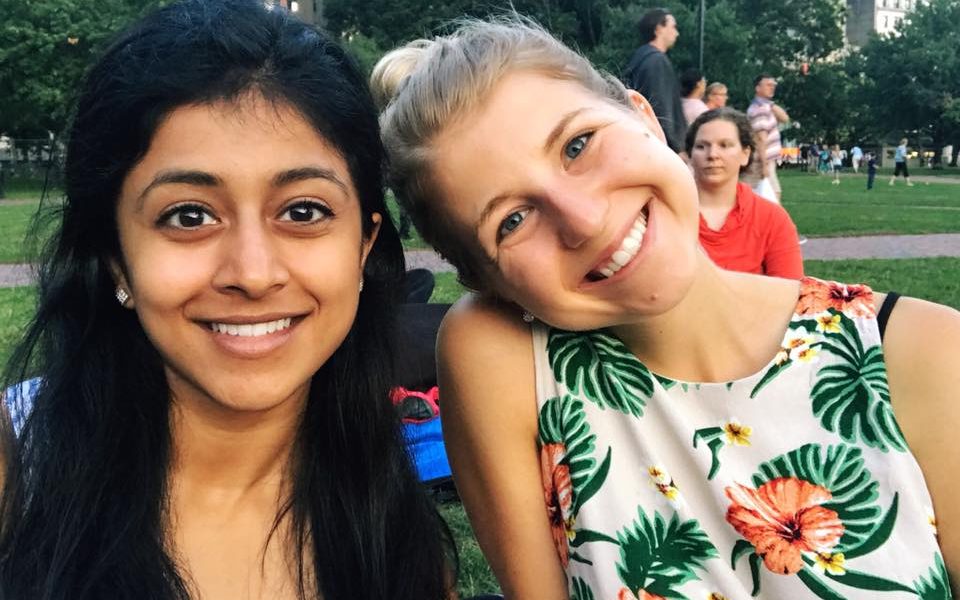
Today we’d like to introduce you to Hannah Meier.
Hannah, please share your story with us. How did you get to where you are today?
My journey to becoming a dietitian started when I was very young and very interested in food. Growing up, I had a tormented relationship with my body and I am now very open about that. I viewed food as a way to punish or manage my body and chose what to eat based on how I thought it would help me get smaller and this eventually spiraled into a pretty restrictive eating disorder. I dealt with a lot of digestive issues that I now attribute to my chaotic eating habits and also lost my period. Even though I went through a tormented time, my relationship to food and passion for helping others dig out of the trenches of their own torment would not be where it is today if I didn’t experience it myself.
I ended up majoring in dietetics and psychology at the University of Wisconsin – Madison, where I got experience working in a clinical setting as well as working in dining services with food, menu and event planning. I went on to complete my dietetic internship, a required 1200 hour supervised work experience, in Boston at Mass General Hospital, where there was a larger focus than most internships on entrepreneurship and leadership. I re-discovered my knack for communication and education and decided that I wanted to pursue nutrition communication at the masters level. Luckily enough, Tufts has a program dedicated to Nutrition Communication in the Friedman School of Nutrition Science and Policy (the only graduate school of nutrition in the country!).
Great, so let’s dig a little deeper into the story – has it been an easy path overall and if not, what were the challenges you’ve had to overcome?
I feel like the major battle I face and continue to fight back against is the diet industry and even the nutrition field in general. There are a lot of very intelligent people out there doing important research, but not enough people talking about how nutrition actually applies to someone’s life. Many people in the nutrition field swear by a particular way of eating or a certain diet rule without realizing that not everyone’s bodies are the same – not to mention that not everyone has the same access to other important resources or even the same schedule that hugely impact how and what someone can or should eat.
The nutrition field and dietetics, in general, continues to feel undervalued. It is hard not to internalize that feeling, but focus on the unique skills and perspective you bring to the table and fight for your worth. Get clear about what you want, journal, write, reflect, meditate – the more confident you are in what you bring to the table, the more others will realize what you have to offer and will get just as excited as you.
Please tell us about Nutrition in Real Life.
During grad school, I worked with college athletes and trained for half marathons and marathons, solidifying the way I thought about food as fuel and how to communicate that. I see so much misinformation out there targeted specifically to people who exercise or live active lifestyles (athlete or not) that is not only poorly thought out, can sometimes be flat-out inappropriate or dangerous for someone to fully take to heart.
I’ve been practicing as an RD for 3 years, but only recently was re-invigorated by the evidence surrounding intuitive eating and intuitive eating as the best, most evidence-based way to honor whole-body health without worshipping diet trends or even super restrictive eating rules. Though I specialize in nutrition and keep up-to-date on scientific literature, I always focus on applying nutrition concepts to someone’s real life, understanding that we are all dealing with different circumstances and that life changes constantly. I focus on helping clients reflect inward, re-discover how their bodies communicate with them and how external dieting messages are often meaningless when it comes to nourishing our bodies. There is a lot more to health than how “clean” your diet is, and more often than not when we are fixated on only one aspect of health we are neglecting others, and overall forgetting to listen to what our body is attempting to communicate.
The concepts of intuitive eating can be hard to grasp for anyone, but especially for athletes who face a lot of pressure to look a certain way because of misguided associations between size and performance. By ignoring our own bodies, we do a lot more harm than good. I hope to help people re-learn how to eat intuitively (after all, we are all born intuitive eaters) and focus on the bigger picture of health in their lives.
There’s a wealth of academic research that suggests that lack of mentors and networking opportunities for women has materially affected the number of women in leadership roles. Smart organizations and industry leaders are working to change this, but in the meantime, do you have any advice for finding a mentor and building a network?
The internet can be a fabulous space for finding a mentor. People who put themselves out there via blogs or videos or another type of presence are a great stepping stone for networking. If you resonate with their message, reach out! Nothing bad can come from trying to make connections with those who inspire you.
Contact Info:
- Address: 581 Boylston Street Ste 201H
Boston, MA 02116 - Website: www.dietitianhannah.com
- Phone: 617-690-8922
- Email: hannah@dietitianhannah.com
- Instagram: www.instagram.com/dietitian.hannah
- Facebook: www.facebook.com/dietitianhannah
- Twitter: www.twitter.com/hannahrosemeier
Image Credit:
Saranya Sathiamoorthi
Getting in touch: BostonVoyager is built on recommendations from the community; it’s how we uncover hidden gems, so if you know someone who deserves recognition please let us know here.