



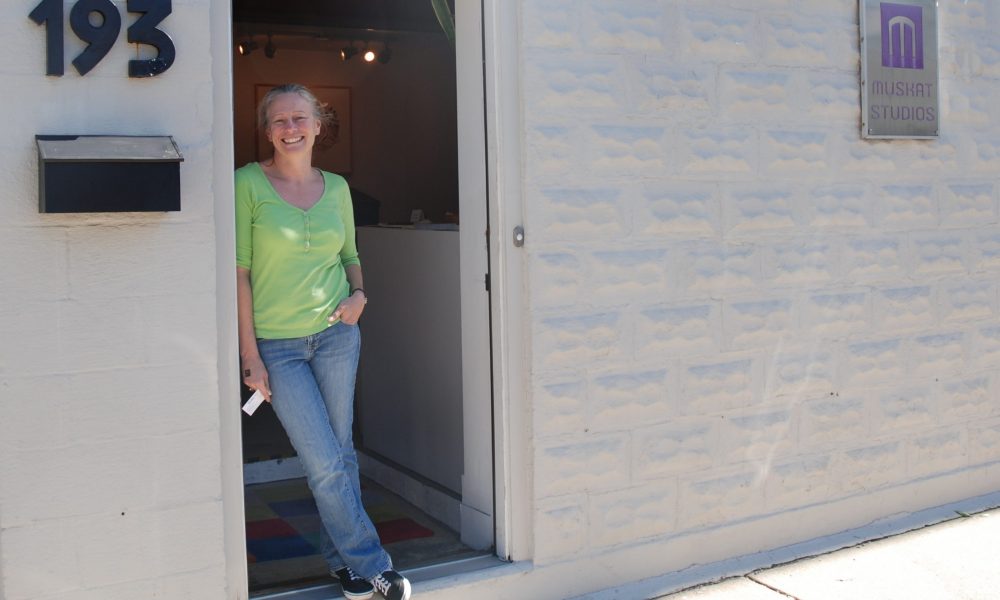
Today we’d like to introduce you to Carolyn Muskat.
Carolyn, we’d love to hear your story and how you got to where you are today both personally and as an artist.
I was interested in art from a young age, but art school was not in the plans. No one in my family was in the visual arts. However, with the encouragement of my mother, I applied to the College of Fine Arts at Carnegie Mellon and was accepted. There I focused on painting and took printmaking as an elective. I fell in love with printmaking, especially lithography and silkscreen. In undergraduate at the time, no one really talked about what you could do after graduating with an art degree. With printmaking, you need more equipment and space than you do for painting or drawing. Fortunately, one of my professors (Jon Beckley) was amazingly supportive, and he explained how professional collaborative studios work and suggested I look at the Tamarind Institute. That struck me as a wonderful situation that would keep me going artistically – I would gain technical skills and wouldn’t be working in isolation.
During my time at Tamarind, I was fine with putting my personal art, not completely on hold, but on the back burner. Instead, I used that time to look at art, talk with artists, think about art, and read. After completing Tamarind, I received the title “Master Printer.” A majority of Master Printers don’t necessarily view themselves as artists, though many of them make beautiful work of their own. They see themselves primarily as craftsmen. For me, I followed this path so I could be a professional, exhibiting artist. I never understood the reasoning that the two can’t go together. So, in 1993 I began Muskat Studios at 450 Harrison in the South End. As that area become more gentrified we needed to find a more permanent space and so moved here to Somerville and have been here ever since! At Muskat Studios we make original prints in collaboration with regional and national artists. It means I get to meet very interesting and talented people who work, think, and conceive of work differently from me. Those collaborations are both stimulating and exciting and help keep my own work fresh!
We’d love to hear more about your art. What do you do you do and why and what do you hope others will take away from your work?
Identity cannot be defined in isolation. We define ourselves by our geography and our culture. These definitions are simultaneously influenced by our interpretation of the past and our distorted vision of our current existence. The concepts of place, definition, transference and identity infuse my work.
In my life I have moved and lived around the United States (Ohio, Texas, Pennsylvania, New Mexico, San Francisco, Boston, etc.) and traveled internationally. In each place I felt a tension about whether I belonged there, was I a stranger and an outsider? When I left and came back people treated me like a newcomer. I like exploring what makes a place unique, what gives it identity in the mind of the people living there and the people visiting. What creates the essence of a place or the quality that identifies a location? Everywhere I go has its own light, color, and atmosphere.
Location, a complex mixture of geography, culture, and lived experience, allows us to assign context and build history. In creating an image, I construct my own history– where I have been and where am I now. My most recent prints were made in response to my trip to the island of Pulau Ketam in Malaysia. It is a place tied to the water. It has features unique to that area and features in common with all other islands and fishing communities. I try to negotiate and articulate those nuances through my work.
Have things improved for artists? What should cities do to empower artists?
The art world has changed with the widespread use of the internet. Now, there is an opportunity for broader visibility and outreach. However, this does burden artists with the work of being up-to-date with all relevant platforms. There are ups and downs to these changes but the basic difficulties of running your own business as an artist, in addition to often other careers and family, remains largely the same.
The best ways to help artists are:
-Maintaining affordable housing and studio/work spaces.
-More events and opportunities to show and sell work
-Recognizing artists as professionals who make significant and valuable contributions to a vibrant creative economy
Do you have any events or exhibitions coming up? Where would one go to see more of your work? How can people support you and your artwork?
The best way to see my work is to come to Muskat Studios! It is located about 10-15 min walk from Porter or Davis T stops. There is small gallery attached to the shop where I show my work and other artists’ work and rotate the show every few months. Occasionally you can see my work in group exhibitions throughout the area. I am currently showing at Francesca Anderson Fine Art Gallery in Lexington, MA and at the National Art Gallery in Kuala Lumpur, Malaysia.
The best way to support me and the shop is to buy art! Purchasing pieces from Muskat Studios means you are buying original hand-drawn and hand-printed artwork. You will be supporting me, local artists who I work with, and the students/young artists who intern at my shop.
Contact Info:
- Address: Muskat Studios
193 Cedar St. Somerville, MA 02145 - Website: www.muskatstudios.com
- Phone: 617-776-7773
- Instagram: @muskatstudios
- Facebook: https://www.facebook.com/muskatstudios/
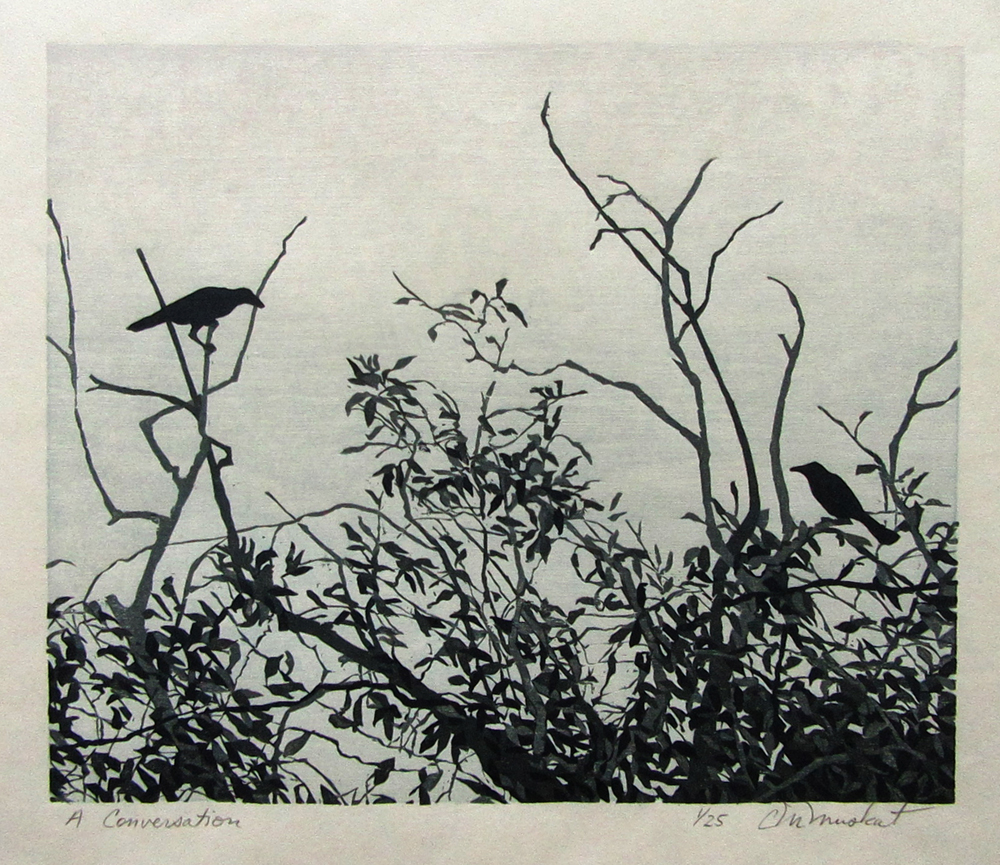
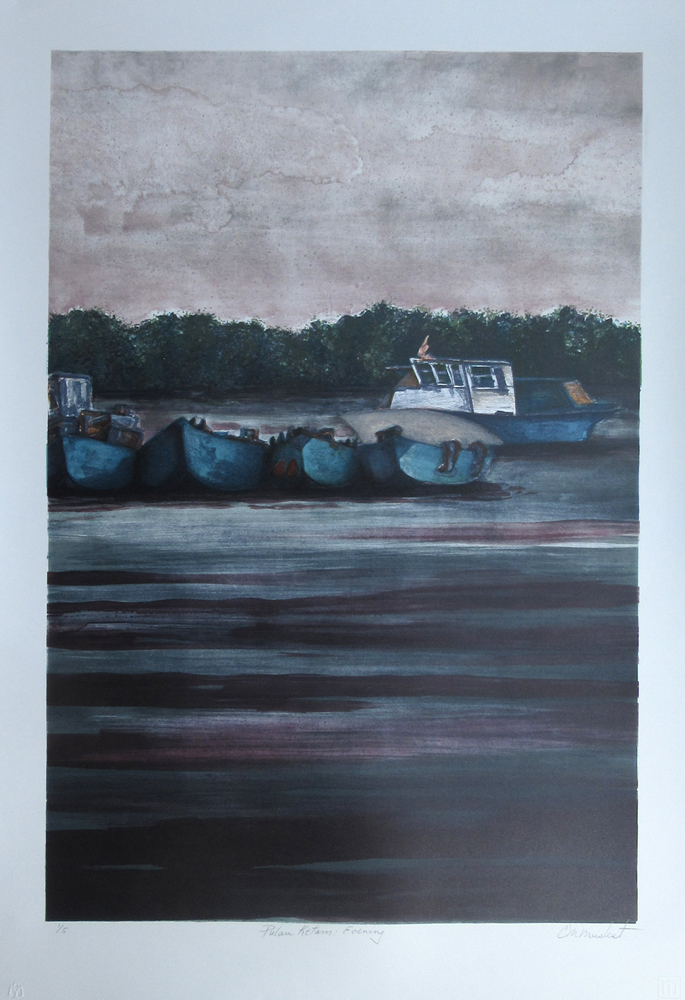
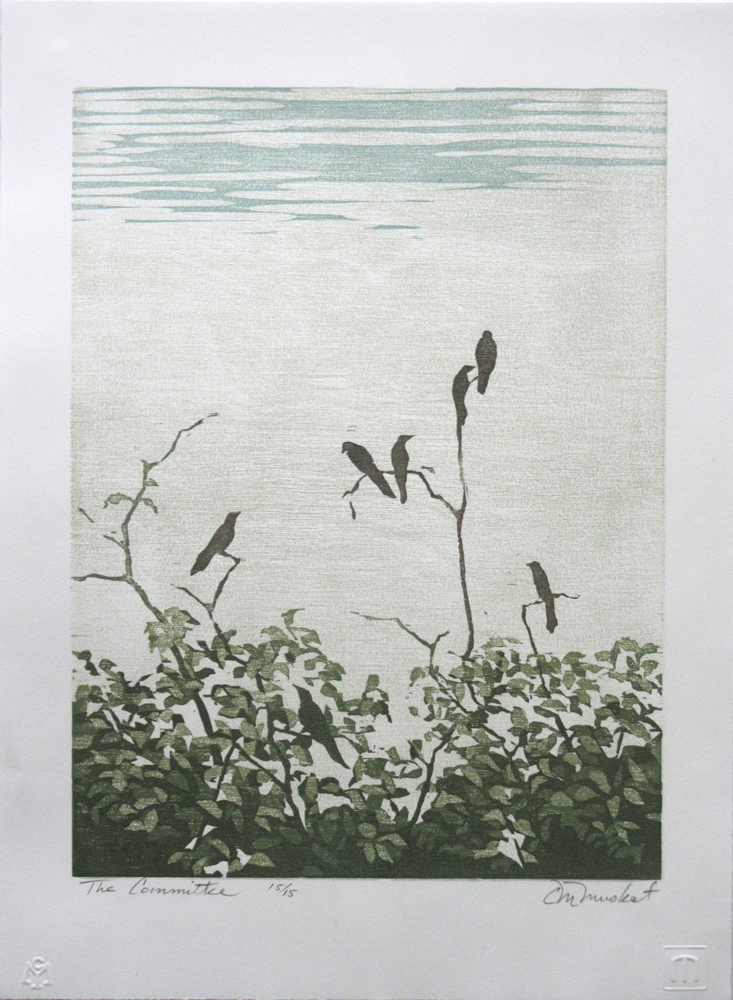
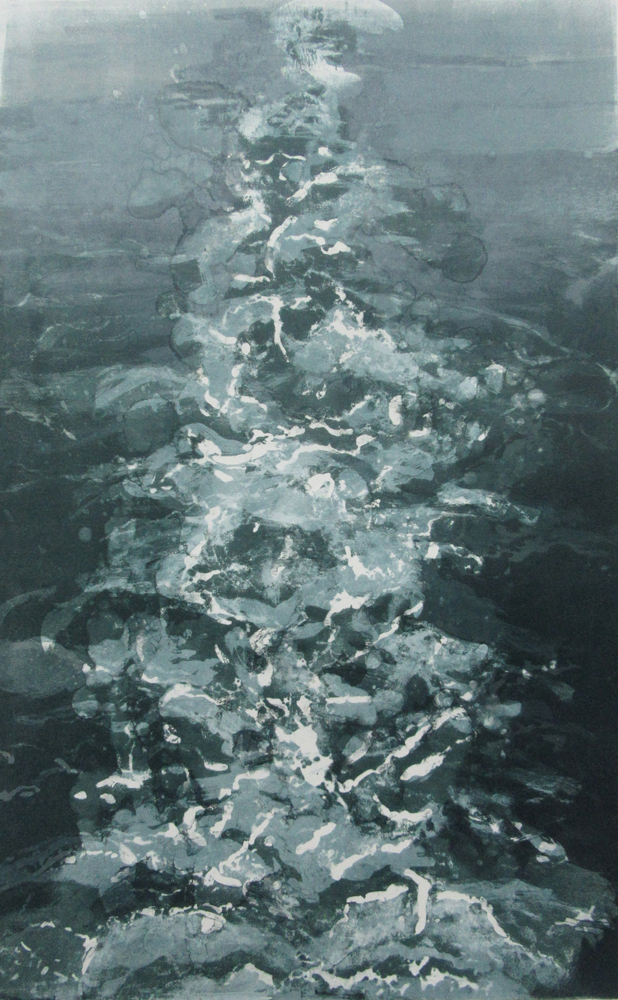
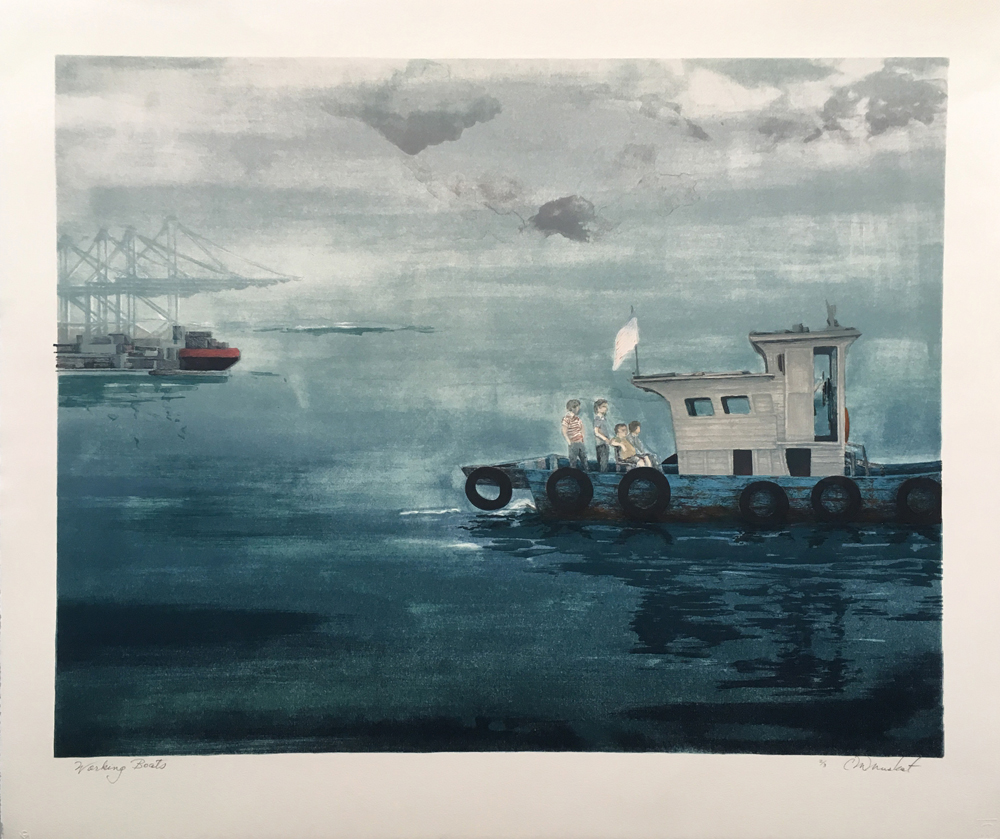
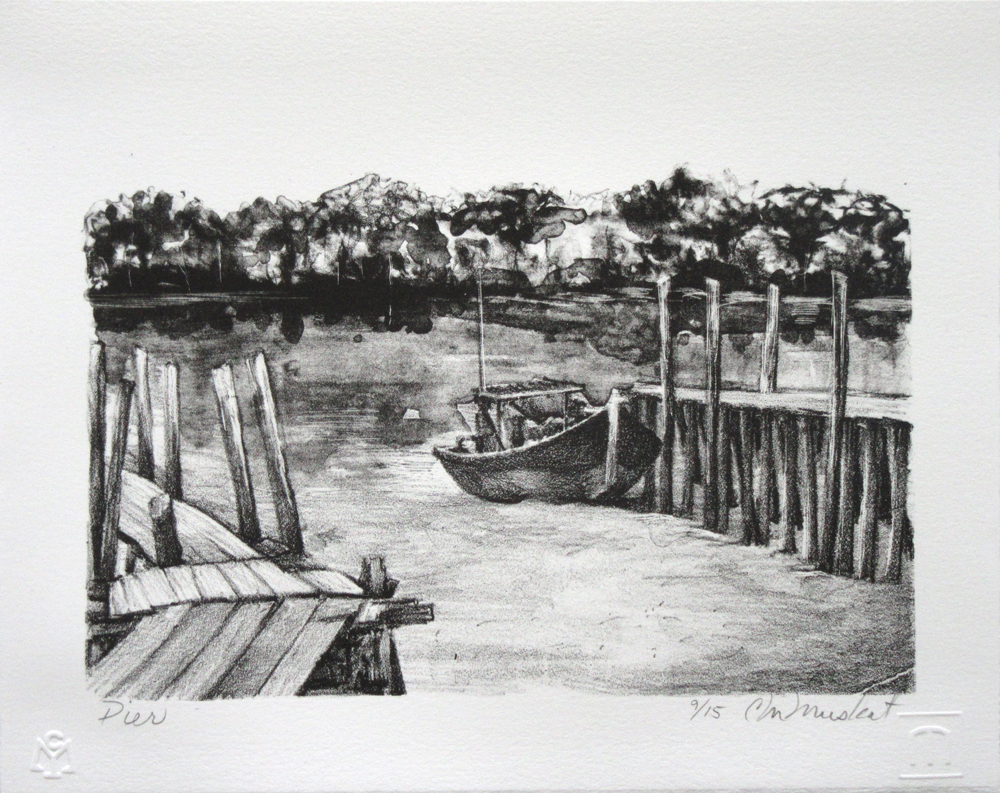
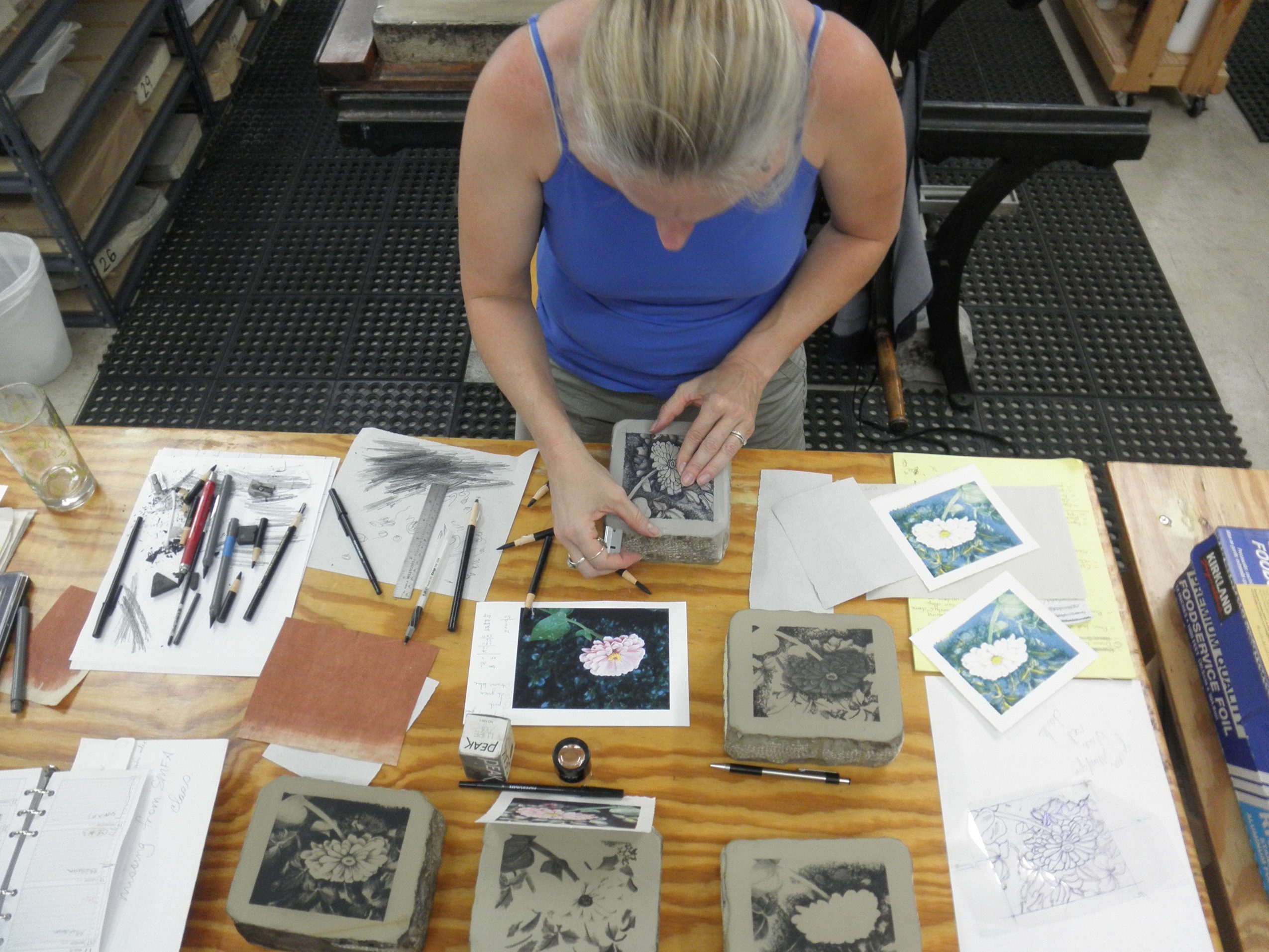
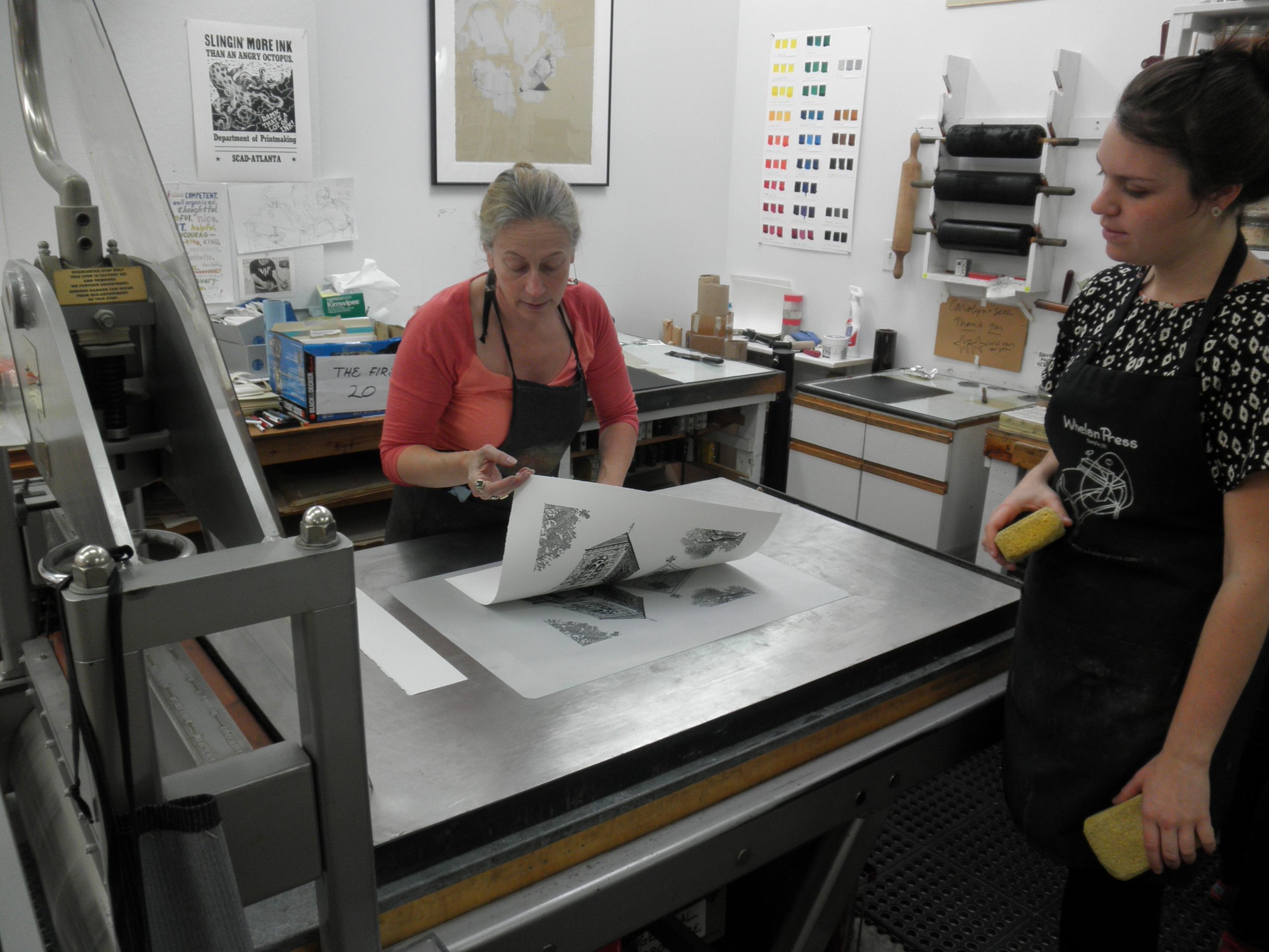 Image Credit:
Andrew Plaut (profile picture)
Seth Read (2 pictures of Carolyn working)
pictures of prints courtesy of artist
Getting in touch: BostonVoyager is built on recommendations from the community; it’s how we uncover hidden gems, so if you know someone who deserves recognition please let us know here.