




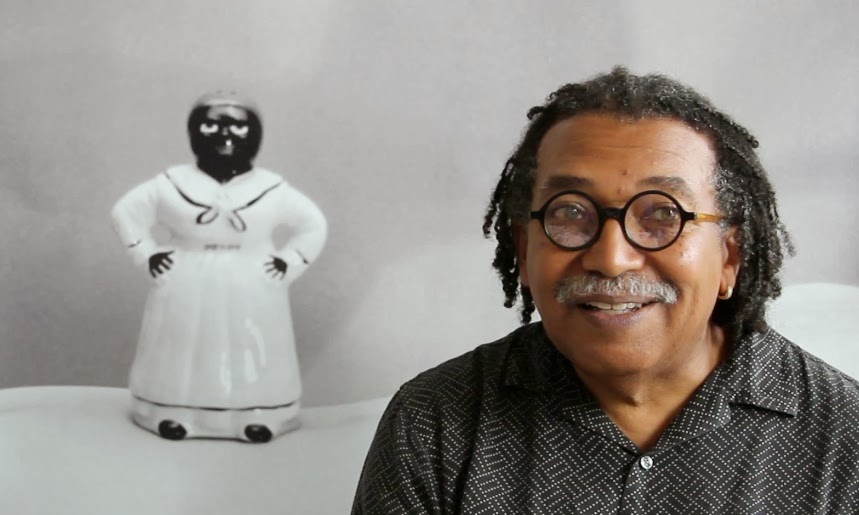
Today we’d like to introduce you to James Montford, Ari.
James is a multi-media artist, whose work ranges from photography and collage to performance art. He works between his studios in Providence, Rhode Island and Boston, Massachusetts. For over thirty five years, his career has allowed him to exhibit his work nationally, curate exhibitions and educate a variety of students crossing disciplines and media. Graduating with Honors in Fine Arts at Brandeis University, he was awarded the Rosland W. Levine Award for outstanding Achievement in Fine Arts and served on the Advisory Committee to the Dean of the College. He went on to receive his MA in Art and Education at Columbia University and MFA at the Hoffberger School of Painting, Maryland Institute College of Art in Baltimore. Montford’s numerous residencies include several Yaddo Residency Fellowships in Saratoga Springs, NY, the Art Matters Inc. NYC Individual Artist Fellowship and a VT Studio Residency Grant. He has pursued opportunities to study and work under great artists such as painter Robert Colescott, architect Paolo Soleri, painter Grace Hartigan and painter Joseph Stefanelli. Montford received funding from the National Endowment for the Arts Individual Artist Fellowship and was twice awarded the Pollock Krasner Foundation Grant to Support Independent Work. In 2006, Montford was appointed Director of the Edward M. Bannister Gallery at Rhode Island College, where he is a Professor in the Art Department, and curates thought-provoking exhibitions by both regional and national artists. Montford is represented in Boston with the Yezerski Gallery. James W. Montford, Jr. (Ari) A.B., M.A., M.F.A.
He (Ari) has held the position of Coordinator of Community Programs at The RISD Museum of Art. In this position he worked with educators and curators in making the Museum’s educational programs and exhibitions more accessible to all types of audiences. In addition to this Ari taught on the college side such courses as African American Art in Context. He was also involved with the college’s diversity efforts. Ari is also an adjunct faculty member with The Community College of Rhode teaching studio and history courses there. He has been a visiting artist at many colleges, including, Clark University, The Hartford Art School, MASS College of Art and MICA. In fall 08 he was a visiting artist at Michigan State University and most recently at Stonehill College. Montford was formally the director of the Edward Mitchell Bannister Gallery at Rhode Island College, teaching and curating at the college.
Ari holds an MFA in Painting from the Hoffberger School of Painting at the Maryland Institute College of Art, (MICA), where he studied with Grace Hartigan, and Dr. Leslie King Hammond. An MA in art and education from Columbia University, and an AB with honors in fine arts from Brandeis University. He has also done postgraduate work at Columbia University in Arts Education and administration with Dr. Judith Burton.
Ari has participated in and curated numerous exhibitions and community projects throughout the United States. Recent venues have included the Queens Museum of Art NYC, the Seattle Art Museum, The Mattress Factory Museum, the Chrysler Museum, the Slater Museum, Wadsworth Athenaeum, The New Britain Museum of Art, and the Taft Museum. His work is included in the permanent collection of prestigious institutions such as the DeCordova Museum, The Chrysler Museum, The Scottsdale Center of Contemporary Art, The Taft Museum, and the Museum of the National Center of African American Artists. Ari has exhibited at the Castellani Art Museum located on the campus of Niagara University and in American Democracy Under Siege at the Hera Gallery in Wakefield RI. He is currently planning an exhibition at Howard Yezerski Gallery in Boston MA.
For more than 25 years Ari, an educator and visual artist has conducted visual research within the African Diaspora focusing on the African American Holocaust and the black Indian. Ariʼs personal and professional work sometimes melds to form opportunities to work with divergent communities concentrating on civic engagement. This is evident in the numerous awards and grants he has received for his experimental work, most notably the Community service award from the International Gallery for Heritage and Culture in Providence RI, and the TRIO Achiever award in 2002, The National Endowment for the Arts individual artist fellowship, Two Connecticut Commission on the Arts Grants, Art Matters Grant, New England Foundation on the Arts Grant, Two Pollock-Krasner Foundation Grants, Vermont Studio Center residency, Wurlitzer Foundation Residency, NEA Arcosanti Fellowship, RAW Grant, Six Yaddo Residency Fellowships. Ari is a 2001-02 Pollock-Krasner Grant Recipient. The grant supports the ongoing development of the work. This is the second time Ari has received this prestigious international award. Most recently Ari was awarded the Berkshire Taconic Foundation individual artist grant for continued development of the work.
Ari has been a censored artist in several national exhibition situations dating back to 1991 to the present, resulting in his work being removed from exhibitions or excluded from exhibitions due to the perceived inflammatory nature of the work. He is acutely interested in and fascinated by the issues raised by the work in addressing the false “universal” societal constructs-racism, community, and environments, their intersection with myth their pervasiveness, and society’s willingness to unquestioningly absorb them. Ari intends these works to be very fertile juxtapositions focusing on the deconstruction of and demystification of stereotyped images as they relate to universal oppression. A recent publication OUTSPOKEN: Stories of free speech by Nan Levinson, 2003 features Ariʼs work and experiences.
Ari feels the impact of attending the Brandeis University Upward Bound Program in 1970 and the experience of the college in general greatly influenced his coming of age in America during a time of great social and cultural conflict. He is thankful to Arline Cliff an English instructor at Brandeis who introduced him to Langston Hughes and the Harlem Renaissance and his art mentor and teacher Grace Hartigan. He is particularly thankful to the artists Robert Colescott and Joe Stefanelli for taking time with an aspiring twenty something artist in the 1970ʼs.
Can you give our readers some background on your art?
Post Traumatic Slavery Disorder (PTSD)
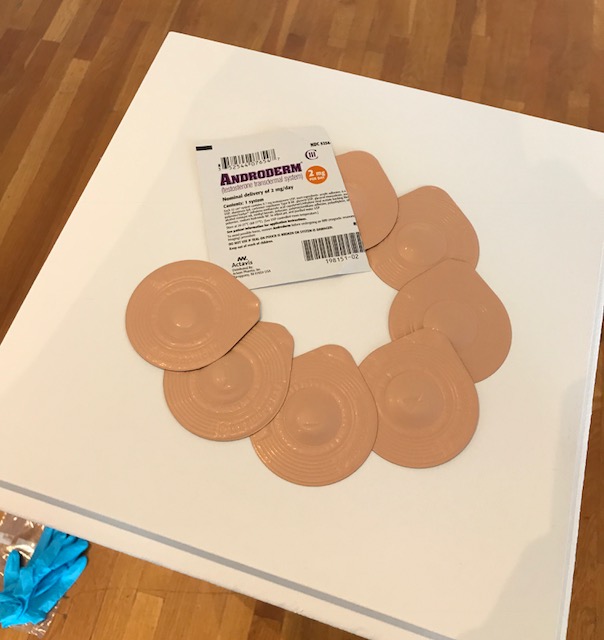
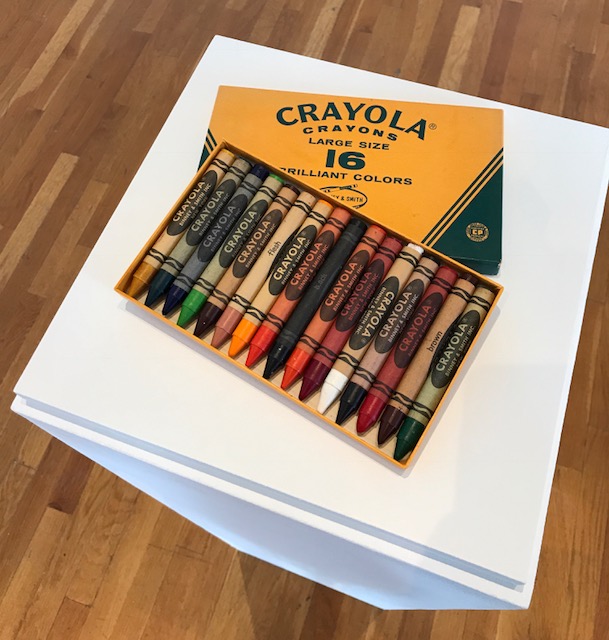
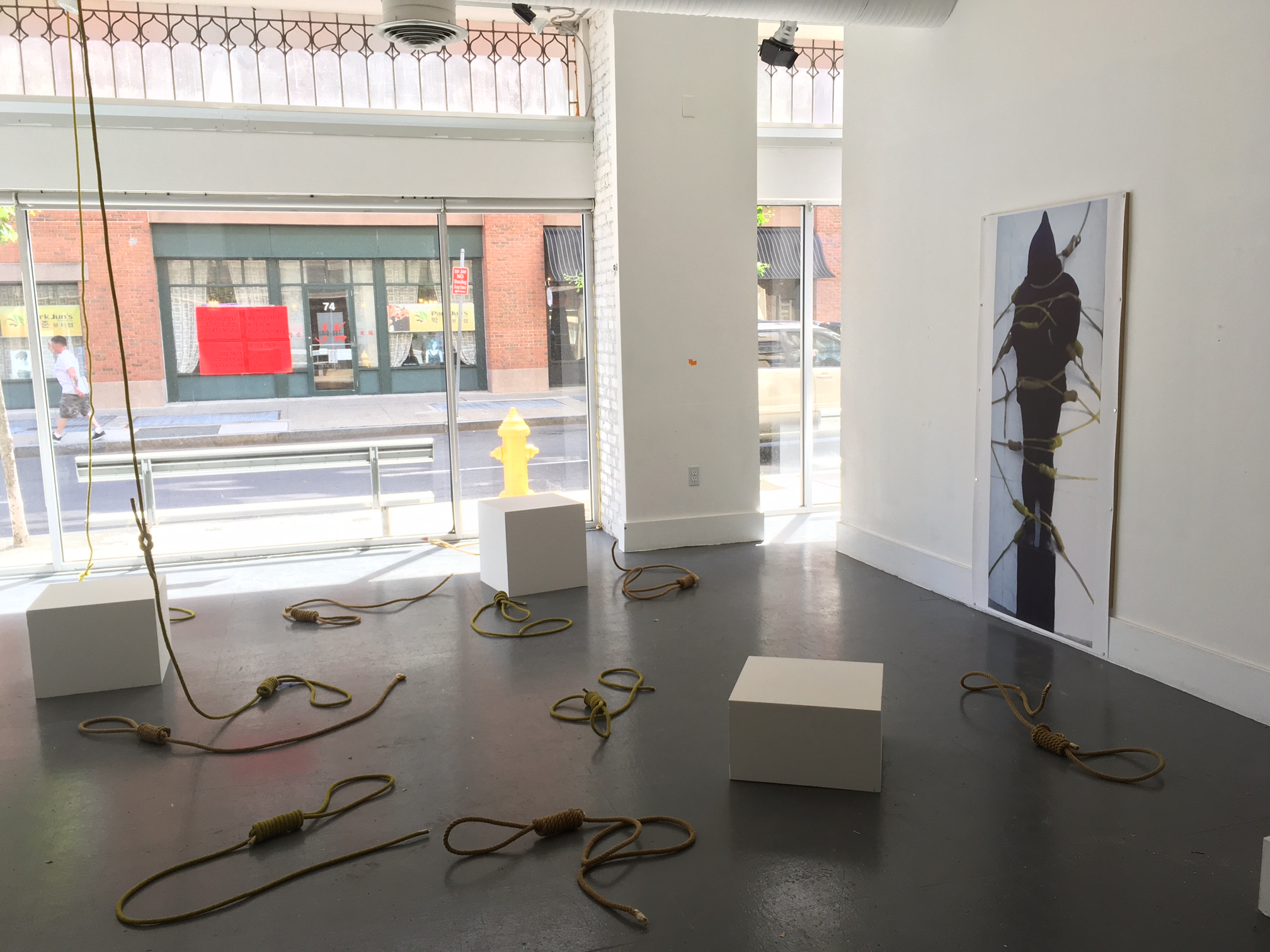
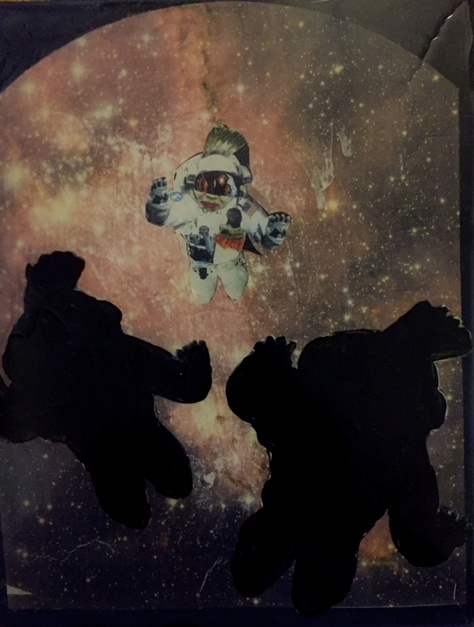
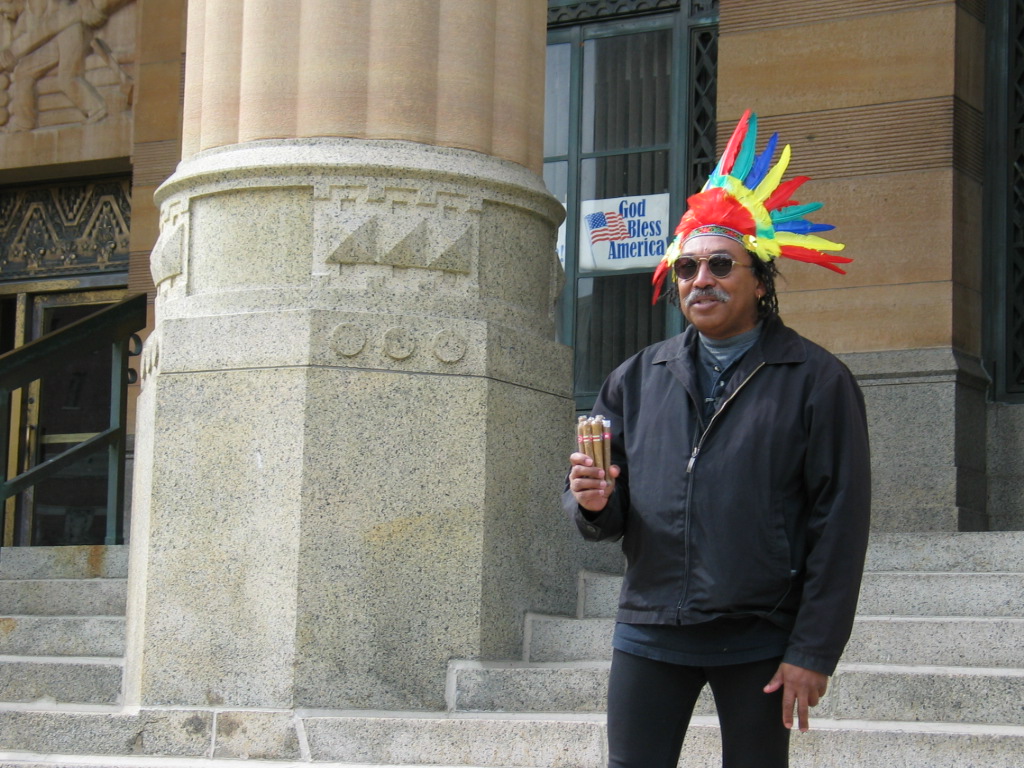
My studio practice involves study and research examining socio-political concerns from an aesthetic, formalist and educational perspective. I have discovered from this process that the factors, which determine pan-cultural and geopolitical histories, can be a methodology for making art impacting the Diaspora. Specifically, it is essential to my studio practice that I explore and demystify those factors, which continue to foster the existence of the African American Holocaust. Black Indians in Space is focused on these concerns from the perspective of a greater understanding of Diaspora. I am a Black Indian.
The Holocaust I refer to here has not found its way into the common lexicon and as such has not been viewed by the culture at large in its proper context. I harbor no bitterness but advocate strongly that others (blacks, whites, etc.) must come to realize that many millions of Africans and African Americans have perished in the name of slavery. Somehow my ancestors survived the horrors and indignations of the middle passage, the horrors and indignation of slavery and the horrors and indignation of Jim Crow. There are over twenty million indigenous Americans lost since first contact. Therefore, my work has come to reflect the reality of this Holocaust and investigates the issues that warrant being discussed while being cognizant of global oppression.
The formal aspects of the work contribute to its edginess, but the work succeeds as a result of its melding the formal with contextual. The context of oppression is universal and not limited to personal expressions of racism. I seek a more humanist ideology or model, one that foresters a transformative process for the viewer, and one that might encourage socio-political change to occur. It has been my recent experience that the representational direction of the work is often associated with advocacy. This is not the case. By producing the work I am not advocating its content but rather adding to the discussion through the chosen re-contextualization of the image.
The conceptualization of the work and its formal concerns are derived from post reductivist constructs and their related special dichotomies. Earlier work although nonrepresentational in nature had a metaphoric reference to cultural sources. There is an effective ambiguous nature to the work that aptly lends itself to the focus of the discussion on subjugation while still being interested in resolving formal conceptual issues. I am acutely interested in and fascinated by the issues raised by the work in addressing the false universal societal constructs-racism, community, and environments, their interaction with myth, their persuasiveness focusing on the deconstruction of stereotyped images as they relate to people of color in the global sense and relationships to the Holocaust, i.e. social justice. I use Holocaust here in the global context.
I am interested in connecting the conceptual/formal concerns of the work with a pan-cultural aesthetic this is the formal line to social justice. . This exploration should provide the backdrop for the continued development of the work from its formal and conceptual directions while enhancing my interest in cultural history as it pertains to the Pan-African Holocaust. My work then has a multi-layered approach from an interdisciplinary practice that seeks to encourage a transformative process for the viewer. I hope to continue developing an evolving dialogue with the work that recognizes the realities of global oppression and its implications.
The studio practice develops a narrative interpretation as part of an ongoing discourse with audience, a discourse that utilizes painting, performance, video, installation and sculptural, ephemeral and archival materials. The narrative or celestial story has been reconfigured from earlier iterations, and are now part of the larger discussion related to installation-based work entitled The Planetarium of Black Indian Constellations
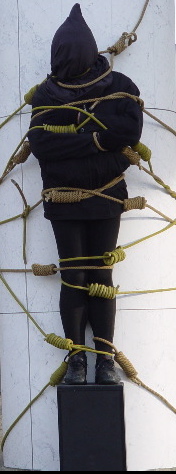
The didactic imagery is intended to serve as a catalyst, offering a script or passageway for contemplation. The foundation for the social narrative of my studio practice is the examination of microaggressions and their relationship to holocaust connects to Goya’s “Third of May”.
The work seeks at this juncture to continue its discourse of social engagement with aesthetic and formal juxtapositions in contrast to majority cultural models. Diaspora representations become the paradigm for the discourse.
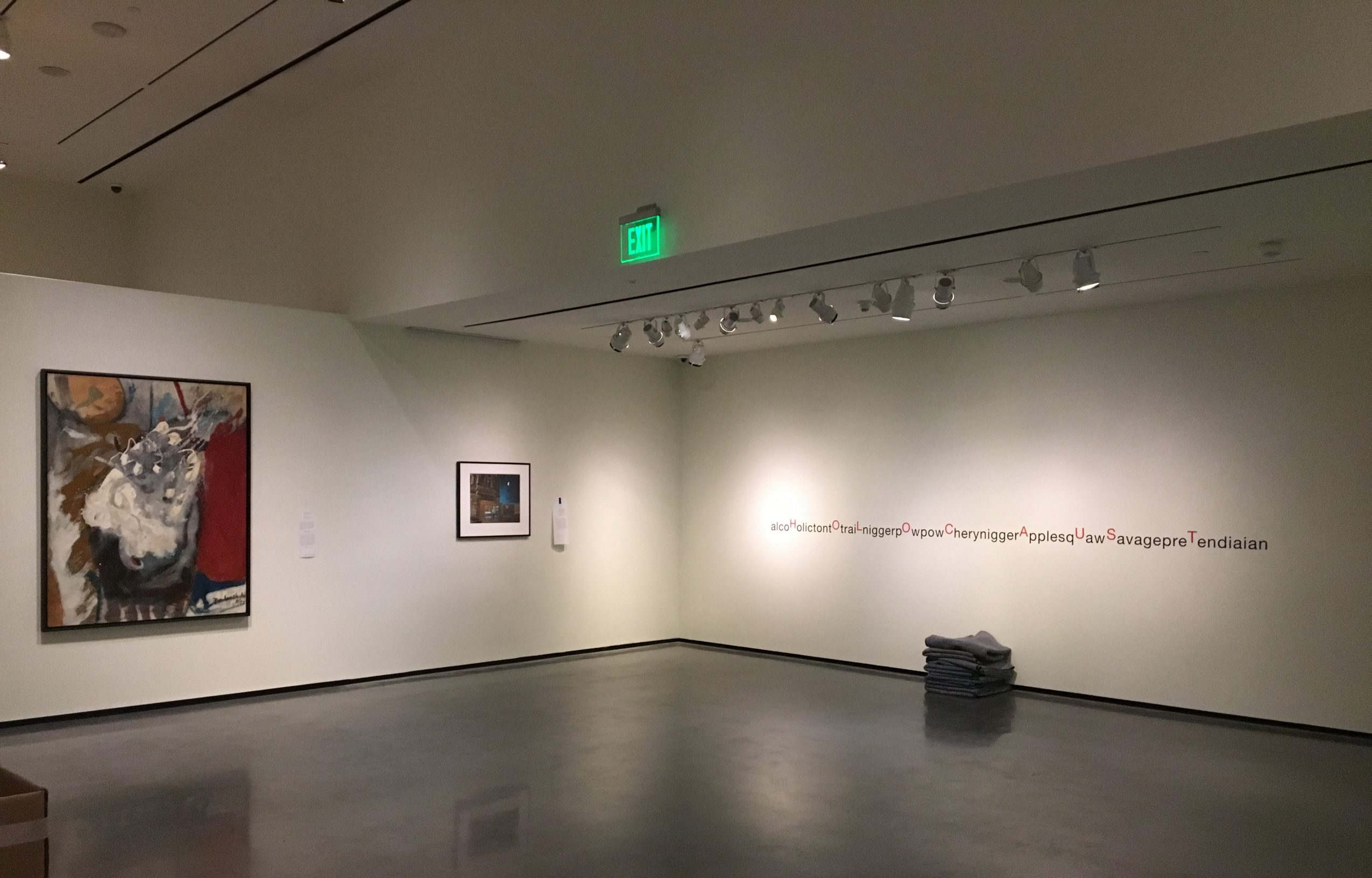
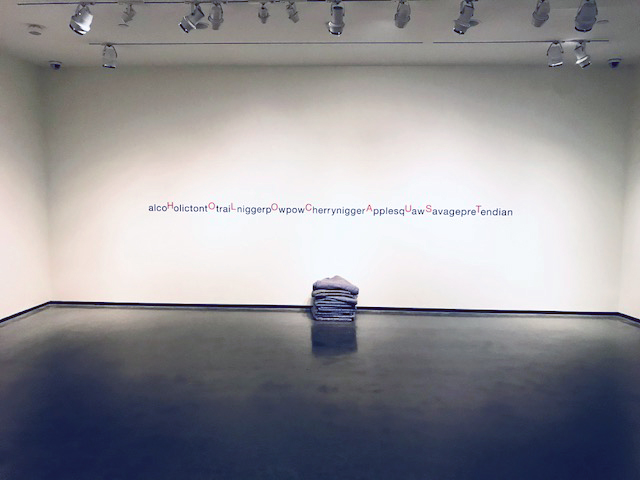
The current exhibition at the RISD Museum Phantom of Liberty is a collection exhibition. The curator Dominic Molon describes the overall concept of the exhibition as being loosely defined groupings of works from RISD’s contemporary collection that address themes ranging from language and communication, economic inequality, costume and identity to holocausts and their impact on contemporary life.
He also stresses the exhibition’s emphasis on the more politically charged and expressive works in the RISD Museum’s collection, and how that reflects the institution’s desire to more actively respond to the incredibly divisive and politicized climate of the current moment. Finally, Mr. Molon points out that the work was acquired into the collection in 2015, and that the Museum felt it was critical not only to support the message and meaning of a work like Holocaust with Smallpox Blankets by acquiring it, but also felt it was necessary to not keep it hidden in storage, but rather to give it a public forum more immediately — especially in the current political/cultural context.
What responsibility, if any, do you think artists have to use their art to help alleviate problems faced by others? Has your art been affected by issues you’ve concerned about?
My studio practice has sought to be connected with the concept of art and more specifically modern art to reflect a transcendent experience for the viewer thereby making the art experience an engaging one. And perhaps a more truthful one.
A testimony to the work is its inclusion in the volume OUTSPOKEN……which focused on censorship in the arts and culture. Essentially the work seeks to unwrap the institutionalization of tragedy that the culture seems to embrace. The so when the experience of holocaust and genocide are expressed they are done so to suggest a broader notion of art being connected to the human condition. Goya’s painting The Third of May is the example I reference in identifying how art seeks a transcendent experience.
When we go to space will it be: “hands up don’t shoot?”
What’s the best way for someone to check out your work and provide support?
The work can be viewed at the Howard Yezerski Gallery in Boston Massachusetts, the AMP gallery in Provincetown Massachusetts and June Kelly Gallery in New York City these galleries there are very supportive of my social justice issues which are a primary focus in the work.
Currently until the end of December 2018 a significant piece in the collection of the RISD Museum is featured in the Phantom of liberty exhibition now on view at the RISD Museum. This work examines notions of Holocaust. The title of the piece is: Holocaust Blankets with Smallpox.
The RISD Museum: https://risdmuseum.org/
Howard Yezerski Gallery: https://www.howardyezerski.com/
AMP Gallery: http://www.artmarketprovincetown.com/
June Kelly Gallery: http://junekellygallery.com/
Academic affiliations:
University of Rhode Island
Bunker Hill Community College
Contact Info:
- Address: 300 Summer St
Boston, MA - Website: www.jamesmontford.com
- Phone: 860.608.3816
- Email: jmontfor@earthlink.net,
Getting in touch: BostonVoyager is built on recommendations from the community; it’s how we uncover hidden gems, so if you know someone who deserves recognition please let us know here.