





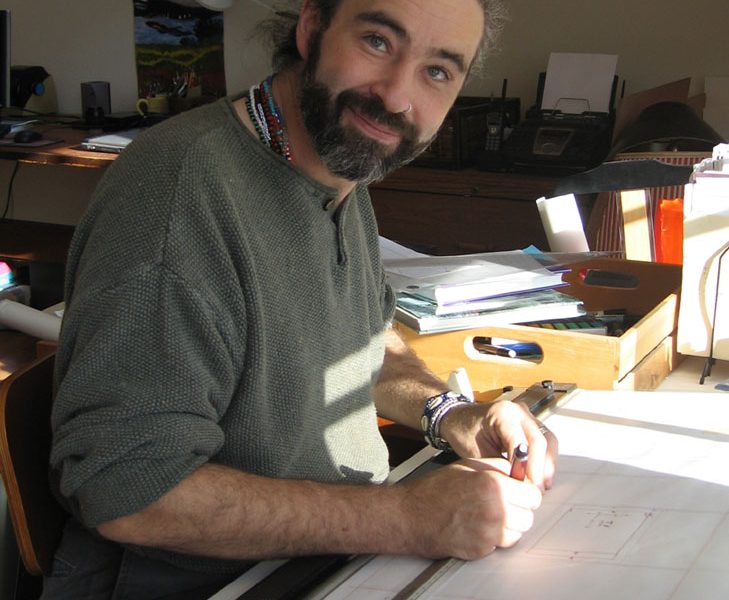
Today we’d like to introduce you to Devon Thibeault.
Devon, can you briefly walk us through your story – how you started and how you got to where you are today.
I have had a passion for woodworking since childhood, and have been in the field professionally since the 1980s, when my first part-time job involved working for the contractor who remodeled my parents’ house. I have owned and operated my own business since 1997.
I began my woodworking training when I was old enough to hand nails to my father. My father was Portuguese from the old country. Over there, if you didn’t fix something yourself, it didn’t get fixed, so my father knew a little of everything.
When I was 13, I talked my father into building a shed in the yard. That 8 ft. x 8 ft. shed was my first workshop. As a teenager, I’d come home from school, head off into the shed, and lose myself in making things out of wood. The next thing I’d know, my mother would be knocking on the door to ask me if I was coming in for dinner.
After time in the Marines, I spent the next years furthering that knowledge by working on construction crews, and learning from more experienced woodworkers. As a voracious reader, I have studied countless books on woodworking and design. Finally, I have found that trial and error is the way most techniques are embraced or discarded.
In 1997, my not-yet-wife suggested that I go into business for myself. I spent several years working on houses, doing mostly finish carpentry. Over time, I decided that what I really wanted to do was focus on furniture making and custom cabinetry.
As a wedding present, my father-in-law covered the cost of several months of formal training at the North Bennett Street School (NBSS) in Boston, I studied fine woodworking techniques with Dan Faya, who was also the head instructor at Mike Dunbar’s Windsor Institute; advanced techniques with Steve Brown, who currently heads NBSS’s Cabinetmaking Program; carving with Janet Collins, who heads NBSS’s Workshop Program; and furniture restoration with Robert Walker, who was a conservator with the Museum of Fine Arts for 30 years.
That same summer I set up my first commercial shop in Medford, where I would remain for 13 years. During those years, I refined my skills in designing, cabinetry, woodworking, and finishing. I have rarely been approached with a project challenge that I haven’t taken on. (Those that I turned away were usually the result of not having access to the specialized equipment to do the project efficiently.)
In 2012, a building conversion to offices forced my relocation to Charlestown, where my shop is currently located. I continue to design and produce a wide range of custom projects.
Has it been a smooth road?
In 2009, the housing bubble shattered the construction industry. The subsequent three years were lean ones for anyone working in the trades. Most months, I was lucky to be working half of the time. It also forced me to downsize my shop. It was difficult to do the same type of work in half the space, but reduction to my overhead, combined with a few loyal clients continuing to come up with projects for me, enabled me to survive those years. I even spent one summer learning (on the job) to repoint bricks for the foundation of one client’s house.
In June 2012, just as business was recovering, Tufts University (the owner of my shop building) decided to renovate the space and use it for other purposes. All of the tenants, most of whom were artisans or artists, had to pack up and relocate. I found a shared space in Charlestown with several other woodworkers. Over time, they moved out, and to contain costs, I have periodically rented out part of the space to other artisans.
So, as you know, we’re impressed with The Underground Carpenter – tell our readers more, for example what you’re most proud of as a company and what sets you apart from others.
I specialize in custom cabinetry and furniture. To that, I also bring a host of other talents that I’ve learned over the years. I am an accomplished wood carver and wood turner. I also know, and occasionally incorporate, leather-working and blacksmithing. If a task calls for it, I can sew. In the next year, I intend to add welding to that list of skills so that I can start to incorporate metal frames into some of my work.
I am especially proud of how I work with clients. I try to work closely with them to determine their specific needs—to get a feel for their tastes, and how they imagine the final result. Then, I try to design a combination of style, form, and function that not only fits the particular space, but also fulfills my client’s vision and needs. I know I’ve done my job when they tell me it’s even better than they expected.
Sometimes this involves coming up with an entirely new design; sometimes it means looking at an old space or existing unit with fresh eyes, in order to re-purpose it, and make it new again. Each project has its particular challenges. Each poses its own set of options.
I have spent years learning the skills of my craft, and deepening my understanding of the woods I use. Wood is a material that continues to react to its environment years after it has been turned into a final product. If a woodcrafter doesn’t understand these interactions, the piece will warp, crack, or have its glue joints fail prematurely.
In virtually every piece I make, I integrate modern woodworking methods, power tools, and materials, with centuries-old and time-tested hand tool and woodworking techniques. I aspire to the Shaker ideal of building pieces of quality so that they last, do not need to be rebuilt in a few years, and require little to no maintenance.
Let’s touch on your thoughts about our city – what do you like the most and least?
I like the diversity of cultures and neighborhoods in such a closely-knit city. I dislike the lack of parking, especially the facts that Boston doesn’t have “Visitor Parking” permits like all the surrounding cities as well as the fact that I don’t know of a single parking garage in the entire city that can accommodate a cargo van! I have to factor the cost of at least couple parking tickets a week in my prices in order to actually work in the city.
Contact Info:
- Address: The Underground Carpenter
7 Sherman St., Suite 4F,
Charleston, MA 02129
(By appointment only) - Website: http://undergroundcarpenter.com
- Phone: 617-308-3241
- Email: undergroundcarpenter@yahoo.com


Getting in touch: BostonVoyager is built on recommendations from the community; it’s how we uncover hidden gems, so if you know someone who deserves recognition please let us know here.