




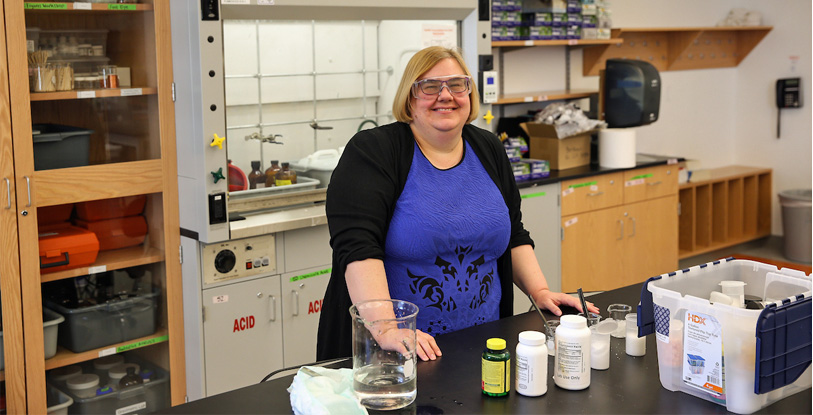
Today we’d like to introduce you to Rachael Kipp.
Thanks for sharing your story with us Rachael. So, let’s start at the beginning and we can move on from there.
I have always liked science and wanted to go to graduate school to study chemistry. People in my family tend to have practical jobs, like elementary school teacher, computer programmer, and police officer. I was the first person to go on to get a PhD in my family and so I didn’t always know how the system worked. Luckily, I had lots of really supportive people in my life. When I was really struggling academically, I was offered the chance to work in a research laboratory at my undergraduate school, the University of Rochester in New York. It made a huge difference to me to know that I could do lab work well, even if I wasn’t getting straight As. Then, I was offered a research assistantship over the summer. It was an amazing opportunity for me, but I didn’t think I should take it. I felt like I had to move home and work to earn money for the next school year. When they heard about it, my family all chipped in to pay for my housing that summer so I could stay and work. I may or may not have succeeded in my career without the assistantship, but I know that I couldn’t have done it without the support of my family.
People think of science as this isolated endeavor, the genius struggles alone in his lab and eventually shares his brilliant discovery with the world. Nothing could be further from the truth. Science is a social enterprise, it is conducted by people. Every step along the way of my career, there was a mentor providing support. My undergraduate professor introduced me to the professor that supervised my graduate research at Tulane University. I worked at Princeton University for a few years as a postdoctoral fellow with someone who I had met at the University of Rochester.
Having grown up on the South Shore, I’ve always loved Boston. Most of my family lives in the area. As my postdoc was coming to an end, I decided to move back here to be closer to them. Luckily, Suffolk University was looking to hire a chemist at the time. I have worked here ever since.
Overall, has it been relatively smooth? If not, what were some of the struggles along the way?
There have definitely been struggles along the way, and not knowing how to navigate the academic system was hard for me. That is one of the reasons mentorship has played such a huge role in my career. There were always people to ask for help and guidance. The advice I have for women starting their careers is to find good mentors. They won’t always be the obvious choices. Many of my most supportive mentors have been men. Not all of them have been scientists. Sometimes, it is a years-long relationship, and sometimes you have a conversation over coffee.
When I was promoted to a department chair, I asked two or three people I knew were really good chairs to talk with me about how they handled the role. Everyone was happy to talk about their experiences and generous with their advice. That has almost always been my experience. People are willing to help if you ask. Don’t be too shy to ask!
Please tell us about Suffolk University.
I really love working in the College of Arts and Sciences at Suffolk University. Suffolk is not a large school, so it really has a small town feel to it. I get the opportunity to work with colleagues in many different fields, which gives me a chance to learn about disciplines outside of my own. I have friends who study the animals living on Boston’s harbor islands, the French enlightenment and sleep quality, dreams and nightmares.
I also get to work really closely with students. Often someone who first took a course with me as a freshman will also turn up in my junior or senior level courses. Our department is a small one, and we really form a community. Our students succeed not only due to our commitment to their learning, but also because they support each other. Being a science major is a huge undertaking, requiring long hours in the laboratory and a more rigid class schedule than some of the more flexible majors. But the thrill of discovering something new is addicting. Scientists, from the newest freshman to the most senior professor, don’t get discouraged by obstacles. Instead, they look at their results and try again. I often joke that the epitaph on my tombstone will be “Next time, for sure.” I love teaching laboratory courses and being a part of students’ first experiences with discovery.
Suffolk really is a small town in the middle of a big city. We are lucky enough to have access to all of the amazing advantages of being in a big city, while still being part of a supportive community.
Often it feels as if the media, by and large, is only focused on the obstacles faced by women, but we feel it’s important to also look for the opportunities. In your view, are there opportunities that you see that women are particularly well positioned for?
STEM fields are still perceived as male-dominated, but there are many women in STEM these days. That is not to say that there isn’t more work to be done, of course, but there are more and more support systems for women working in these fields. I think younger women would be surprised at how many people that look like them they will meet.
Contact Info:
- Address: 20 Somerset St., Boston, MA 02108
- Website: www.suffolk.edu
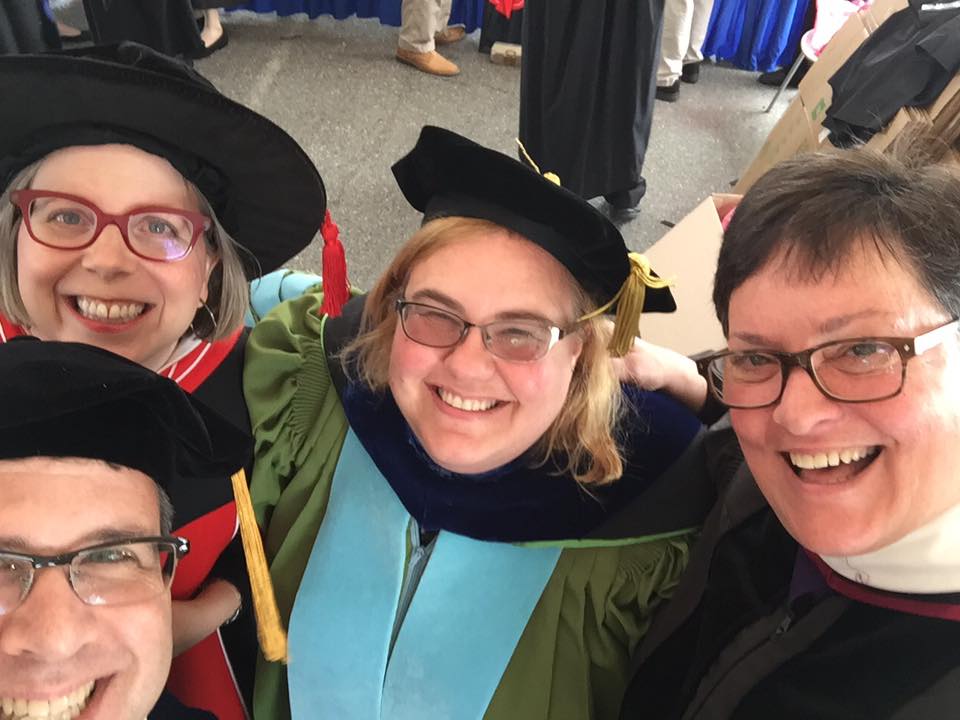
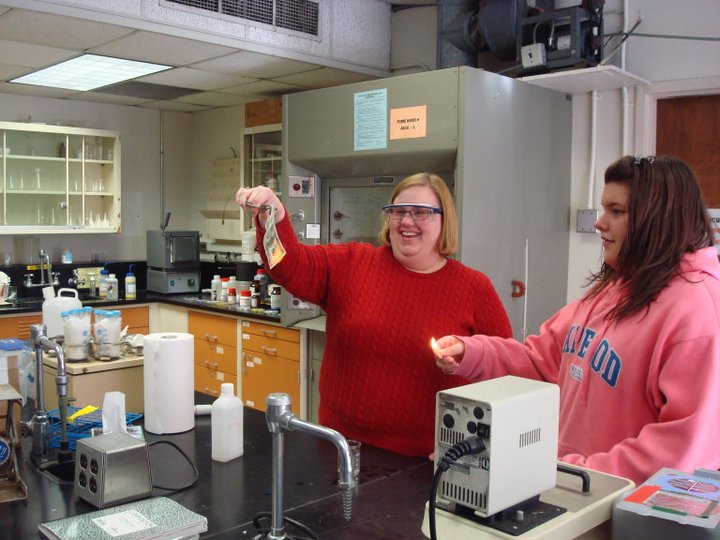

Image Credit:
Michael J. Clarke, Suffolk University; Pam Brien-Kipp
Getting in touch: BostonVoyager is built on recommendations from the community; it’s how we uncover hidden gems, so if you know someone who deserves recognition please let us know here.