






Today we’d like to introduce you to Nicole Peterkin.
Nicole, please share your story with us. How did you get to where you are today?
My dad died unexpectedly and in the aftermath I learned a few lessons. One was that I didn’t want to have a laser focus on career and upward mobility professionally at the expense of lifestyle and time with family because life’s too short. Second, I learned that in relationships handling personal finances often gets put through the same delegation of responsibilities as other tasks with one spouse doing the bulk of the management and making most of the financial decisions and the other playing a passive role in that area. Seeing how in the dark my mom was about the family finances without my dad taught me how crucial it is for everyone to be actively involved in their own personal finances. The third lesson I learned was that professional success is not an indicator of financial savvy. My parents were smart, they were high earners, they tried their best to stay on top of the “right things to do” with their money, but they weren’t financial planners. Their day to day expertise were in their respective fields not in finance. They didn’t have the tools needed or the time to devote to mastering their finances. After my dad died and the veil was pulled back on the family finances, my mom went to see a financial planner and we learned how many inefficiencies and gaps there really were in what my parents had been doing- things that cost them real money.
These three lessons resulted in me building a financial planning practice so that I could have the flexibility of being an entrepreneur while helping others be able to use their resources to live better lifestyles, have less stress, and help the people they love the way they want to.
When I started my practice, I really thought that everyone who called themselves a financial advisor was doing the kind of planning and giving the kind of advice my family was given. It turned out that really the minority of advisors did planning the way he did which included budgeting, cash flow planning, debt management, investment advice, etc. I was being encouraged to steer away from being comprehensive and charging “normal people” for advice and to instead focus on working with affluent clients who needed investment management and estate planning. But my heart wasn’t in it. I wanted to work with people like my parents who were doing well but not super affluent and who I felt could really benefit from optimizing every dollar. It was a rocky road navigating how to build what I have today, but I have an office and a few employees, clients I love, and a business that supports the lifestyle I want to have- and not just from a financial perspective.
Overall, has it been relatively smooth? If not, what were some of the struggles along the way?
Not at all!
Most of us don’t learn about money from our parents or at school. But even those who were lucky enough to be taught or teach ourselves the basic money skills and should-do’s like budgeting and putting money away for retirement, don’t have any idea how to navigate the financial industry. No one ever tells you what you should pay for money help or what reasonable fees are in an investment or mutual fund. Whereas with buying a house you can easily compare two 30 year mortgages at different banks or ask what your friend’s interest rate is on their loan, you can’t really compare financial advice apples to apples. And it’s taboo to ask the people around you what they’re paying their financial planner (if they even have one) or what they’re putting in their retirement account or what the fees they’re paying on their investments are. This makes it very cloudy because no one really knows what anyone is getting paid for better or worse.
My biggest struggle was in trying to charge for the kind of service I wanted to offer.
I wanted to work with people who were making a strong income but were frustrated because they felt like their finances weren’t working as hard as they could be for them. Not sure if they were making the right moves in paying extra off their mortgages or refinancing their debt. Feeling guilty about family vacations because they aren’t sure if it’s needed for college or for an on-time retirement. It wasn’t about helping people get the best return on their portfolio, it was about showing them how to really find balance and understand the trade-offs between different financial decisions. And to give them to confidence that their goals would actually be met at a specific time in the future instead of remaining an abstract hope. Because this demographic typically has a mortgage, some other debt, investments mainly in retirement accounts at work, and maybe an insurance policy or two, the traditional compensation models didn’t work well. These people didn’t have $250,000 or more for me to invest and get paid 1% on. But they were paying $200 per month each to Verizon and Comcast. I figured financial security was much more important than cable and a cellphone bill and that people would be banging down my door to be able to finally get the advice and accountability they needed to stay on course and make the decisions that would help them achieve their financial goals and have the confidence their money was working hard. Instead, I got a lot of “no’s initially. I questioned my fees, often charging too little and working way too hard for clients that ultimately didn’t see the value in getting advice and accountability ongoing as their lives, incomes, and goals changed and instead wanted to work with me for a year on, a year off, etc. I was getting burned out and frustrated.
Fortunately, I’m a risk taker and pretty stubborn when I believe in something. Instead of finding a different type of client, doing planning differently, or offering less so I could charge less I started doubling down. I found a coach who only works with advisors who does planning the way I do and charges the way I do. I also changed my process for my initial consults so I wasn’t giving out free advice (which in retrospect was losing my clients) but was still giving more value so that I was getting referrals even from people who chose not to hire me. Lastly, I stepped up my networking and visibility since 97% of my business comes from referrals and the other 3% are people who find me online. I realized the right people who want an advisor who works like me and who are willing to pay for the value they’re going to get in working with me are out there and I just need to find the right ones.
Another major struggle was figuring out the right way to build out different income streams in my business.
I’m a published author so I would sell my book at events and had pretty regular speaking gigs about half of which I got paid for and all of which typically resulted in book sales. Neither of those income streams were substantial though. I was still very reliant on my core client work. Based on what I saw other entrepreneurs doing, I felt like I should be building out programs and online offerings. I hired a coach to learn how to build an online business, and began implementing what I was learning but it really felt incongruent with the impact I wanted to make and my heart wasn’t in what. People were buying what I put out there, but I could track who was actually doing the work and using the program after and the numbers were pretty bad. It makes sense- I’ve bought dozens of programs that I’ve never cracked open because life and business got in the way. There are only so many hours. And with programs I did try, I often got frustrated because I’d sit down to finally do the work and would have to stop to wait for questions to be answered or wasn’t sure I was doing things correctly. Ultimately, I’d end up just hiring someone to help me if it was important enough or deciding not to continue in that area if not. I really wanted to do something that was in person, a one and done, with built in accountability and high impact. So I built a one-day bootcamp. With the bootcamp, I can’t make money while I’m sleeping like I could with an online course, but my income is still diversified and I’m helping more people each year without compromising my lifestyle. The bootcamps are new and we’re not totally selling out yet so marketing using videos, blogging, and Facebook ads has been a huge learning curve for me and my team. But that’s small business- there are always challenges and hiccups, but it’s very rewarding.
Please tell us about NicolePeterkin.com.
The offering I’m most excited about right now is our Cash Clarity Bootcamp. We run them quarterly and limit the group to 25 attendees. I personally run the camps so participants have access to me for a full day to get teaching, ask questions, and really completely upgrade their personal finances. There’s a requirement to gather all of your financial documents in advance and bring them so that you can work on your financial strategy in real time. The first half of the day is about really understanding the mechanics of the different areas of your financial life. This isn’t just basic budgeting and debt management- it’s really understanding the planning tools and strategies available so that you can apply them to your goals and resources and use them to actually get further financially. We break for a catered lunch together after the morning of teaching, and in the afternoon you create your financial strategy and 90 day action plan so that you leave having done the work, had all your questions answered, and can build momentum. No more Googling or asking friends, family or coworkers about what to do in any area of your financial life. For $997 and one day of your time, you can finally have financial clarity.
What I think is one of the coolest parts of the bootcamp is that it’s an investment, but it’s everything you need if you want to DIY your finances. It’s not meant to have participants turn around and say “this is impossible, I need to hire someone”. There is no upsell and nothing is held back.
Another cool aspect is that it’s a small group setting. At our last bootcamp there were 30 somethings and 60somethings-literally. There were couples and singles. Everyone got one on one attention for private questions, but there were also public questions that everyone benefited from, but no one had to share any of their private financial information so it was a safe space. It was cool to see the couples in the room communicating and literally working on putting the pieces of their financial lives together.
It’s a condensed version of what I do one-on-one with clients but at a much lower cost and with more general education and I’m really proud that I found a way to deliver this and that the results are immediate.
If you had to go back in time and start over, would you have done anything differently?
Nothing. If I tried to build the business I have now when I was just starting out I’m pretty sure I wouldn’t be in business.
Pricing:
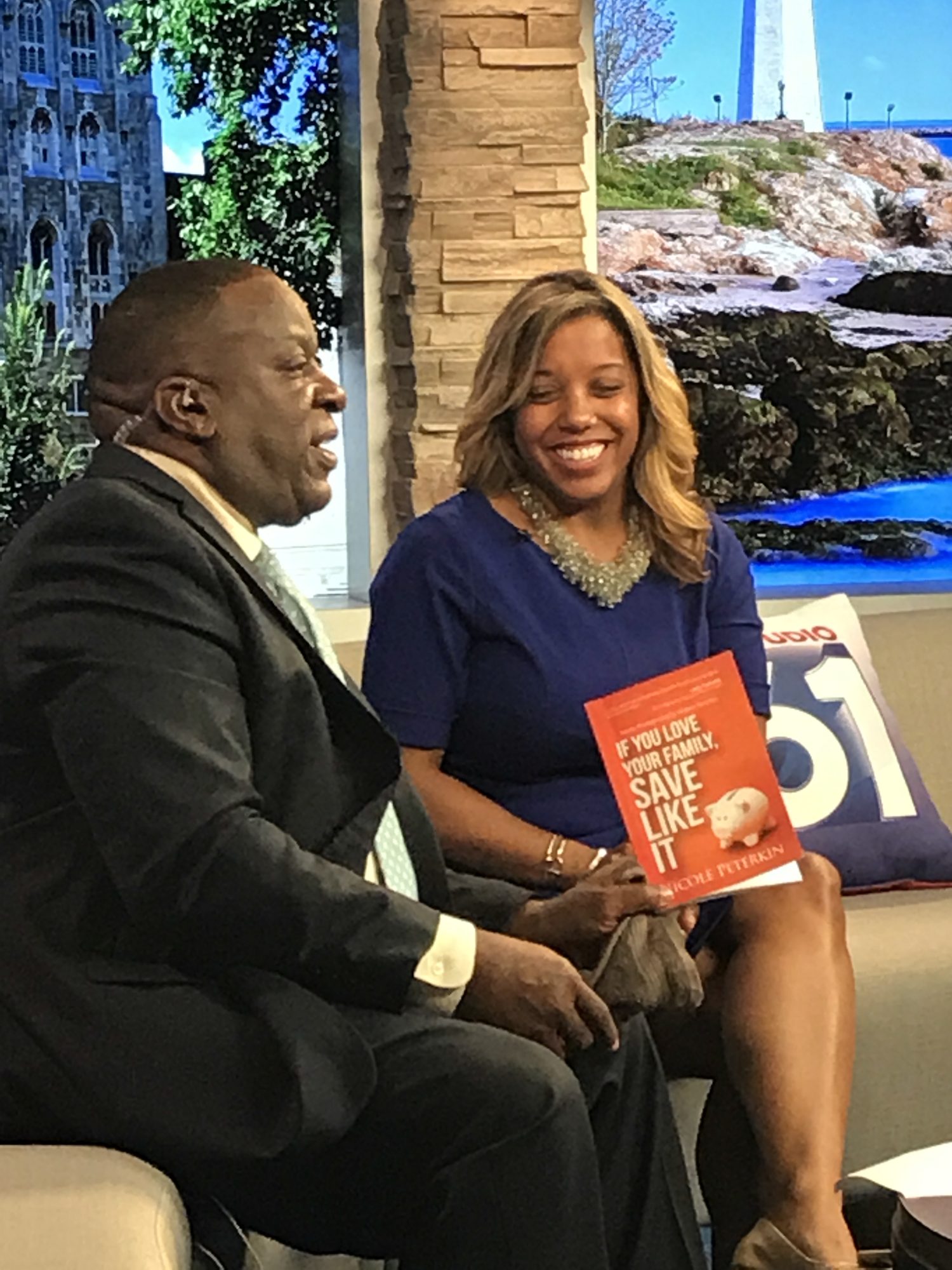
- Signed Copy of “If You Love Your Family, Save Like It” by Nicole Peterkin- $20
- Cash Clarity Bootcamp (June 2, 2018)- $997
Contact Info:
- Address: 222 Forbes Road, Suite 106, Braintree, MA 02184
- Website: www.nicolepeterkin.com
- Phone: 508-369-9745
- Email: nicole@nicolepeterkin.com

Getting in touch: BostonVoyager is built on recommendations from the community; it’s how we uncover hidden gems, so if you know someone who deserves recognition please let us know here.