




Today we’d like to introduce you to Rosamond Lu.
Rosamond, please share your story with us. How did you get to where you are today?
At Tom’s BaoBao, the art of traditional bao-making is on display. At the first international location of the innovative Chinese restaurant concept in Cambridge’s bustling Harvard Square, see, smell and feel firsthand as several varieties of authentic Chinese steamed buns are handmade – showcasing the highest quality ingredients and technique.
Tom’s BaoBao in Harvard Square is the first international location of the famed Chinese fast-casual bao restaurant, GanQiShi, which has more than 200 locations in China and has been serving nearly 250,000 bao a day since it was founded in 2009. Interested in expanding his passion for the highest quality bao, using the best ingredients and expert technique, founder and CEO Tom Tong fell in love with Massachusetts and Rhode Island while on vacation and knew it was the perfect place to introduce his concept abroad.
Bao (also called baozi, baobao, or steamed buns) is a delicacy that first appeared over 1,200 years ago in China. This leavened dough can be filled with anything from pork to curry beef to spicy lotus root – the possibilities are endless! Bao grows during the steaming process into a large, fluffy bun that perfectly encapsulates its flavorful filling. In modern China, the vast majority of bao is frozen, mass produced by machines, and sold past its prime. Tom’s BaoBao prides itself in preparing each and every bao by hand, in front of customers and serving them fresh out of the bamboo steamers. If it isn’t fresh, it isn’t bao!
As a child, Tom remembers bao being the special treat that his grandfather would reward him with for good behavior. As he grew older he realized what bao had become in modern China: cheap street food, made by machines and frozen before being served. To Tom, this was not real bao and he saw an opportunity to reinvigorate the traditions of a historic Chinese food and elevate its status with distinct care and precision.
Tom’s quest has always been to deliver the perfect, most authentic bao and doing so requires a meticulous process with strict training for every baoist. Each baoist at all Tom’s BaoBao locations has apprenticed for at least three months and shares Tom’s values of integrity and community.
ACCOLADES:
• China Business News and Ecolab 2016 &2017 – “Chinese Food Safety Seven Star Award: Superior Quality Prize”
• Hangzhou Trade Association and Hangzhou Culture and Communications Association 2015 – “Top 10 Steamed Buns”
• Entrepreneur 2014 – “Top 50 High Growth Chain Enterprises, China”
• Hangzhou Restaurant and Hotel Association 2012 – “Hangzhou Citizen’s Favorite Fresh Meat Bun”
With an emphasis on the most important ingredient, the bao, the menu at Tom’s BaoBao is small with several different bao offerings that combine historical Chinese recipes with modern innovations and the highest quality local ingredients, each providing a distinct way to enjoy bao:
• Juicy Pork: pork, scallion, ginger, shaoxing wine
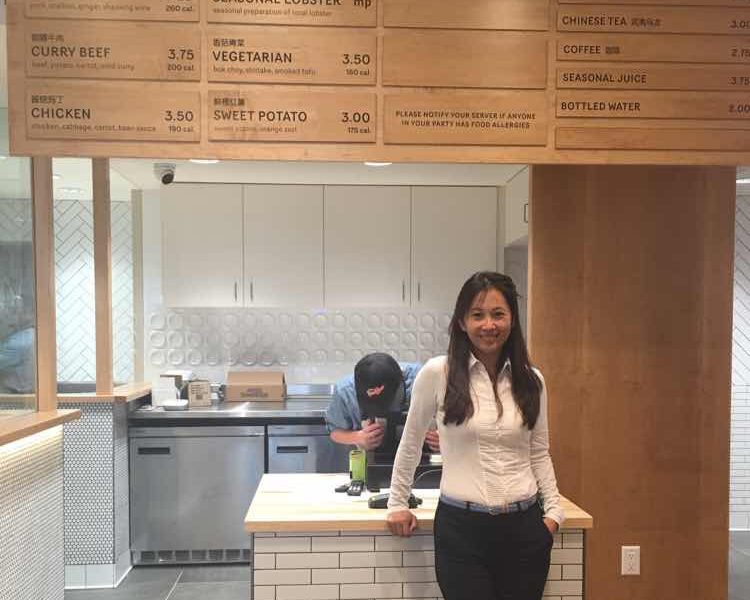
• Curry Beef: beef, potato, carrot, mild curry
• Chicken: chicken, cabbage, shiitake, bean sauce
• Vegetarian: bok choy, shiitake, smoked tofu
• Seasonal Lobster: seasonal preparation of local lobster
Seasonal Savory and Sweet Offerings
The Harvard Square menu includes the world’s only known lobster bao with locally sourced lobster. The menu will change seasonally, allowing guests to enjoy the bao with various local ingredients and flavors. Tom’s BaoBao has developed signature bao just for the United States.
Drinks served with bao include Oolong tea, which comes from Wuyi Mountain in China, where Tom oversaw the harvest; soy milk made fresh in Cambridge by Chang Shing Tofu Inc., and seasonal fruit and vegetable juices.
Tom’s BaoBao prides itself on combining carefully prepared food with fast and friendly service. Each restaurant is designed to allow for customers to watch the live bao-making process while in line for their food. The unique store design also ensures quick service—less than thirty seconds from initial order to fulfillment.
To master the creation of the perfect bao, a strict focus on the four techniques is crucial:
• ARTISANS’ HANDS ARE EVERYTHING. Making bao is an age-old craft that takes many months to master. The baoist cuts just the right amount of dough, rolls it out so that the center is thicker than the edges, and adds just the perfect portion of filling. Then comes the crucial folding: the baoist wraps the bao using just fingertips (hands warm the dough), pinching together layer upon layer (up to 22 folds) to form the bao. Great bao requires perfect technique. Every baoist has apprenticed for at least three months before they can serve a bao!
• STEAM IS ALCHEMY. Steam turns dough into an extraordinary textural delight, but only if done just right. If cooked for just a few seconds too long or too short, the bao is ruined. The baoists at Tom’s manage tall stacks of steaming baskets with different amounts of steam required for different types of bao, but always know when a basket is perfectly cooked (typically between 8-12 minutes depending on the weather).
• STEEL IS NOT A FLAVOR: Tom personally sources the handmade bamboo steamers from a village high in the mountains of Fu Jian province that has continued this ancient craft for nine centuries. The binata woven mats used to line the steamers are the product of a single family in An Hui province that has passed down this lost traditional art to the next generations. These natural fibers impart a subtle, spicy aroma to the bao during the steaming. The mats make the dough softer and help to retain natural juices. Tom’s is old-fashioned this way; most bao today is steamed in steel which is not how Tom would like his bao to taste!
• BAO SHALL NOT PERISH. The texture, juiciness and aroma of bao are all very perishable. A bao isn’t like pizza. Or even a loaf of bread. Day-old bao is bad bao.
Enjoying bao is like drinking an espresso—its essential qualities have a very short shelf-life. The bao is always fresh and only served if less than one-hour old.
Tom believes that bao is best enjoyed by engaging the major senses:
• BAO SHIMMERS LIKE A PEARL: Bao should be smooth and translucent, not dull and flat. The sheen reveals that the bao is super fresh, hinting at the textural treat to come.
• BAO GIVES IN: Bao is all about texture; the sublime mouth-feel that’s so different from bread. When one feels the bao in his or her hands, he or she knows immediately whether the texture is right. Perfect bao gives in—it nearly melts in the mouth. If someone has to work at taking a bite, it’s not real bao.
• FIND THE SUBLIME IN THE JUICY BORDERS: The magical bites of bao are found in the borders where the juices from the ingredients soak into the bao. These bao borders should always ooze juicy goodness. Steaming retains the natural flavors of the ingredients, so one can smell the aromas of the pork, shiitake mushroom, and osmanthus flowers while taking a bite. These borders should never be dry.
• BAO HINTS OF ITS BAMBOO UPBRINGING: The delicate scent of the bao is a crucial part of the experience, connecting the senses to nature. If the bao is well made, one should be able to exalt in its subtle aromas, just like a fine glass of burgundy.
Tom’s BaoBao is a modern, bright white space with tile floors, hand-painted murals and wood finishings. The chairs and stools were created to reflect both the sleek design and dedication to nature. The restaurant’s design seeks to bring to life the four senses of bao through large murals depicting the bao-making process cast all over the small space.
Behind the counter a large glass window looks into the kitchen so that guests can watch the baoists at work. Transparency is crucial so that customers can observe the meticulous detail required to create the bao they will enjoy. Similarly, the restaurant is located on the ground floor and has a large window that looks directly onto Winthrop Square so that passersby can take a look inside.
Great, so let’s dig a little deeper into the story – has it been an easy path overall and if not, what were the challenges you’ve had to overcome?
Some of the challenges are:
1. Recruiting, training and retaining of team, because of the very specialized skill sets required for our chefs (we called them Baoists), we invested much more in our staff development than a typical restaurant. First groups of Baoists were sent to China to be trained by our masters there.
2. Speciality Ingredients: to achieve the unique texture of the dough for our baos, we searched high and low for suitable flour in the US. At this time, we are still importing custom sourced flour from China. We continue to experiment with products in the US to find a satisfactory replacement.
3. Operational improvements: we made our products fresh. To meet dynamic demand, we are constantly improving our processes to reduce wait time and waste.
Please tell us about Tom’s BaoBao.
I am a founding partner of this business and am the COO running all the day-to-day operations. I am most proud that our team build this concept from zero to two stores.
There are numerous Chinese restaurants in the US, but there is no other dedicated bao shops with an open kitchen showcasing the beautiful art of hand-making baozi. We are very delighted to introduce this iconic food from China to the US market.
Do you look back particularly fondly on any memories from childhood?
Warm home-cooked meals.
Pricing:
- Typically savory baos are priced at $3-$4 per piece
- Dessert mini baos are priced at $1.5-$2 per piece
- We offer combo meals at $10-$12 per set including a drink
Contact Info:
- Address: 84 Winthrop St, Cambridge, MA 02138
326 Westminister St, Providence, RI 02903 - Website: www.tomsbaobao.com
- Phone: 617-945-0067 for Cambridge
Providence – 401-714-0253 - Email: info@tomsbaobao.com
- Instagram: toms_baobao
- Facebook: https://www.facebook.com/TomsBaoBaoHarvardSquare/
- Twitter: @Toms_BaoBao
- Yelp: https://yelp.to/qTKq/CzjYeaR3oF


Getting in touch: BostonVoyager is built on recommendations from the community; it’s how we uncover hidden gems, so if you know someone who deserves recognition please let us know here.