





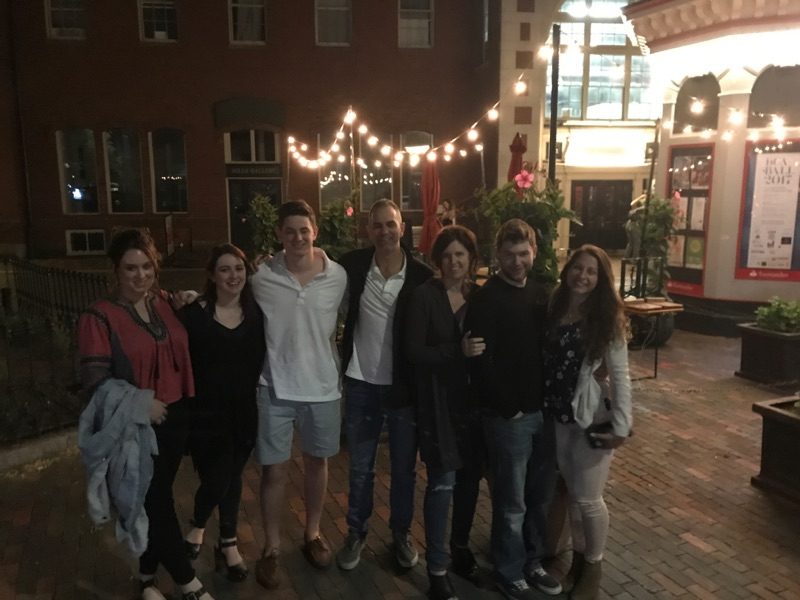
Today we’d like to introduce you to Michael Flynn.
Michael, can you briefly walk us through your story – how you started and how you got to where you are today.
Having been let go from my first job as an attorney (Latti & Associates, a maritime firm in the North End), I ended up working for a few years at a venerable old insurance defense firm in Boston (Parker, Coulter, Daley & White). I was fortunate enough to have “carried the bag” for Bob Farrell, one of the city’s preeminent defense attorneys, who taught me a great deal about the practice of law. He died unexpectedly at a very tumultuous time for the firm, in the summer of 1995. There had already been rumors that the firm was breaking up. The leading partners were in negotiations with other firms. The demise of the firm seemed to hasten after Bob’s death, and the climate began to deteriorate as the summer wore on.
Toward the end of the summer I tried a case in Plymouth Superior Court. Representing the captain of a fishing vessel who had been sucker punched at a bar during a post-voyage celebration with his crew (the bar had formerly been a venue for local rock bands, and it was apparently one of Aerosmith’s first haunts, an interesting sidelight for me as a big music fan), I was out of the office trying the case for a week while the firm’s leaders were voting on its future. I was hoping that if I was successful on this case, I might establish my value to one of the firm’s competing factions as an upcoming young trial attorney with some real courtroom experience. Not to be. On the same day the jury returned a verdict for my client – with interest, the award exceeded $200,000.00 – I learned that the firm had voted to disband. Rather than returning a conquering hero, I was essentially a free agent without a connection to most of the landing spots that the disbanding partners had secured.
It would take a few months for the firm to formerly dissolve. Before it did there was work to be done and clients to serve, and one in particular with cases to be tried. One of Bob’s biggest clients, a large railroad, for whom I had been working on a number of cases, requested that I be assigned the bulk of their business, including a rather significant (by virtue of the amount of the demand) FELA case that was scheduled to be tried in October. The FELA had been assigned to another associate, who was highly regarded, so I was rather surprised when one of the departing partners reassigned this case to me and told me that I was going to try it – in two weeks! No sooner had the partner left my office then I received a call from the client informing me that he had demanded that the FELA case be assigned to me for trial, and that their other files also be reassigned for my handling. I was flattered of course, but also a bit daunted. I was only 30 years old at the time, with only a couple of jury trials under my belt. I had not yet tried a railroad case on my own, although I had second-chaired a couple with Bob (who, of course, was a master).
Long story short, I busted my tail to get ready for that trial, and it went off without hitch in federal court in Boston. After a week of evidence, it took the jury less than an afternoon to award my client a defense verdict. Parker Coulter was history a few weeks later. I ended up hitching my wagon with Jack Brister and Len Zandrow, two equity partners with whom I had worked quite a bit. They were starting their own firm in the wake of the Parker Coulter practice, and I signed on to be their first associate. The railroad work followed me there.
I spent the better part of three years at Brister Zandrow, learning from two of the best practitioners I’ve ever met, who were also great guys who were all about integrity, honesty and practicing law the right way. I tried a few cases with Jack, and a few more on my own, all of them to victories for our clients, including a few more defense verdicts for that big railroad client. With Len’s appellate prowess, we had a couple of successful appeals decisions as well. Although working for Jack and Len was a great and formative experience, by 1998 I was ready to strike it out on my own. With three kids under the age of five and a fourth on the way it might not have seemed like such a good idea to my friends and relatives. With my wife Nancy’s support though, nothing seemed impossible to us.
So we mortgaged our house for startup capital, bought a computer and printer, incorporated a business – Flynn & Associates – and installed a business phone and fax line in a corner of our living room. And waited for the phone to ring. And waited. And waited some more. We were pretty confident that our big railroad client – the same one for whom I had tried that FELA case in the waning days of Parker Coulter – would decide to send their work to me at my new startup, but the decision was up to a senior attorney in their Philadelphia headquarters. Timing such as it was, his wife ended up going into early labor and he went on emergency leave about the same time Nancy and I were announcing the formation of Flynn & Associates. So the assignment of those files were going to have to wait. In the meantime, the kids and Nancy all came down with the chicken pox, and they were all quarantined. So here we were faced with sick kids, no files and a baby of our own due any minute.
Then things broke. After a couple of weeks the railroad attorney returned to his post in Philly and sent the work to my new firm. A few other clients followed suit. And then the phone started ringing, and the printer started printing. By the end of the month we were sending out bills and – on April 30, 1998 – our fourth child (Jack) was born. Our new business and our newest child were born in the same month! They’ve both been thriving ever since. I’ll never forget the first time I appeared in court on behalf of Flynn & Associates. It was about a week before Jack was before. There was a conference on one of the railroad cases with Judge Michael Ponsor in federal court in Springfield. I brought my older boy Aiden with me. He sat dutifully in the first row as I appeared before the court. Toward the end of the conference Judge Ponsor took note of Flynn & Associates, congratulated me on the startup and took note of Aiden’s attendance. He then said, “I take it this is your “‘Associate?'” He was absolutely right.
The firm grew quickly. We moved into new digs in Boston, first on Franklin Street, and then on State. Bob’s son Sean joined the firm. He spent a couple of years with us before moving on to become general counsel with the State Police, a position he still holds today. Lori Wirkus joined shortly thereafter, and has been with me ever since. She was made my first partner in 2009. John Young joined the firm in 2002, left to join a Boston insurance defense firm in, returned to the firm in 2008 and was made partner in 2012. The firm has since then been known as Flynn|Wirkus|Young. We now have 20 employees and offices in Quincy (we moved from downtown Boston in 2004), Franklin, Buffalo and Philadelphia.
Our clientele grew as well, expanding from our original core of railroad clients (railroad defense to this day is a large part of our practice) to a number of other commercial and industrial entities and insurance companies. We are actively involved in a variety of transportation matters including trucking and motor vehicle liability, premise owners liability, products liability and other general litigation matters. Our clients have entrusted us with the defense of cases throughout the United States. We have tried a number of cases to verdict and litigated matters here in New England as well as places like Arkansas, Iowa, Illinois, Ohio, Pennsylvania, New Jersey and New York. A couple of our clients asked us to represent them in Western NY and PA, so we opened up our offices in these locations primarily to serve their needs. We have also consistently represented a select group of plaintiffs in personal injury matters and have within the last three years greatly expanded that part of our practice. In fact, we have achieved several million-dollar settlements/verdicts over the years, including a verdict against a table saw manufacturer, and a $5.3 million settlement for an injured construction worker in a NY Labor Law case in Buffalo in 2014.
Has it been a smooth road?
It’s been like the history of the stock market. Mostly smooth overall upward progression with some downturns. It started rocky though – in law school I had been a summer associate at Burns & Levinson but was not offered a permanent position. So as law school came to a close, I did not have a job lined up. So I had to study for the bar – already a pressure-packed proposition – with the added gravity of knowing that if I did not pass the first time around, I would not be in the running for a job as a lawyer for another year. A lot was riding on me passing the exam the first time around. Even though I studied as intensely for the bar exam as any test I had ever taken, I thought that I did poorly on it, and messed up one of the proctor’s instructions (I answered parts of several of the essay answers on the flip sides of the same sheet of paper) which led me to believe I would be failed as a matter of procedure. I ended up working here and there, mostly as a union laborer setting up conventions, hoping to supplement my wife Nancy’s income. We had gotten married at the beginning of my last year of law school after having met only 11 months earlier (love at first sight!), and she had a good job so we were making ends meet. But we wanted to buy a house and start a family, so without a steady income from them that wasn’t going to happen any time soon.
Anyway, the letter finally came in the mail telling me that I had passed – I got it the same day Magic Johnson announced he was HIV-positive and it’s a toss-up as to which shocked me more. That same day I got a call from Bill Griset, a partner at Latti & Associates with whom I had interviewed a few weeks earlier. He asked if I passed, and then offered me a job. I started there about a week later, but then that got rocky too. I wasn’t very good, had no idea what I was doing and simply was not performing, so I got “laid off” about four months later. Mike Latti – a fantastic lawyer and a great man – was gracious enough to spend time with me identifying colleagues that he thought might hire me, and he wrote a super recommendation for me. One of the people he suggested I contact was Bob Farrell at Parker Coulter. A couple of weeks later I got hired there.
I was doing alright at Parker Coulter and then that got rocky too as Bob died and the firm ended up breaking up. Out of the splintered remnants and misfortunes there though I ended up forging a relationship with a client that would end up form the foundation for what would eventually become my own firm in 1998 and virtually everything that has happened since.
The start of my firm was not altogether smooth. The decision itself was difficult. On the one hand, I was working for two great guys and really valued that situation, but I had also always had a burning desire to be my own boss and have my own firm that I could create and shape as I saw fit. My entrepreneurial spirit ultimately won out but not until after some soul searching. As I also explained in an earlier answer, the actual startup was trying – with babies, and chicken pox and Nancy 9-months pregnant with child #4 and a delay in finding out from our most important client whether they’d be coming with us or not. For the first few weeks of the firm’s existence there was nothing coming in and we thought for a second maybe we made the wrong decision.
A couple of years and some steady growth led us to another bump in the road. One of the biggest plaintiff cases we had handled to date (against major corporate and insurance entities) was being vigorously – and unscrupulously- defended by well-heeled defense firms. We were constantly being beaten back and had to subdue our personal interest in collecting a buck for the firm (we need the income!) in favor of doing right by the client and maximizing the settlement for him. The litigation became costly and the stakes were high as we headed into trial. I can remember paying for hotel stays and court reporters for out of state depositions on credit cards and wondering if Nancy and I were going to go bankrupt. We wondered if we had bitten off more than we could chew, if we were cut out for this. As the trial date approached, offers had been made, but we didn’t think they were fair or reasonable enough, so we rejected them and tried the case. Two weeks later, after three days of deliberations, the jury (Norfolk County) returned a verdict which – with interest – approached $1.5 million. The firm really needed the fee on that verdict, and needed it badly. But the defendants filed post-trial motions, and once those proved unsuccessful, a notice of appeal, all of which interminably delayed the collection of the judgment. Finally, we reached an oral agreement to settle the case for the full amount of the verdict plus all pre- and post-judgment interest. And then another downturn – the client died the very night we reached the agreement, but before the agreement was committed to writing. So the defendants decided to renew their efforts on appeal and the case did not finally settle – for every penny of the verdict and accumulated interest – until after the Appeals Court affirmed the verdict. Delivering the check to my client’s widow – and depositing the fee into our operating account – were two of the most gratifying (and pressure-relieving) moments in the history of the firm.
There’s the flip side of this too, Having achieved a string of “high-profile” results (at least with respect to the industries and insurers I was representing at the time), I found myself being asked to take on “problem” cases in jurisdictions through the country. One of these cases involved defending a railroad in the mid-west. One of their workers, a young man about to start a career in the Marines, was essentially cut in half after being run over by a freight car of a train that he was swithing. The case was headed for trial by the time I was asked to get involved, and my job was to take over the handling of the case from prior counsel and try the case, given that settlement negotiations had failed. Coming off a string of victories (I had never before “lost” a trial), I thought I was invincible and my ego was at an all-time high. Pitted against one of the country’s best railroad plaintiff lawyers, the case was tried in Rock Island, IL over the course of a long, dreary month at the end of the winter. The trial was being closely followed in the railroad industry. The case was hard fought, and we scored enough points to get our opponent back to the bargaining table. The first night the jury was deliberating, we hammered out a “high-low” settlement agreement, meaning that if the jury came back lower than our “low” number the plaintiff would get our number (not the jury’s), if the jury came back higher than our high, the plaintiff would only get our high number and if the jury came back in between our numbers, the plaintiff would get the jury’s number. A day or so later the jury returned with its verdict – $33.5 million, by some accounts the largest amount ever awarded in a personal injury case in Illinois. Crushed is an understatement in describing how I felt that night. That night, the return trip home and the next few days were a blur, with a few exceptions. Somewhere in there I got a call from the CEO of the insurance company that would be footing the bill, telling me what a great job I had done and that my efforts ended up saving several million dollars (the delta between the verdict and the high end of the high-low agreement). As appreciative as I was for those kind words, it didn’t change my point of view – as far as I was concerned I had suffered as big a loss as a trial attorney could suffer. I felt that I had let my client down. I felt that I had let my firm and family down. I was concerned about the impact the verdict would have on my reputation and the firm’s ability to attract and keep clients, and that the firm would suffer a downturn. It took a while to get over that defeat, and to some extent it will be with me forever. But business has kept coming and it doesn’t appear that any of my clients have shied away from us. In fact, to some extent there has been positive feedback from the verdict in that we are looked at as attorneys who will try high stakes cases and take verdicts even in difficult cases.
Finally, one more rocky time I’ll mention. A few years back we lost one of our biggest defense clients, one upon whom we had become entirely too reliant. The firm was put in a precarious financial position. We took some belt-tightening measures which included having to lay off some valued employees. Without question, having to look these people in the eyes – good, hard-working people who gave me and the firm their all and did not deserve to be put out of their jobs – and let them go was the hardest thing I’ve ever had to do in my career. Thankfully, we’ve endured the loss of the client – we somewhat “reinvented” ourselves with marketing efforts that have yielded a broader client base, and we shortly thereafter settled a case for more than $5 million for an injured client – and regained our financial footing. But I’ll never be able to take back letting those people go. Thankfully, that was the only time I’ve had to do that, and hopefully it will be the last.
So let’s switch gears a bit and go into the Flynn|Wirkus|Young story. Tell us more about the business.
Most proud of – commitment to our clients, our employees and ourselves. We have been in business for nearly 20 years and many of our employees and clients have been with us for nearly as long. By commitment to ourselves, I mean that Nancy and I set out to create a firm that stands by certain principles and ways of doing business and we have remained dedicated to our core values through all the ups and downs. For instance, we have strived to create a congenial working environment where everyone is respected, equally valued and feels like coming to work here is like coming to a second family, and we believe that the longevity of our core employees speaks volumes to how effectively this has been instilled.
We feel that this is one thing that sets us apart from other similarly situated firms. In terms of how we represent our clients, we are different from other firms because of the priority we place on creative thinking and our resistance to “group think.” The practice of law – especially on the insurance defense side – is becoming micro-managed and task-managed. Cookie cutter practice models are being incentivized and slaves to efficiencies are being rewarded over masters of their crafts. This is resulting in a premium being placed on “doing things the way they’ve always been done” and restricting attorneys from being able to think through new solutions. We have always resisted that and seek to represent clients who value our outside the box thinking and the creativity that we bring to representing their interests. This sets us apart. Let me provide just one example. It is mandatory at our firm that a Keynote multi-media presentation be prepared for every mediation that we attend. Our attorneys are encouraged to look at these projects as if they are creating a special report for CNN, or a movie, the purpose of which is to inspire and persuade. Mediators have repeatedly told us how effective these presentations are, and also that they share an observation with us – just how surprised they are at how few other firms prepare anything like our presentations. In fact, more times than not, the open part of our mediations consists of our audio-visual presentation v. a few comments from the other side supported by some handwritten notes.
How do you think the industry will change over the next decade?
I think more of an emphasis will be placed on alternative dispute resolution, and fewer and fewer cases will actually reach trial. The stakes are just too high for either the plaintiff or the defense to put their fates in the hands of a jury, which can be unpredictable indiscriminate. Despite what “experts” might tell you, predicting what a jury might do – especially on the limited information attorneys are provided during the jury selection process – is virtually impossible. In fact, recently attended a presentation where a well-known jury consultant essentially admitted just that. I think too that the last election has shown us that there are tremendous divisions among us, and that there are many people (hence prospective jurors) who have polarized opinions that are beyond persuasion. It should perhaps becoming clear to trial attorneys that it might not be good advice to advise a client to go to trial with a jury of people whose attitudes can neither be predicted nor changed.
I also think that eventually there will be a correction in certain segments of institutional representation. Ultimately the demand for task-managed efficiencies at depressed billable rates will lead to bad results. Once this occurs, I think we will see some entities at least carve out exceptions to case management protocols for more serious cases. In fact, I have already seen some clients move in this direction.
Contact Info:
- Address: Main office:
400 Crown Colony Drive/Suite 602
Quincy, MA. 02169Other offices:
32A Main Street
Franklin, MA 02038534 Delaware Ave.
Suite 014
Buffalo, NY 14202
1010 N. Hancock Street
Philadelphia, PA 19123 - Website: www.flynnwirkus.com
- Phone: (617)773-5500
- Email: mflynn@flynnwirkus.com
- Facebook: https://WWW.FACEBOOK.COM/FLYNNWIRKUS/
- Twitter: https://TWITTER.COM/FLYNNWIRKUS
- Yelp: https://WWW.YELP.COM/BIZ/FLYNN-WIRKUS-YOUNG-QUINCY


Getting in touch: BostonVoyager is built on recommendations from the community; it’s how we uncover hidden gems, so if you know someone who deserves recognition please let us know here.