




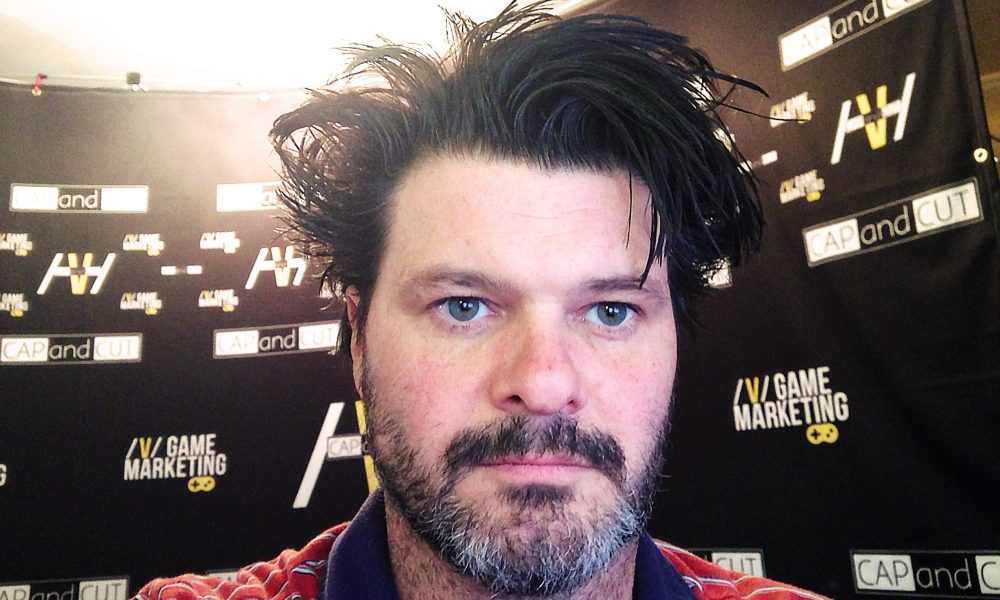
Today we’d like to introduce you to Jack Dalrymple.
Jack, please share your story with us. How did you get to where you are today?
The story of how I ended up with the dream job of most 7-year-old boys is not the traditional path. 15 years ago breaking into the game industry seemed nearly impossible. There were few higher education programs to prepare you for this kind of career. Self-taught coders dominated the field, honing their skills through nothing but practice. Besides the hard work of learning what was not taught, luck played the biggest part of breaking into the game industry.
After 7 years of working in the Boston music scene making music videos, Warner Bros. Turbine Studio hired local musician Steve DiGregorio for composition and audio development on Lord of the Rings Online. I was lucky enough to have Steve D as a close friend, whom I had worked with for years. When the Audio Team expanded into game trailer production, I was on the shortlist. Because the team was already familiar with my unyielding work ethic and willingness to figure out anything, no matter how difficult, I got the job.
We worked day and night researching, experimenting, and building until we had one of the first live HD game capture machines on the planet; I then began making game trailers, developer diaries, and in game cinematics for Dungeon and Dragons Online and Lord of the Rings Online. I didn’t stop for 10 years and built the department into a 7-person team developing over 300 trailers with over 9 million online views.
The process was simple on paper: conceptualize a script, capture gameplay from a developer game build, develop motion graphics, and edit a trailer. The most rewarding part of the job was turning hundreds of people’s hard work into a polished piece that showcased the best of what they created. Achieving that perfect display required a lot of smoke and mirrors. The evolving, ever-difficult challenges of this task kept the job new and engaging.
Has it been a smooth road?
The rockiest part of my career was the transition of what to do after Warner Bros. downsized our studio to only a handful of people. The AAA game industry in New England had been pretty close to decimated and I had to make the decision to either move to the West Coast, or leave the game industry and go work for an ad agency.
Neither of those options was appealing, so I came up with an alternative. I started Cap and Cut, a Boston based creative agency specializing in game trailer production. The journey since has been beyond rewarding.
We’d love to hear more about your business.
In the last four years Cap and Cut has continued to work with cutting edge technology; most recently we created the first AAA mixed reality trailer for the Facebook-funded Harmonix game Rock Band VR. In mixed reality videos, we sync a motion active in game camera with a real-world camera and composite the real-world footage into the virtual game environment.
Our business model is a pool system since we have an extensive Rolodex of AAA veterans. With a model that allows us both to stay lean and to ramp up quickly, we can tackle projects of all sizes and cherry pick jobs we love.
Cap and Cut does more than just market games. Any team or project that piques our interest, we jump on. We recently developed a full branding, social media, and technical operations package for Seaport Tattoo, a premier parlor and the first ever tattoo shop in South Boston. All business types benefit from the tangible, positive shift in public perception that is always brought about by pristine design, consistency, and technical planning.
A big part of our business is pitch and funding presentations. Even the very best ideas will fail in presentation without a cohesive story, focused messaging, and appropriate craftsmanship. Quality assets are of the utmost importance to close financing opportunities, and given our experience with countless Fortune 500 greenlight pitches, this is where we excel.
Where do you see your industry going over the next 5-10 years? Any big shifts, changes, trends, etc?
Other than VR, right now the biggest change we are seeing in the game industry is gamification and particularly video game tech moving into health apps with great success. In Boston we are seeing the birth of many medical apps that include games and game worlds to help cure patients or alleviate ailments. Just a few are Healthimation working with diabetes, Neuromotion Labs working with ADHD, and Brain Power working with autism. These advances are amazing for the people they help, and they add revenue streams to one of our most beloved art forms.
Similarly, we are seeing huge strides in game design integrating education and learning, and in the near future kids will be able to attend total VR schools. We are watching large-scale spending and well-deserved growth in eSports, as the next generation greatly recognizes pro gamers over traditional sports stars. More immediate and short-term investments are obviously going to AR, VR, and Toys-to-life games, which are supporting outside the box thinking that doesn’t require huge AAA teams to achieve. The game industry is at a fascinating tipping point. Everything is evolving as much as when home game consoles were first introduced 40 years ago, and we are proud to be a part of that marketing push.
Contact Info:
- Address: Jack Dalrymple
VP Business Development
CAP And CUT, LLC
6 Liberty Square #2020
Boston, MA 02109 - Website: http://CAPandCUT.com
- Phone: 781.874.9153
- Email: jack@CAPandCUT.com
- Twitter: https://twitter.com/jackterror
- Yelp: https://www.yelp.com/biz/cap-and-cut-boston


Getting in touch: BostonVoyager is built on recommendations from the community; it’s how we uncover hidden gems, so if you know someone who deserves recognition please let us know here.