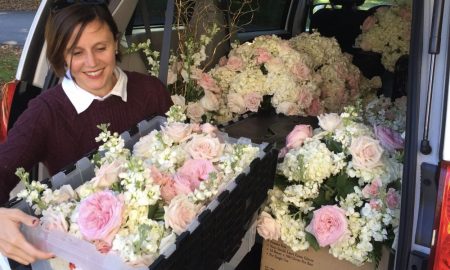






Today we’d like to introduce you to Aline P. Zoldbrod Ph.D.
Dr. Aline, please share your story with us. How did you get to where you are today?
I am such a lucky woman. I have loved doing the work I do since the moment I began doing it. I got licensed as a psychologist in 1981, and I have been an AASECT certified sex therapist and a diplomate since 1993. (AASECT is the American Association of Sex Educators, Counselors, and Therapists). Being a sex therapist and a psychologist and an author and a public speaker have all felt pre-determined, in the best kind of way.
Public Speaking
Public speaking is one piece of who I am professionally. This part of my career goes back to speaking about infertility in Cancun in 1987 and continues up to today, talking about all kinds of topics, including parenting, healthy sexuality, womens’ sexuality, “the war between the sexes”, aging and sexuality, and trauma.
The most exciting professional experience I have ever had is being invited, out of the blue, to be the keynote speaker for the Fertility Society of Australia in 1993. (Getting to snorkel on the Great Barrier Reef for a week when the reef was healthy and teeming with fish was one of the top five experiences in my life. The visual and aural memory of a huge, red fish crunching on the coral is etched on the hard drive of my mind. ) I have been the invited keynote speaker for local and international conferences several other times as well. Of course, I also like to speak when I am not the most featured person in the room!
It is exhilarating when people resonate with what I present. I have spoken to all kinds of diverse audiences, old and young, Black and white and Asian, lay and professional (physicians, nurses, and psychotherapists). You won’t be surprised to know that it’s a risk to be a public speaker. I have certainly had a few times when things fell flat and an audience did not seem to connect with what I was saying. But that’s a rarity for me.
When it goes well, it is so much fun to inspire and empower lay audiences to envisage concrete steps they can take to change their lives for the better. And I love talking to professionals about my ideas about relationships, love, and sexuality. Many times, the speaking invitations are a result of what I have published, which motivates me to keep writing.
These days, I am hoping to also do smaller workshops that help people transform their sexuality. So here is an invitation to all of you: if you have something you would like me to speak on, please invite me.
Being a Psychologist who Sees Individuals and Couples
My clinical style has been influenced by my family, but it has also been influenced by my training in multiple different modalities of doing psychotherapy. I prize my sense of humor, but there are some very deep and emotional ways to do therapy, and when I use those modalities, I have to forsake my beloved humor for a time.
All my life, I’ve been curious about what makes people tick. My mother was a social worker, and she adored her work. So I grew up thinking that I would work outside the home and that my work would have to do with relationships and people.
When my mother died, I was going through all of her papers. She had saved a whole series of interviews I did with my friends when I was 12 or 13. I had written up a bunch of questions, made copies of the questions, and I had gone around to all the boys and girls I liked or loved at school, and to my neighborhood friends, and asked them detailed queries about how they felt about their siblings and their parents and their friends. It cracks me up, because that’s basically what my book SexSmart: How Your Childhood Shaped Your Sexual Life and What to Do About It is about.
I should add that I feel I was destined to be a sex therapist, as well as an individual and couple therapist. My parents were very loving, and I grew up in an affectionate, sex-positive environment where my mother talked (appropriately) about sexuality.
I think my ability to stand clients’ conflict and upset (at each other, at themselves, and sometimes at me) in psychotherapy sessions comes from the very solid and nurturant family I grew up in.
Funny story: At one point, when I was young, my mom read me a book about how babies were made. (This is before books on sexuality got quite as explicit as they are now. ) So I asked my mom if I could “watch when Daddy plants the seed.” I think she was a little taken aback, actually, but she told me that this was something that was done in private and that when I got married and had kids, my kids would not be able to watch my husband plant the seed in me, either. That satisfied me, but I also learned that it is fine to ask questions about sexuality.
Writing
Writing also is part of a family tradition. Several of my cousins are authors. The first thing I wrote that got me noticed was a booklet I self-published about using imagery to cope with infertility back in 1990. I think that the fact that I have written three commercially published books about relationships and sexuality has helped my career a great deal. The first book I wrote was about infertility. That book came out of experiencing infertility, but it is a very serious, dense professional book.
I am a practical person, so I have tended to develop models and strategies that I think might be efficient and enlightening in helping people to hone in on what is upsetting them, to figure out how they want to change, and to help them strategize about how to make those changes happen.
My second book, SexSmart, won an award as one of the top three self-help books written that year. SexSmart has been translated into Spanish and Turkish, and it has been gratifying to find that my ideas are floating around in Australia, New Zealand, Germany, Spain, and Mexico. Presumably someone is thinking about them in Turkey, but I can’t read Turkish, so I don’t know. It’s fun to think (or hope) that some of my ideas will be out there in the world, bopping around, when I am dead!
One of the things that makes being a sex therapist so interesting is that people are so different from eachother sexually. SexSmart (which was originally published in 1998) grew out of my fascination with the myriad paths each of us take in developing (or not developing) into sexual people.
When I was trying to help my patients understand why they turned out the way they did, or why they were having the problems they were having with intimacy, trust, and sexual functioning, I couldn’t find any literature that described their world and their sexual development the way I saw it. So I had to write SexSmart, to explain in words what I was thinking.
Many people learn things on their own or in an adjunctive way from bibliotherapy. It’s a good idea to publish things for patients (and others) to read, because it’s impossible to absorb all the new ideas one might hear in an actual psychotherapy session. ( If you have ever been in psychotherapy, you know that when you leave, your head is swirling with ideas, and your body is swirling with emotion, but after a few hours in the real world, you tend to lose a lot of what you remember and learned from the session.)
I’m happy that my ideas have gotten into the professional and the lay literature. The first time I got cited in the media, I think, was in the New York Times early in 1991, along with the LA Times later that year.The first time I got cited in the professional literature was 1993. I continue to be cited for various ideas, models, books and articles, and that is a wonderful part of my career.
Anyone who is in the same field knows what a privilege it is to be allowed deep entrance into the lives of individuals and couples. It feels great to help people. I am forever grateful that I found a career I love so much.
We’re always bombarded by how great it is to pursue your passion, etc – but we’ve spoken with enough people to know that it’s not always easy. Overall, would you say things have been easy for you?
Its funny– reading this question almost makes me feel guilty! I think the biggest struggles have nothing to do with seeing clients. And that’s the core of what I do for the largest part of my career.
Writing for blogs can be fun, but it is a bit challenging.
The training to learn new clinical techniques is enjoyable, and the seeing clients is extremely enjoyable.
Watching people change as a result of their relationship with me is amazing and moving. I enjoyed being pregnant, but I did not like some of the side effects, like having to go to the bathroom throughout the night. Watching adults grow and change in therapy has some of the upsides of being pregnant without any of the downsides…
People I see are grateful to me for the amount of energy and attention I give to them, and it is gratifying to see them change. So no challenge there, just pleasure.
Public speaking is fun while I am doing it, but/and there is a lot of preparation behind the scenes. But that’s not a challenge. That’s just professional work.
I can’t say that writing seriously for journals is fun, so I guess that’s the biggest challenge. As I said, I am very lucky, and I know it.
We’d love to hear more about your business.
There is a piece of choosing a psychotherapist that is a lot like falling in love. There is a chemistry, or there is not.
You can tell that in a single session.
People choose me instead of someone else because
(1)First and foremost, the chemistry is there. I think when you are picking a surgeon, you go for their credentials and don’t care too much about their personality. However, you don’t want to sit and talk about your secrets and your worries and your sadness with someone with whom you don’t feel comfortable.
(2) They read something I wrote in blogs, in books, in articles, or on Linked In, and it spoke to them.
(3) They resonate with one of the models they find on my website, www.SexSmart.com
(4)They Googled something about their problem and they found me.
(5) They like the fact that I am a seasoned psychotherapist and one of the senior sex therapists around; I have serious credentials in the field.
(6)They feel like I “get” them when they talk to me
(7) They think I am smart and have good ideas.
(8) They see that I’m not afraid of strong emotions, in individuals or couples;
I was delighted when one of my patients commented, “Oh, I see. Coming to see you is like a gym for the emotions.”
(9) They felt I was kind with their sensitive feelings.
(10) I can be very funny– which makes people feel less self-conscious in talking about difficult subjects.
(11) I’m earthy, if you like that sort of thing. (If you don’t, if you like formality, I am NOT for you.)
(12) I am very empathic, which I got from growing up in my family of origin.
(13) They heard me speak somewhere and liked me or what I said.
What were you like growing up?
Growing up, I loved my parents, friends, my cats and their kittens, swimming, playing in the woods, riding my bike, going to camp, and going to school. I was a lucky kid. Enough said. I have seen enough people to know how unusual my life was, and I even knew how lucky I was as a child.
Contact Info:
- Address: 12 Rumford Road Lexington Massachusetts
- Website: SexSmart.com
- Phone: 781 863 1877


milestones blues good


Getting in touch: BostonVoyager is built on recommendations from the community; it’s how we uncover hidden gems, so if you know someone who deserves recognition please let us know here.