





Today we’d like to introduce you to Paul Weisman and Michele Simos.
Paul, can you briefly walk us through your story – how you started and how you got to where you are today.
My wife and business partner, Michele, and I met 11 years ago during a business meeting. Very quickly, we realized our passion was identical: both of us wanted to help people achieve their personal and professional potential. Both of us are coaches, organizational development practitioners, and trainers of communications skills programs. It made sense that we should merge our passion for our work and each other.
We are now a husband-and-wife team, and we bring similar and complementary skills to the table. And, as we joke in our classes, I am left-brained, Michele is right brained, and together we have a whole brain. She is the curriculum designer and creative force behind our work. As a recovering civil engineer, I am focused on strategy and project execution.
Has it been a smooth road?
As in any startup, we have experienced our share of ups and downs. First, we launched our business during the Great Recession. Not the easiest thing to do. When our clients were tightening their budgets, we were at the starting gate ready to make an impact.
Second, organizational consulting in Boston is an overcrowded space. Colleges including Harvard, MIT and some of the top business schools in the country are located here, and they fill the market with Learning and Development professionals. Although the competition keeps us sharp, it also adds a degree of difficulty in attracting new clients.
Third, we specialize in people skills, which we believe has wrongly been pegged “soft skills,” sending the message they are non-essential. In our experience, companies have historically been more interested in honing technical skills or “hard skills.” We believe both skillsets are critical to organizational success.
The good news: recent surveys have shown that Millennials view soft skills as a top tier skill development need. Individuals and teams make up a company’s culture. And, culture drives hiring, retention, productivity, innovation, and competitive advantage.
When people do not know how to get along, resolve differences and hold the challenging conversations, the organization suffers. Thankfully, with the influx of Millennials into the workforce and the retirement of Baby Boomers, companies are beginning to abandon the “command and control” model.
They understand that change is afoot. Millennials want a voice; work-life balance; and professional development, or they will leave.
So let’s switch gears a bit and go into the SMART Conversations story. Tell us more about the business.
SMART Conversations® (SC) is a learning company. We focus on helping people reach their potential as communicators and relationships builders. We do this by providing organizational development solutions, i.e., training, coaching and consulting. We have curated our content from the top thought leaders like Stephen Covey, Peter Senge, Chris Argyris, and Daniel Goleman. Many of whom have lived and worked in Boston.
What sets us apart is the holistic nature of our curriculum. Unlike our competitors, our work is principal-based, which means you don’t have to memorize anything or employ “cookbook” tactics. The five principles form a mindset of positivity that you can use at work, at home, and in the community.
At its core, SMART Conversations® is about creating positive, inclusive cultures. We like to think of our work as creating a culture’s tapestry vs. untangling knots though we can do that as well when an intervention is necessary. If you are ready to be open-minded, learn about yourself and yearn to be the best team player on the field, you are ready to embrace SMART Conversations®.
What we’re most proud of and what sets us apart is our social enterprise status. We co-founded SMART Conversations®, our for-profit company, and The Dignity Institute, our nonprofit. They are synergistic; SMART Conversations(R) loans its intellectual property to The Dignity Institute.
The Dignity Institute’s mission is to help vulnerable youth stay in school, graduate and then connect to a career, entrepreneurship or college. We also work with families and can now deliver our work via e-learning, which increases our reach tremendously. We intend to donate 15 percent of SMART Conversations® profits to support The Dignity Institute.
How do you think the industry will change over the next decade?
From here, it looks like the learning & development industry will continue to grow globally based on the huge hunger of Millennials for continuous learning. Also, e-learning will be a big driver with the ability to learn anywhere and anytime and on any device.
And, there is a large shift to micro-learning which means small snippets of content (2-3 mins) at a time and usually presented in a video format, These trends are driven by the speed of change and innovation resulting in less and less time available for traditional learning.
We are committed to providing the best e-learning content and experience in the business!
Contact Info:
- Address: 73 Chelsea Street, Suite 308 Charlestown, MA 02129
- Website: www.smart-conversations.com
- Phone: 6174134291
- Email: paul@smart-conversations.com
- Facebook: https://www.facebook.com/SmartConversations/
- Other: www.thedignityinstitute.org
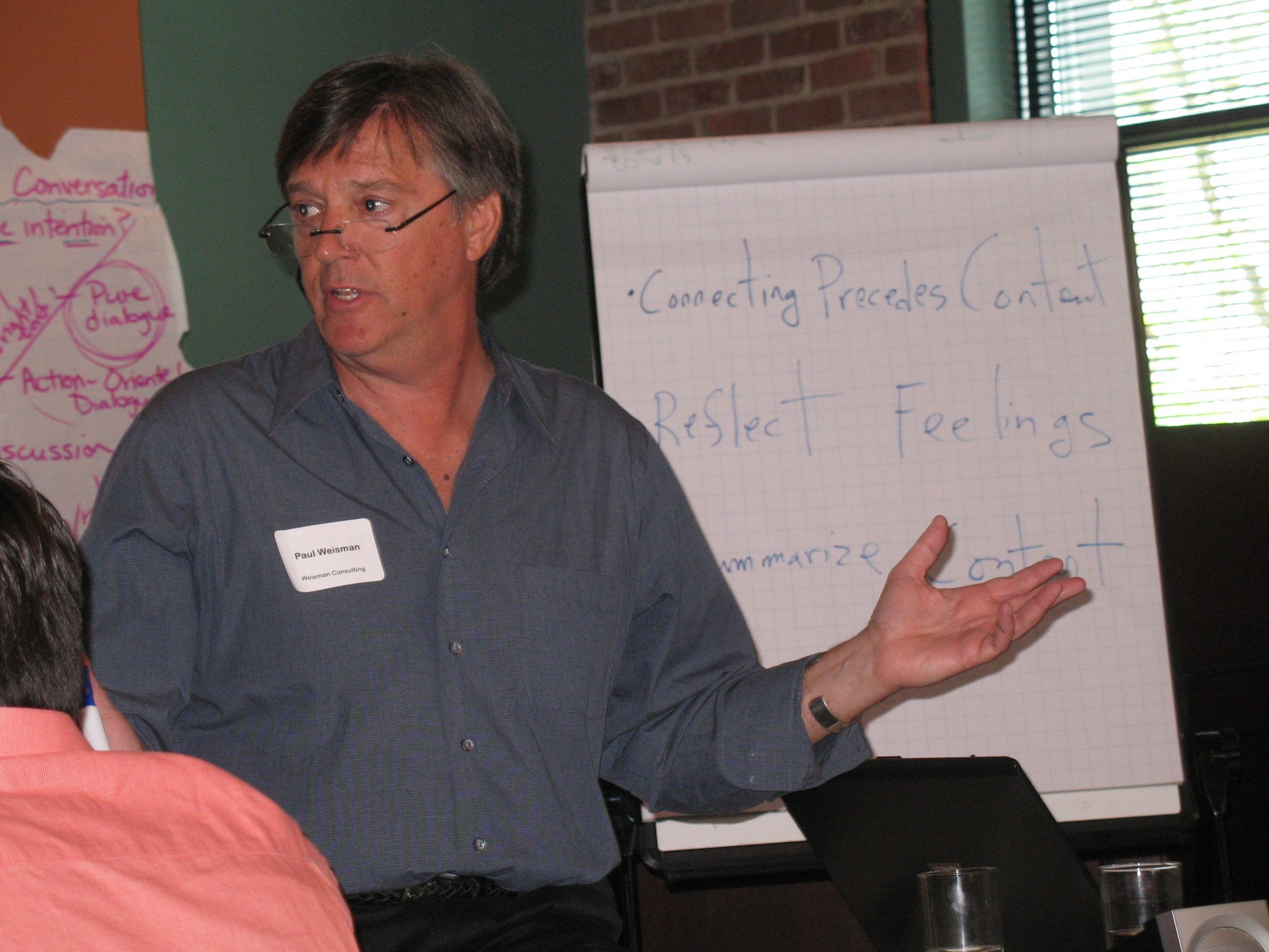
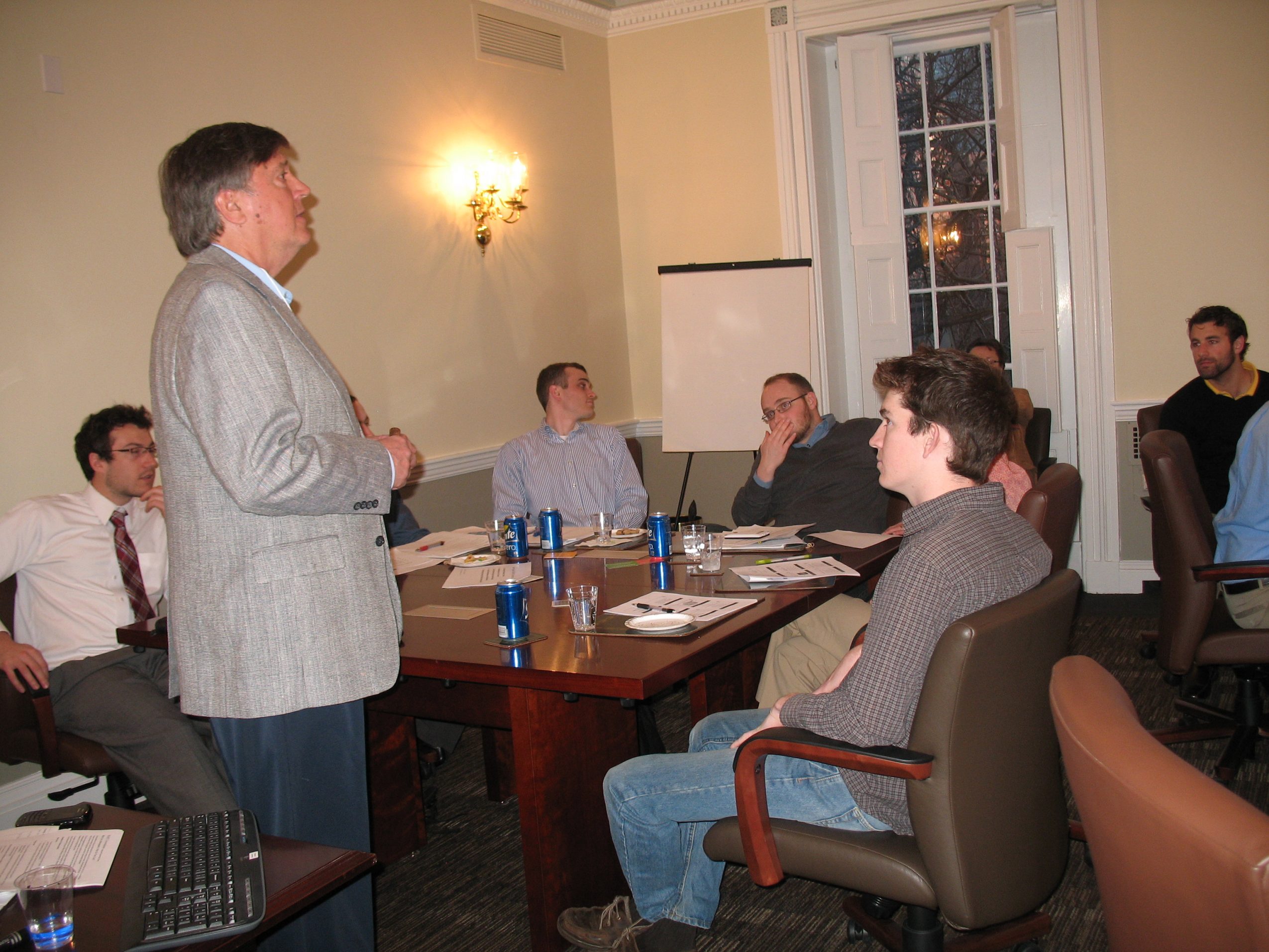
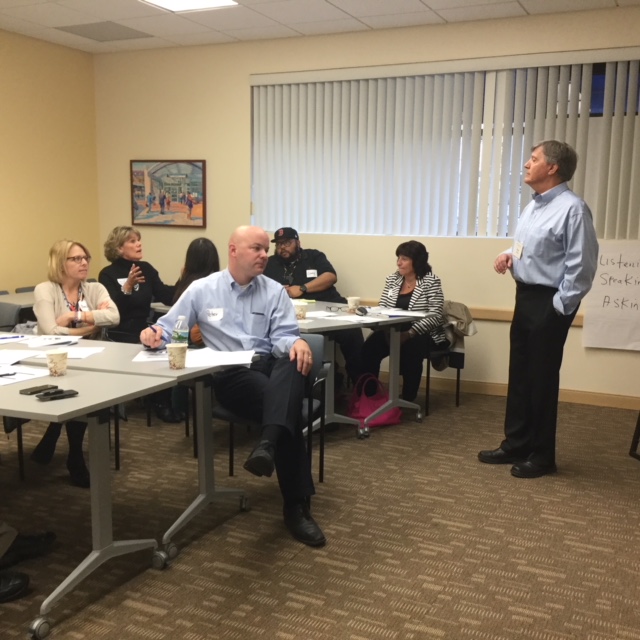
Image Credit:
Paul giving SMART Conversations
Getting in touch: BostonVoyager is built on recommendations from the community; it’s how we uncover hidden gems, so if you know someone who deserves recognition please let us know here.