



Today we’d like to introduce you to Basil El Halwagy.
Basil, we’d love to hear your story and how you got to where you are today both personally and as an artist.
In 2005 I was widely exhibiting large scale drawings which I called my black drawings series, and in one of those drawings there was a character called The Untitled Man. These drawings were a little larger than life size, about 9ft tall by 5ft wide. The Untitled Man was a character that I really liked and I felt he embodied my idea of ‘the artist’ so I wanted to make the Untitled Man more real. I wanted to bring The Untitled Man out of paper and into real space. in 2006 I set out to recreate The Untitled Man in wearable art while at a residency at the Vermont Studio Center. I set out to create a costume that one could wear, and there began my transition from working in traditional media like drawing, to creating wearable art. I wasn’t interested in creating simply items that could be worn, I was interested in creating characters, and with each of my pieces, the wearer is head-to-toe transformed into a character created by me. Each character has a unique idea which they embody and a way in which I prefer to use them. I think that all of my characters are avatars with realms of reality in which they inhabit, but for now, they aren’t necessarily the types of characters that have origin stories, were bit by radioactive spiders, or were once regular people. They are more like eternal presences of specific ideas in human form.
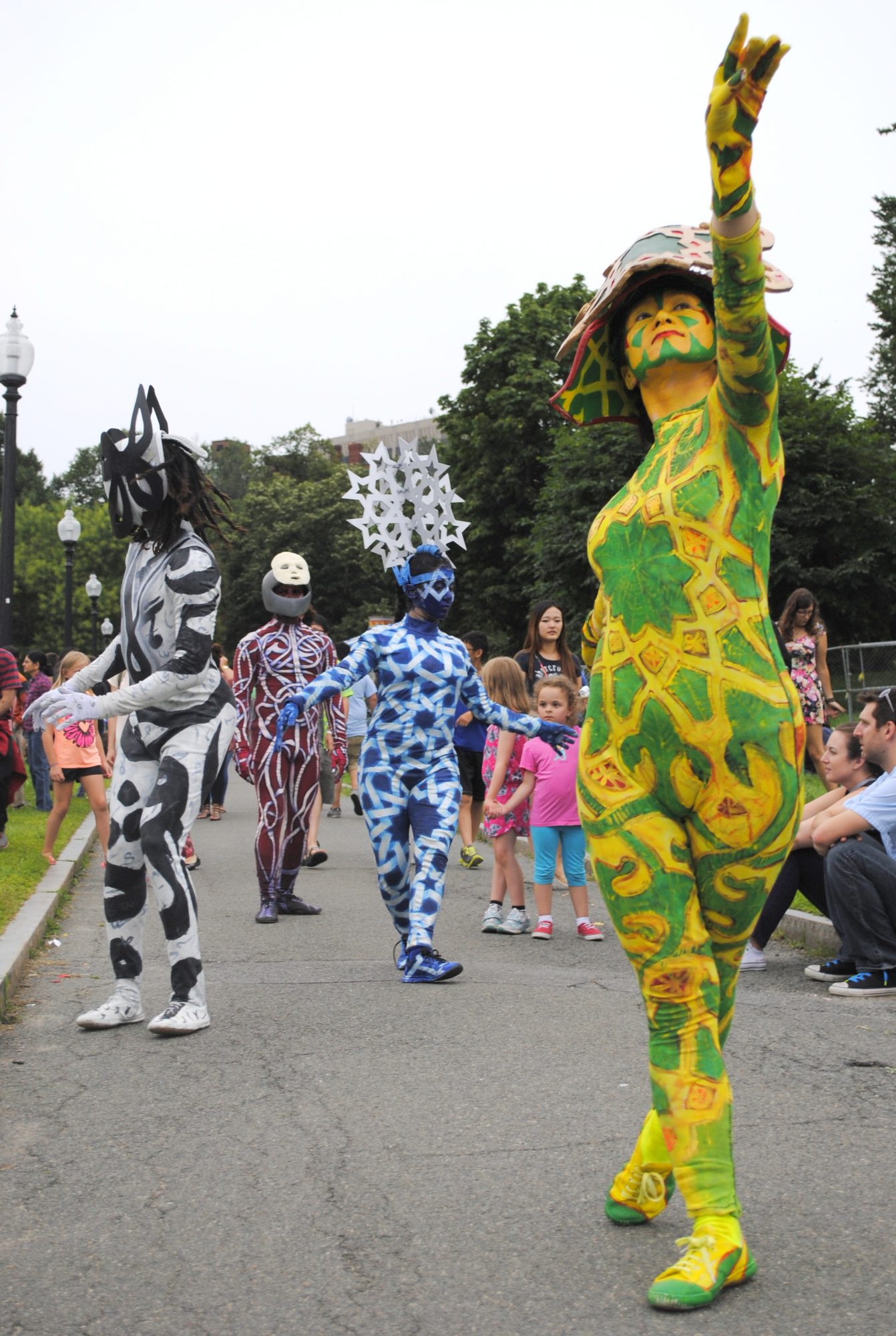
So the suit I created in 2006 at Vermont Studio Center ended up being just a prototype, and only in 2010 did I have the new version of The Untitled Man, which has performed along with many of my other characters in festivals at Northeastern University, Art Beat Somerville, The Boston Convention and Exhibition Center, Outside the Box Festival, and many other places. I’ve created 6 characters by now, and I recently collaborated with Jenny Oliver to create a suit character based on Erzule, a Haitian Loa (deity of sorts) connected to certain aspects of romantic love. This costume is now in Oliver’s private collection. My goal is to have 10 suits by the end of 2019.
I’ve also been a full time, public school visual arts teacher. I taught in Winchester, Cambridge and in Boston, but this year I left my public-school job, finally ready to create my artwork and manage my career full time. In the past while teaching I was only able to take on one or two projects a year, and while I felt deeply connected to my work as a public-school teacher, the fact that I had limited time and energy for my artwork bothered me, and I started planning to transition into making art full time.
We’d love to hear more about your art. What do you do you do and why and what do you hope others will take away from your work?
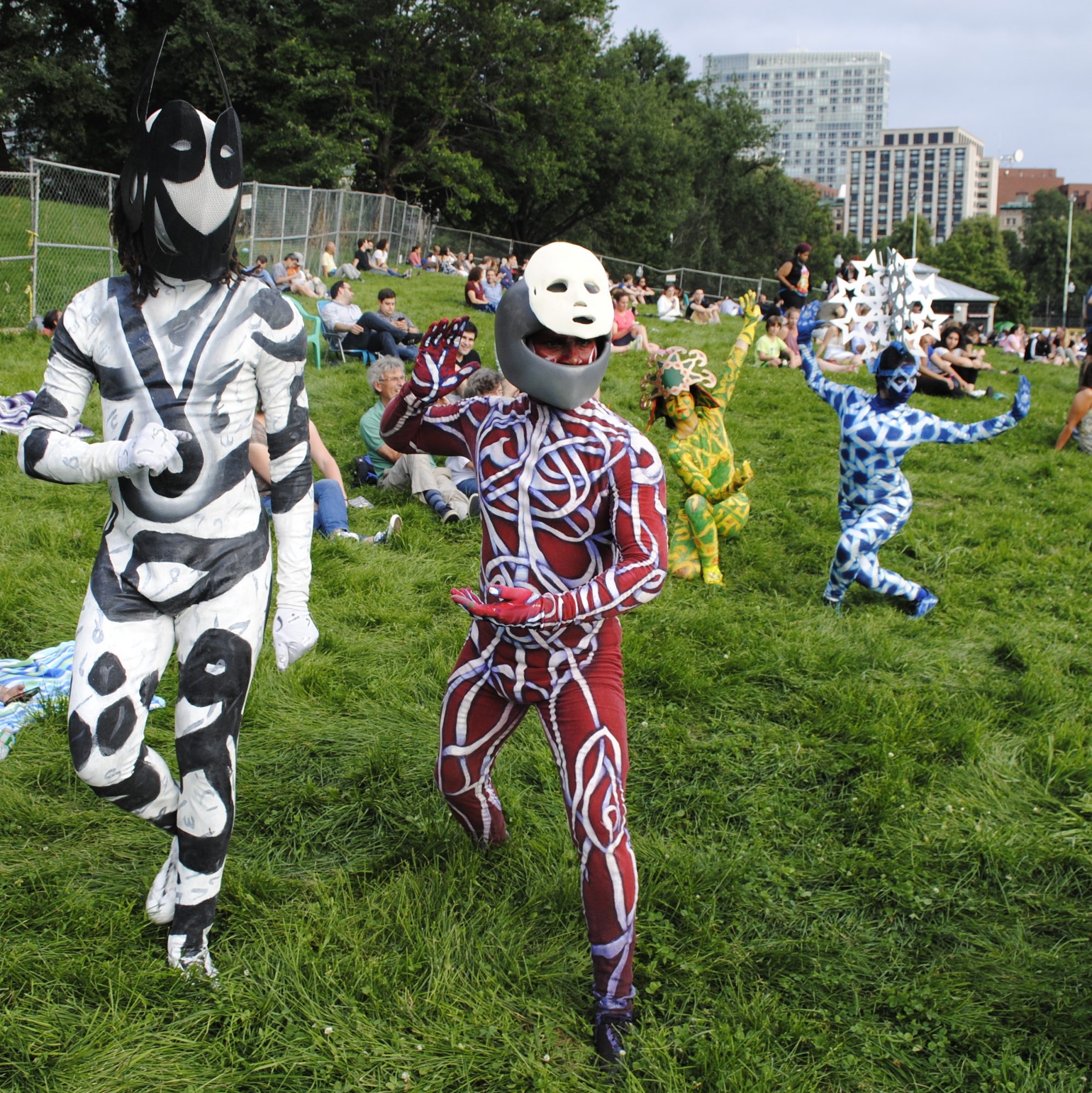
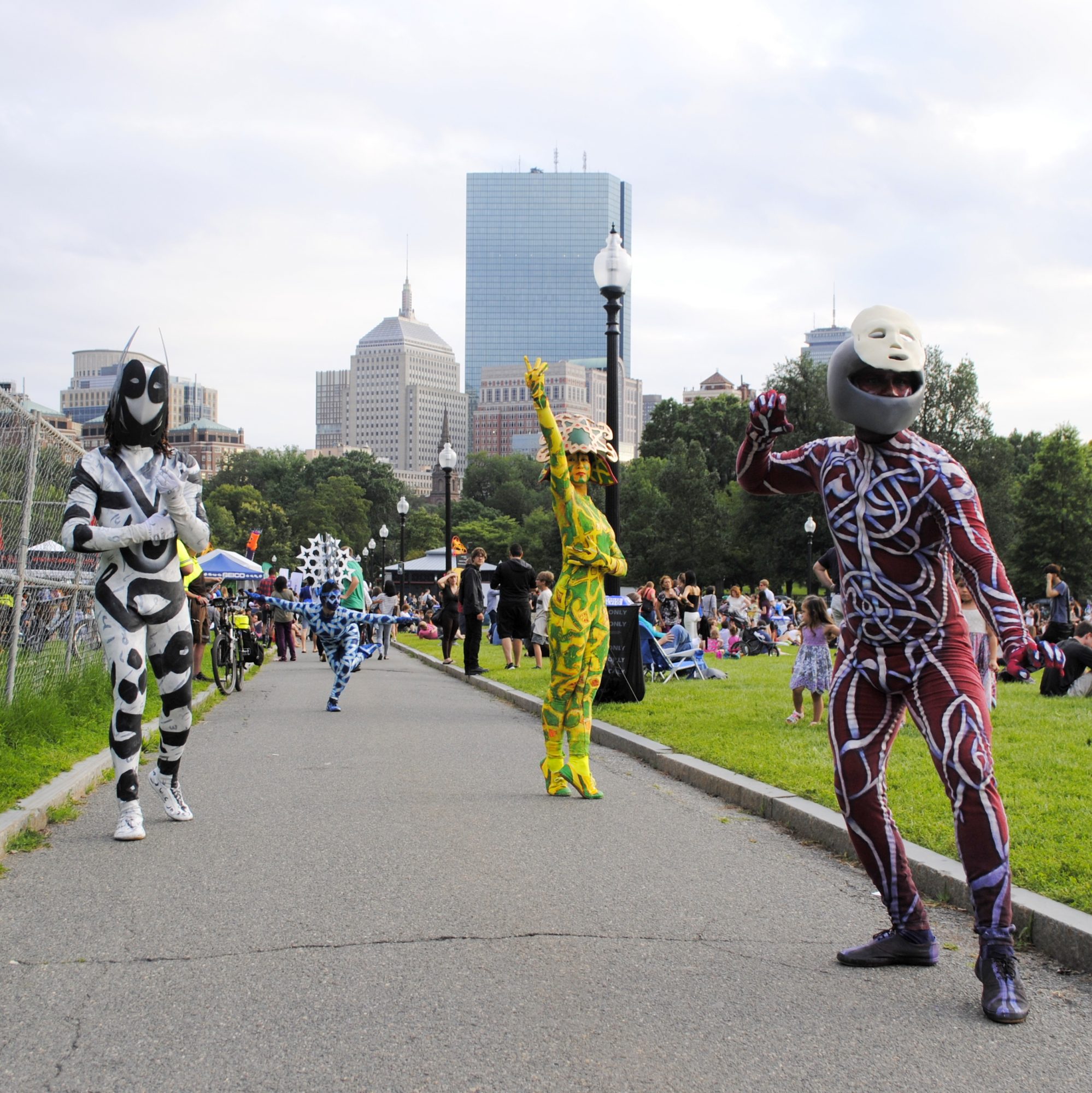
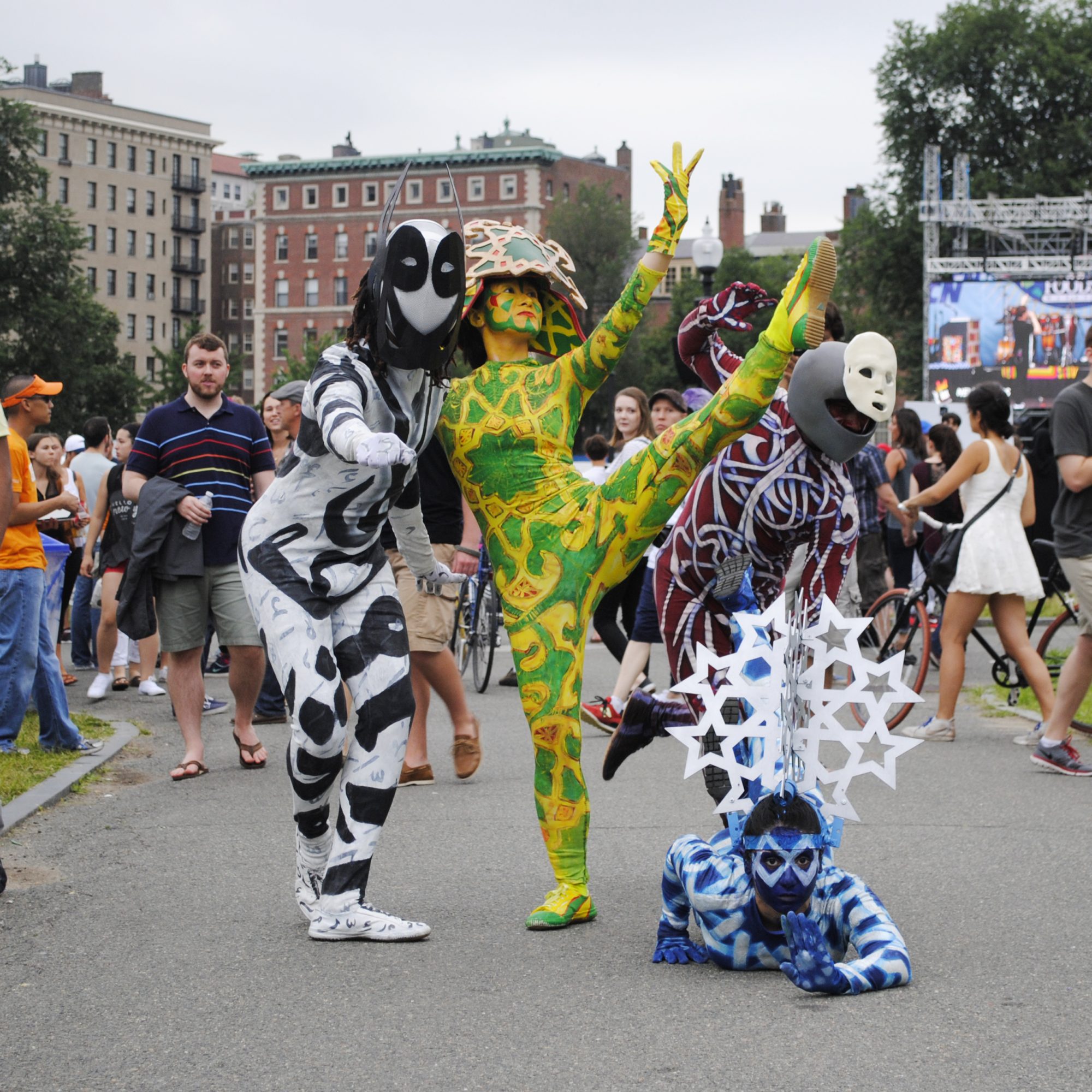
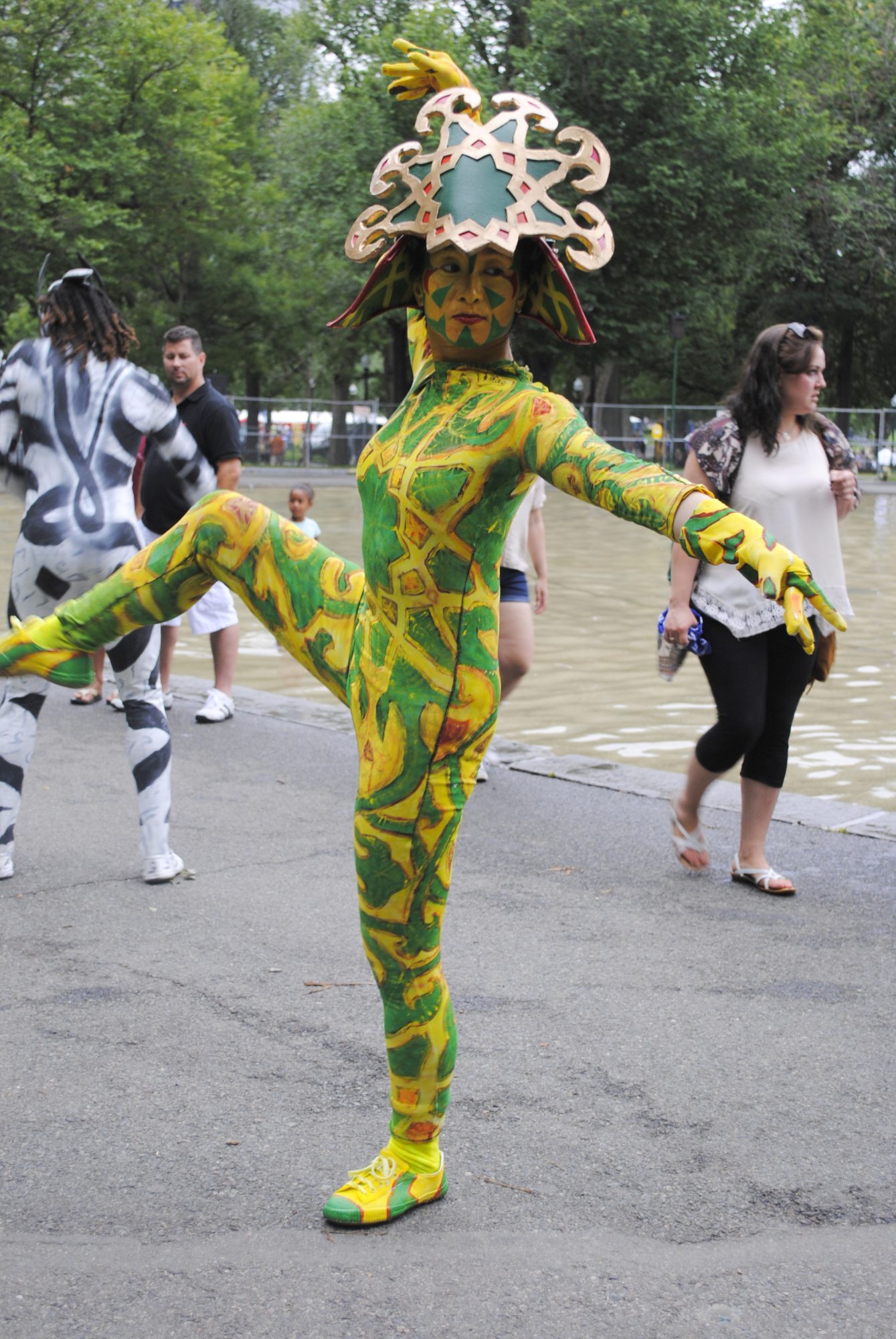
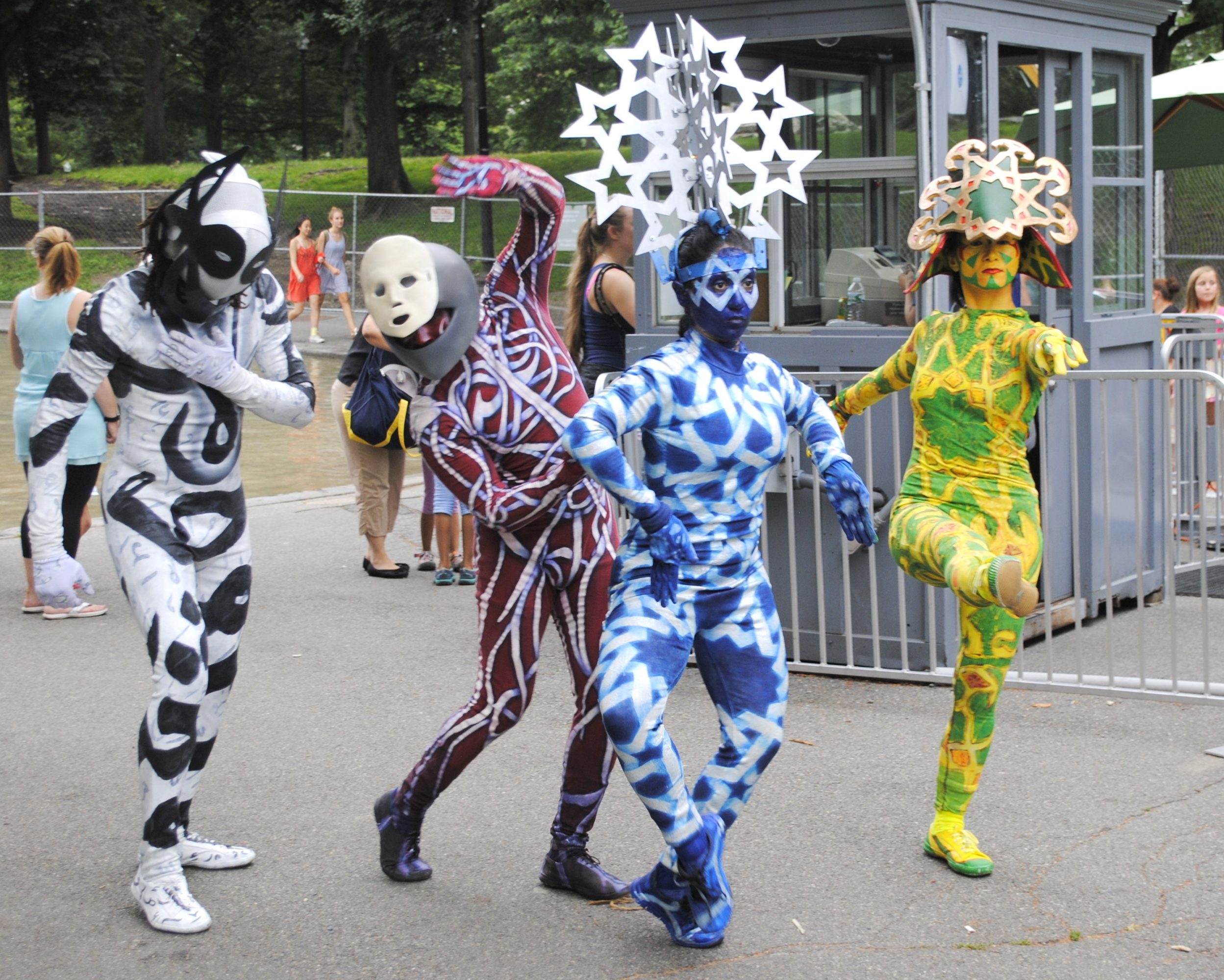
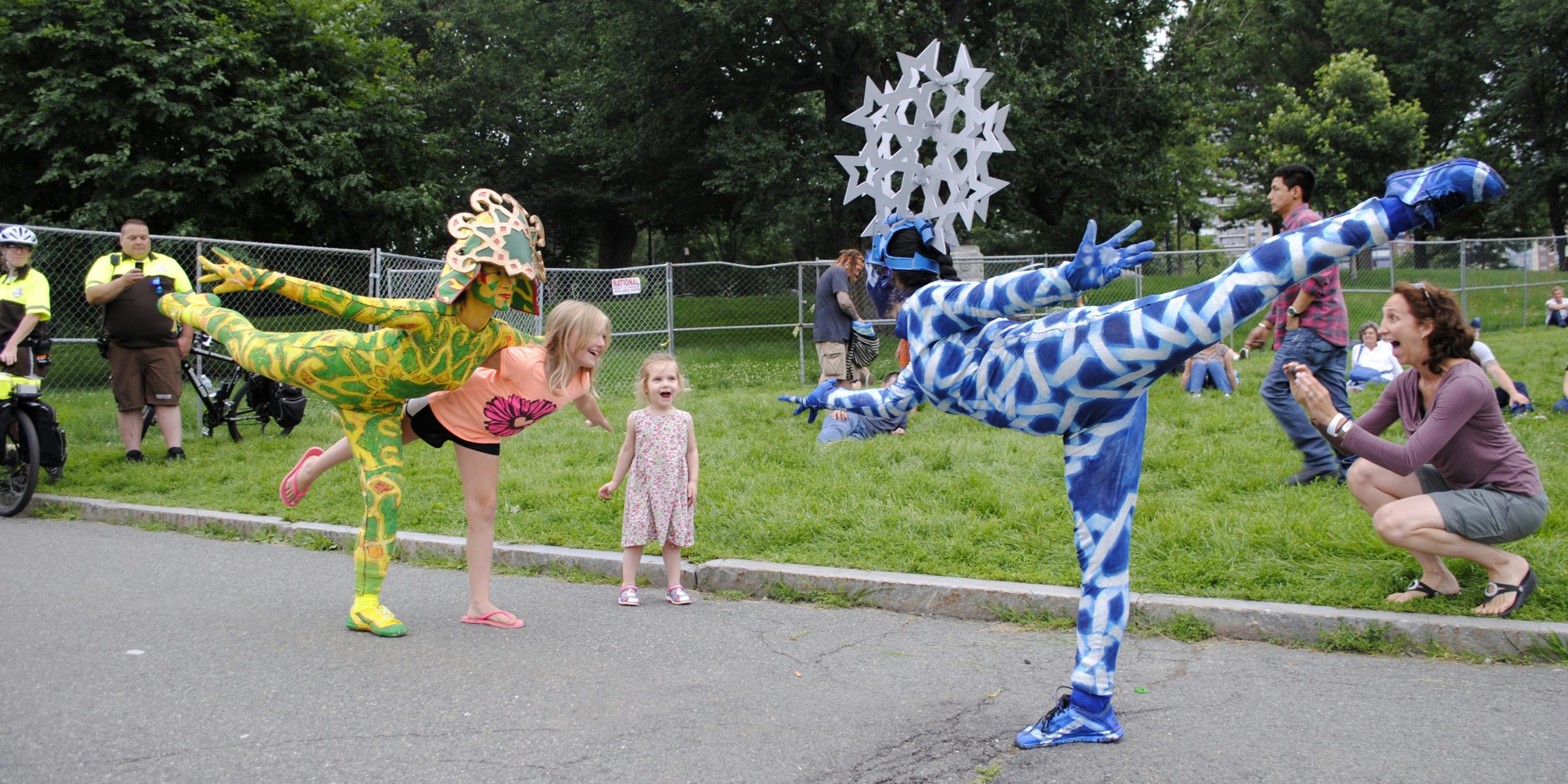
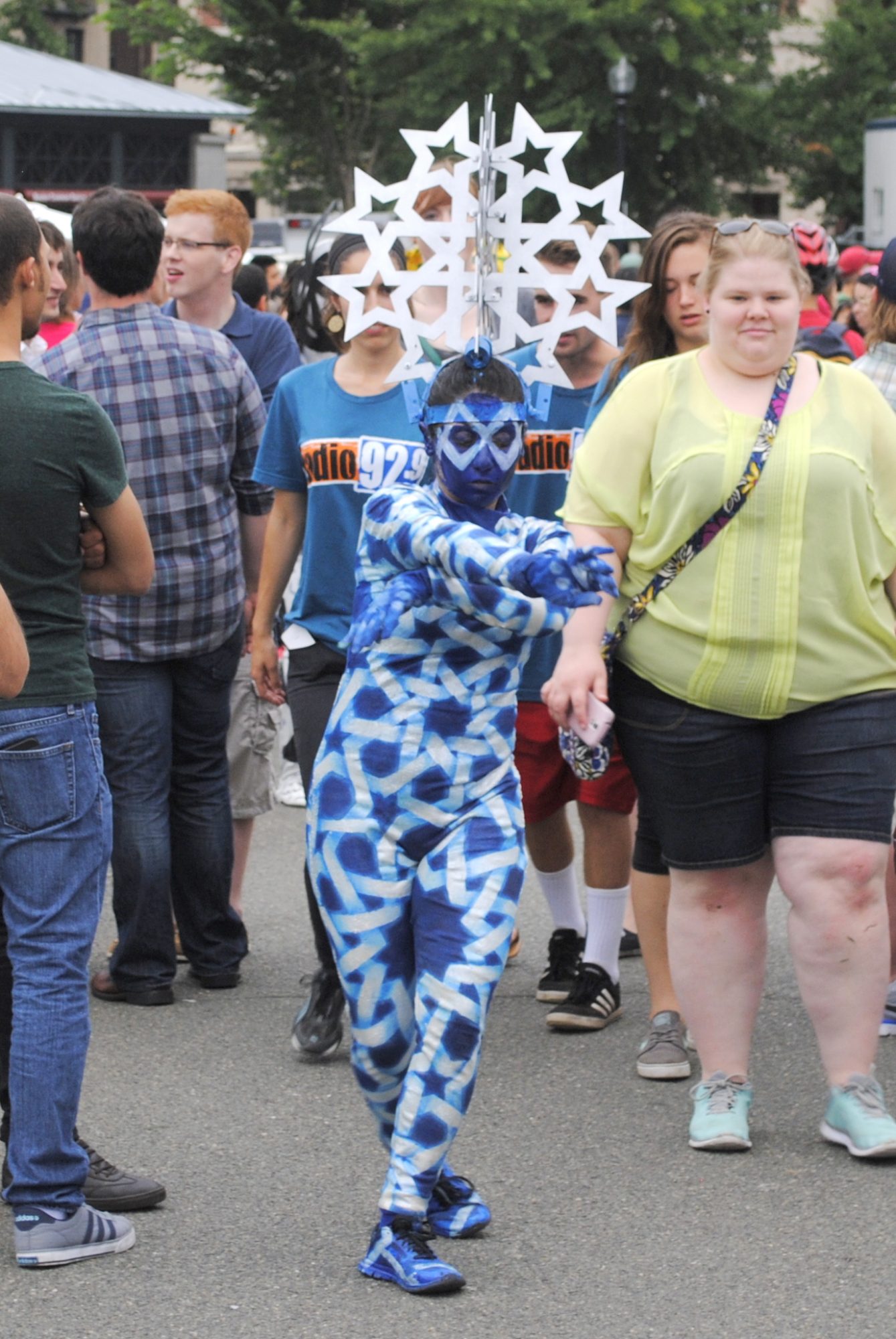
I create wearable-performative characters that embody ideas and tell stories. I call my characters ‘Fine Art Superheroes’ because our archetypal comic-book heroes wear suits and costumes which call forth the values they embody and defend. Just like in the comic genre, each of my heroes’ suit employs a motif that comes to signify that character’s identity.
My characters embody ideas that come to life before audiences and allow people to connect with artwork in a more direct and personal way, Encountering living, moving, performative works, often unexpectedly, outdoors and in public settings. I create all my characters using a cotton unitard and fabric paint, and various materials for the headpieces. Once the suits are finished, I collaborate with dancers to create performances, I write about the characters and I share what I’ve written with my dancers, in order to collaborate effectively and allow them to interpret and develop movement that fits.
Now more than ever my work exists as a challenge, rather than part of a trend. Through my work hope to learn if, and how, an artist in the 21st century can create a fictional hero that is as well recognized as characters in comics and pop culture, without the driving power of capitalism, box office sales, or merchandising. Again, this question is: Can an artist working in this media create characters everyone knows, in a climate where certain enormous media companies have co-opted role of myth making and epic story telling in our time? I feel his role is so important in marking how our time will be understood, and I hope to, through my work, encourage many other artists to start creating characters. I especially hope to talk vast community of auto-didactic DYI cosplay artists, who’ve produced incredible feats of creativity for comic conventions. There’s so much talent and creative potential out there, and I’m excited to see what effect it would have if each of these cosplay artists created just one original character for a convention.
I started this project because I wanted to make characters in my drawings come to life. I found that I also enjoyed extending these projects into great photographs and unique performances, play the role of director, installation artist, writer, mask maker, seamstress and make-up artist at the same time. Now as I move forward, I’m excited to explore more possibilities for a new group of characters, but I’m also interested finding new ways of using my characters and new stories that can be told with them, through movement and performances.
Artists face many challenges, but what do you feel is the most pressing among them?
This is a good question. It’s difficult to say, we face so many challenges in so many areas, and some challenges we’re not even aware of. I’m tempted to talk about affordable housing as far as Boston and the East Coast in concerned. I’m tempted to talk about the art scene’s white privileged in a city like Boston, which means it’s simply easier to find curators and gatekeepers with access to your cultural point of view (which is essentially your art) if you are a white person in Boston.
Ultimately I think there’s a hidden challenge which most artists here in Boston are oblivious to. Having worked with public school students for a number of years, I remember the question I would get asked most often is, why does art matter. Of course, there’s so many answers to this question that work, but what this question pointed out, is that few of these kids really had living artists in their lives who they identified with or even admired, and that is what worried me. The main challenge artists face is maintaining a connection with the people, in the common sense of the word.
Do you have any events or exhibitions coming up? Where would one go to see more of your work? How can people support you and your artwork?
This is a tough question because right now I don’t have exhibits coming up or performances scheduled. I’m doing a bit of a rebuild and remodel and I hope to have performances lined up for next year in spring and summer.
But that said, there is a great way to support my work. I want to bring my fine art superheroes to outdoor festivals that are connected in any way to the arts, whether it be comic conventions, city celebrations with performances, or outdoor arts festivals. The fine art superheroes bring intuitive site responsive movement to arts festivals ala a type of moving, living sculpture. If anyone would like to bring the fine art superheroes to their local cultural or arts festival, they can get in contact with me through my email address.
Contact Info:
- Address: 15 Channel Center Street Apt 414
- Website: www.fineartsuperheroes.com
- Phone: 617 501 3554
- Email: basil.elhalwagy@gmail.com
- Instagram: @fineartsuperheroes
- Facebook: www.facebook.com/basil.elhalwagy.creative.projects
Getting in touch: BostonVoyager is built on recommendations from the community; it’s how we uncover hidden gems, so if you know someone who deserves recognition please let us know here.